
Mustang Region Nepal – A Journey into the Last Forbidden Kingdom
Nestled in north-central Nepal, bordering the Tibetan Plateau to the north, Mustang is a land of extraordinary contrasts, ancient traditions, and dramatic Himalayan landscapes. Known for its windswept valleys, colorful rock formations, centuries-old monasteries, and traditional villages, the region offers a fascinating glimpse into a world shaped by Tibetan culture and trans-Himalayan trade.
Often described as the “Last Forbidden Kingdom,” Upper Mustang remained closed to foreign visitors until 1992. Its history as the former Kingdom of Lo, combined with its remote location and distinctive cultural heritage, has helped preserve traditions that set it apart from much of Nepal.
Mustang is divided into Lower Mustang and Upper Mustang, each offering a unique travel experience. Lower Mustang is known for its spectacular mountain scenery, apple orchards, traditional Thakali villages, and sacred pilgrimage sites. In contrast Upper Mustang, reveals an arid, otherworldly landscape of eroded cliffs, ancient cave dwellings, Buddhist monasteries, and fortified settlements, culminating in the historic walled city of Lo Manthang.
Whether you are seeking a short Himalayan getaway, a cultural exploration, or an adventurous trek into one of Nepal’s most distinctive regions, Mustang promises an unforgettable journey through spectacular landscapes and living heritage.
Lower Mustang: Gateway to Mustang’s Wonders
Lower Mustang is the more accessible part of the region and a popular destination for travelers exploring the Annapurna Circuit, the Kali Gandaki Valley, and the sacred pilgrimage site of Muktinath. Located within the Annapurna Conservation Area, it combines striking mountain scenery with rich Thakali and Tibetan-influenced cultural traditions.
The landscape changes dramatically as you travel north from the greener foothills toward Jomsom and Kagbeni, where the terrain becomes increasingly dry, rugged, and windswept.
Highlights of the Lower Mustang region
- Jomsom – The Gateway to Mustang: A bustling mountain town and regional transport hub, Jomsom is known for its dramatic mountain views, strong afternoon winds, and access to trekking routes and flights from Pokhara.
- Marpha– The Village of Apples: Famous for its whitewashed stone houses, narrow paved alleys, traditional architecture, and apple orchards, Marpha is an ideal place to experience local culture and sample regional apple products.
- Kagbeni – The Historic Gateway to Upper Mustang: Located at the confluence of the Kali Gandaki and Kag Khola, Kagbeni is a picturesque medieval-style village with narrow lanes, mud-brick houses, and an ancient monastery. It serves as an important checkpoint and the traditional gateway to the restricted area of Upper Mustang.
- Muktinath – A Sacred Himalayan Pilgrimage Site: Revered by both Hindus and Buddhists, Muktinath is one of the region’s most important spiritual destinations. Its religious complex is renowned for 108 water spouts and the natural-gas flame at Jwala Mai, which holds deep religious significance.
What makes lower Mustang special?
Lower Mustang is ideal for travelers seeking shorter hikes, village walks, cultural excursions, and less demanding trekking experiences. Its combination of mountain scenery, traditional settlements, and spiritual heritage makes it an excellent introduction to Mustang.
Upper Mustang: The Forbidden Kingdom
Upper Mustang is the remote and culturally distinctive northern part of Mustang, historically known as the Kingdom of Lo. Closed to foreign visitors until 1992, it remains a restricted trekking area requiring a special permit.
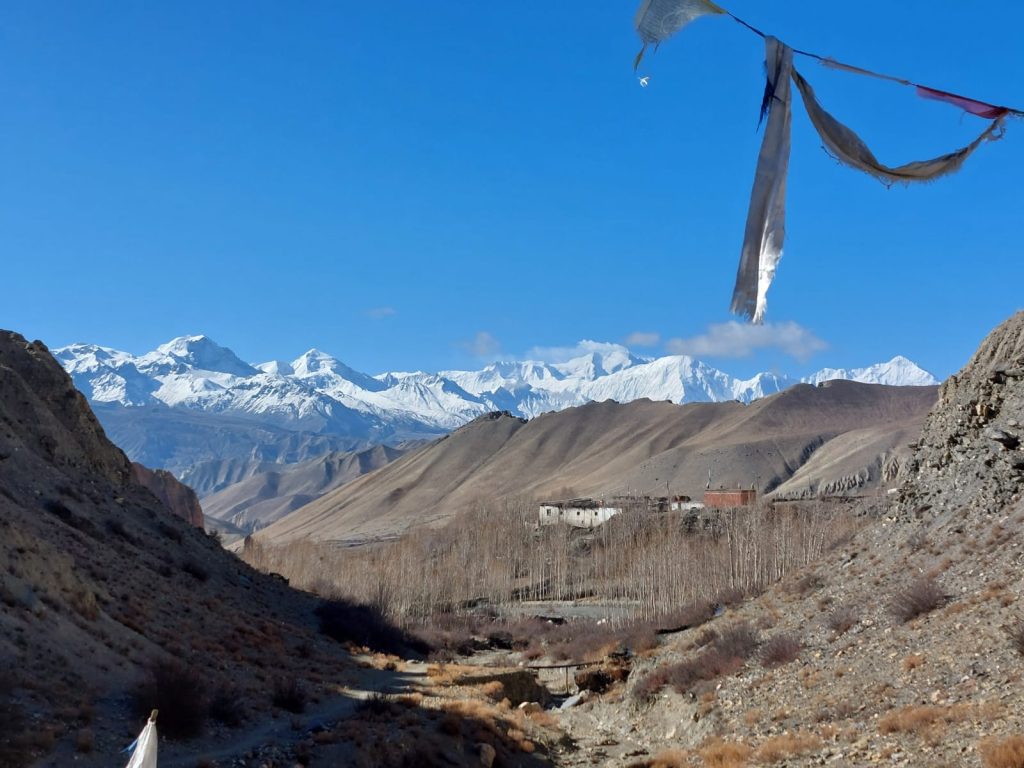
Unlike Nepal’s greener hills and forested valleys, Upper Mustang features a striking trans-Himalayan landscape of barren plateaus, deep canyons, colorful sandstone cliffs, and wind-carved rock formations. Its terrain resembles the Tibetan Plateau, while its traditional villages, monasteries, and religious practices reflect centuries of close cultural connections with Tibet.
Trekking through Upper Mustang is both an adventure and a cultural journey. Along ancient trails, travelers discover traditional Buddhist villages, sacred monasteries, centuries-old cave complexes, and the historic walled capital of Lo Manthang.
Key highlights of the Upper Mustang region
- Chele – Gateway to Upper Mustang: A traditional village surrounded by rugged cliffs, stone walls, and distinctive Himalayan landscapes.
- Samar – A Peaceful Mountain Village: Known for its poplar trees, traditional houses, and dramatic rock formations.
- Syangboche – A Remote Settlement: A small mountain village offering scenic highland views and a glimpse of traditional rural life.
- Ghiling – Beneath the Ochre Cliffs: A traditional settlement featuring whitewashed houses, seasonal barley fields, and ancient monasteries.
- Ghami – Ancient Mani Walls: One of Upper Mustang’s larger villages, famous for its long Buddhist mani wall and striking red cliffs.
- Chhusang (Chosang) – A Village of Rock and History: Known for its colorful rock formations, traditional architecture, and nearby ancient caves.
- Ghar Gompa – A Sacred Buddhist Monastery: Also known as Lo Gekar, this revered monastery is traditionally associated with Guru Rinpoche (Padmasambhava).
- Lo Manthang – The Ancient Walled Capital: The historic capital of the Kingdom of Lo, featuring fortified walls, royal buildings, and centuries-old monasteries.
- Chhoser Caves – Ancient Cliff Dwellings: Remarkable multi-level caves carved into towering cliffs, believed to have served as dwellings, storage spaces, and possibly religious or funerary sites.
Together, these villages, monasteries, and ancient caves reveal Upper Mustang’s distinctive Tibetan-influenced culture, rich history, and extraordinary Himalayan landscapes.
Culture, festivals, and traditions
Upper Mustang’s cultural identity is shaped by Tibetan Buddhism, the historic Kingdom of Lo, and centuries of trans-Himalayan exchange. Prayer flags, mani walls, chortens, traditional homes, and monasteries are integral to the landscape.
One of the region’s best-known celebrations is the Tiji Festival, held in Lo Manthang, usually in May. The multi-day event features ritual dances, ceremonial performances, and religious observances associated with the triumph of good over evil and the restoration of harmony.
Festival dates vary each year according to the Tibetan lunar calendar, so travelers planning their itinerary around Tiji should confirm the dates in advance.
Best time to visit Mustang, Nepal
Mustang can be visited during much of the year, but the best season depends on whether you plan to explore Lower Mustang, trek into Upper Mustang, or attend a cultural festival.
- Spring (March–May): Spring brings generally favorable trekking conditions, clear mountain views, and increasingly pleasant daytime temperatures. It is also a popular period for cultural visits and the Tiji Festival, which usually takes place in May.
- Autumn (September–November): Autumn is one of Nepal’s classic trekking seasons. Upper Mustang generally enjoys dry weather and excellent visibility, while Lower Mustang offers crisp mountain scenery and comfortable conditions.
- Summer and monsoon (June–August): Upper Mustang is an attractive option during Nepal’s monsoon because its location in the Himalayan rain shadow keeps much of the region comparatively dry. However, road access, flight operations, and connecting routes may still be affected by rain or landslides elsewhere. Lower Mustang is generally wetter, particularly farther south.
- Winter (December–February): Winter brings cold temperatures, freezing nights, and possible snowfall, especially at higher elevations. Lower Mustang remains accessible in many circumstances, but Upper Mustang will be more challenging, and some lodges and services may close for the season.
Permits required for Mustang Region
For Lower Mustang: Travelers visiting the Lower Mustang area will require the Annapurna Conservation Area Permit (ACAP). Restricted Area Permit is not required for destinations outside the restricted zone.
For Upper Mustang: Travelers must obtain an Upper Mustang Restricted Area Permit in addition to the Annapurna Conservation Area Permit.
Restricted-area trekking or cultural tour must be organized through a government-licensed trekking agency and accompanied by a qualified guide, subject to current regulations.
Why Visit Mustang with Wind Horse Tours?
At Wind Horse Tours, we know Mustang as more than a destination on a map. Some members of our team come from the region, and we visit regularly to maintain our connections with local communities, cultural sites, and the extraordinary landscapes that make Mustang so special.
Our local knowledge enables us to design journeys that combine cultural discovery, scenic exploration, comfortable logistics, and meaningful encounters with the people who call Mustang home.
Discover Mustang with Wind Horse Tours and experience the hidden kingdom of the Himalayas, where ancient traditions, extraordinary landscapes, and living heritage come together.