
Kuzu Zangpo la Anand, we are back from our tour and would like to send a big thank you to everyone who made this trip so amazing! Thanks to your expertise and consulting, the final mix of hiking and culture was perfect and we got a very good first overview of the country. Seems as we have to come back…

Ancient Bhutan Trail Hikes
Trans Bhutan Trail western Part
Ancient Bhutan Trail Hikes draws inspiration from the recently restored Trans Bhutan Trail (TBT), which has been reopened primarily for visitors seeking hiking grandeur and historical exploration. In times past, these trails served as the sole means of connecting different places for trade, movement, pilgrimage, and more.
Over time, with a judicious infusion of modernity, these trails have naturally evolved. Nevertheless, they still retain much of their original, untouched appeal and innate natural history.
This meticulously crafted itinerary seamlessly immerses travelers in the captivating essence of history as they journey through unspoiled and breathtaking natural landscapes. Amidst the rigors of trekking, one can uncover the allure that lies in the challenges of the trail. Simultaneously, this journey maintains a delicate balance, allowing for exploration of the cultural richness nestled within the valleys and villages.
Speaking of achieving a delicate balance, we’ve incorporated drives to key attractions to optimize time and arranged hotel stays for comfort rather than camping in tents. This decision is primarily driven by logistical considerations and cost-effectiveness. The essence of this itinerary is to provide a journey that is rugged, beautiful, and culturally immersive without compromising on comfort.
Note: The Trans Bhutan trail spans almost 35 days, stretching from Haa in the far west to Trashigang in the east. However, many parts of the route are now accessible by road. For this tour, we have focused on the western region of the Trans trail and integrated cultural themes from these areas. Should you be interested in a longer duration, you can combine hiking with driving to complete the Trans Bhutan Trail.
Ancient Bhutan Trail Hikes Outline Itinerary
Day 1: Arrive in Paro
Day 2: Drive to Haa Valley & Explore
Day 3: Trek Haa Kastho on the Trans Bhutan trail to Ngopa (Paro)
Day 4: Rejoin the Trans Bhutan Trail to Jele Dzong and Tsaluna- drive to Thimphu.
Day 5: Whole day for a tour in the capital, Thimphu
Day 6: Drive across Dochula Pass and hike along the Divine Madman trail (part of TBT ) and drive to Punakha
Day 7: In Punakha – Excursion hike to visit Limukha village through TBT
Day 8: Along the way, hike to Lungchutse & Trashigang Goempa – Overnight in Paro.
Day 9: Hike to Taktsang (tiger’s nest).
Day 10: Departure.
Activities: Walking Tours, Culture Tours, Village Tours
Trip highlights
Trip’s Highlight
- Vista of stunning natural landscapes.
- Immersive cultural experiences.
- Opportunities to sight wildlife & Avi Fauna
- Varied climatic zones – spanning temperate to alpine to sub tropical
Day by day
The full day-by-day itinerary.
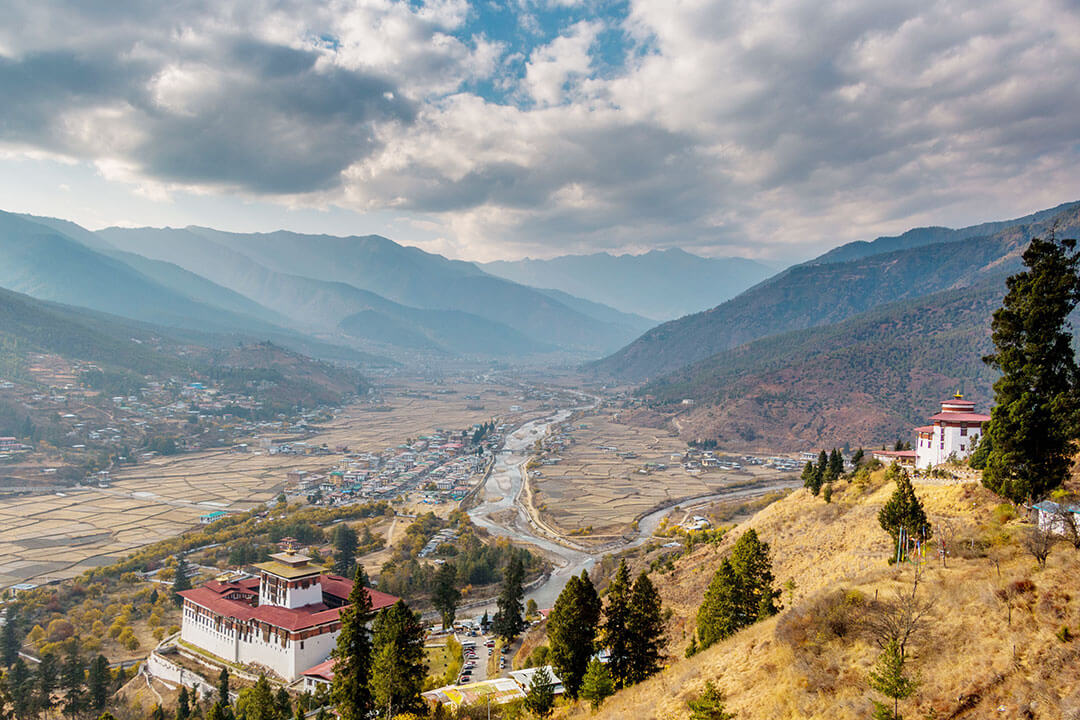
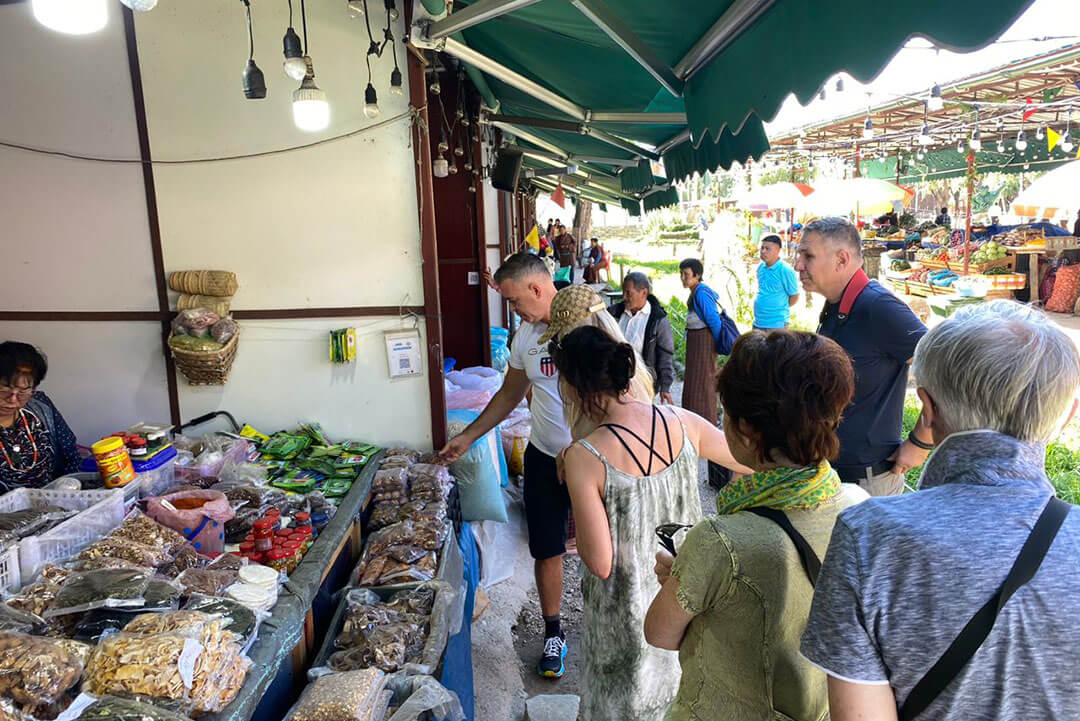
Upon arrival at Paro Airport, your guide and driver will be waiting to transfer you to your hotel. Depending on your arrival time, you will start with a visit to the National Museum and Paro Dzong. Afterwards, take a leisurely stroll down to Paro town, where you can explore the farmer’s market along the way. Later, enjoy a short hike to explore nearby villages.
Your arrival timing will influence directly with the first day sightseeing activities. If you arrive early, you can cover all of the sights listed. If the arrival is late, will adapt the attraction visit the following day or later.
Meals Lunch · Dinner
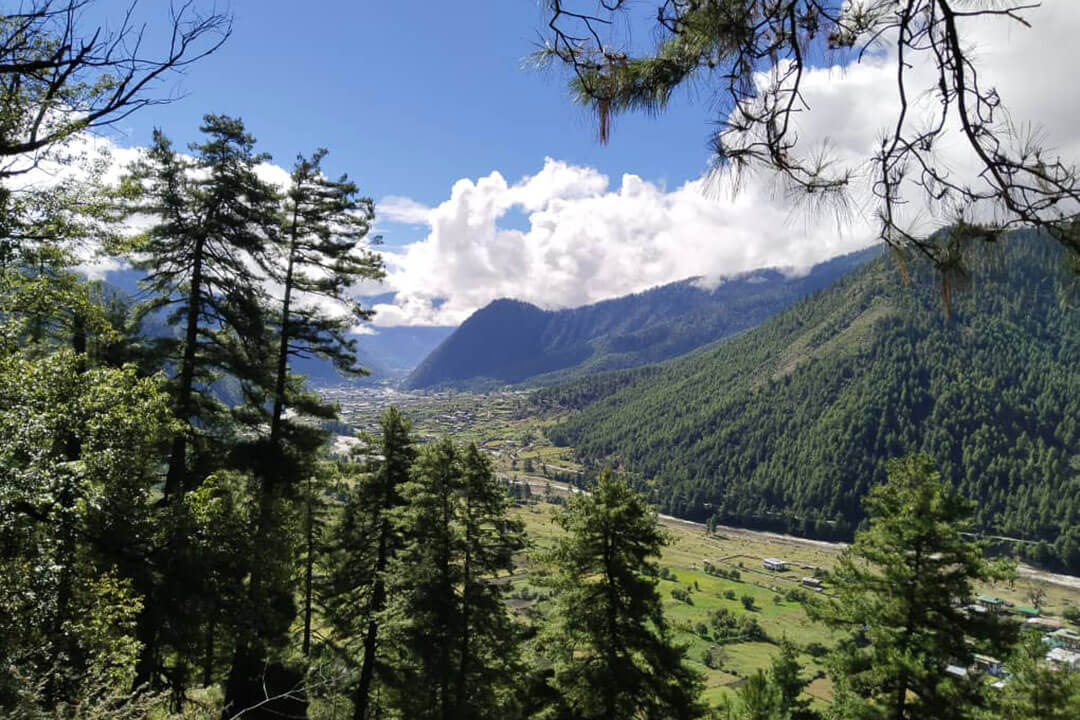
Haa, nestled in a quaint and secluded valley in the western frontier, exudes serene charm. While the journey takes approximately two and a half hours, we’ll pause to explore Kila Gompa, nestled just below the majestic Chele La. Here, several temples and retreat huts cling to the cliffside, creating a mesmerizing sight.
Crossing Chele La pass, Bhutan’s highest motorable point at 3,988 meters, we descend into Haa valley. We’ll optimize our remaining time with a mix of driving and walks, exploring Lhakhang Karpo, Takchu Goempa Monastery, and a nearby village.
As night falls, indulge in traditional Haa delicacies.
Today, you will cross Chelela Pass - 3850m - the one among a few more along the journey. It is the highest motorable road in Bhutan.
Overnight in Haa Meals Breakfast · Lunch · Dinner
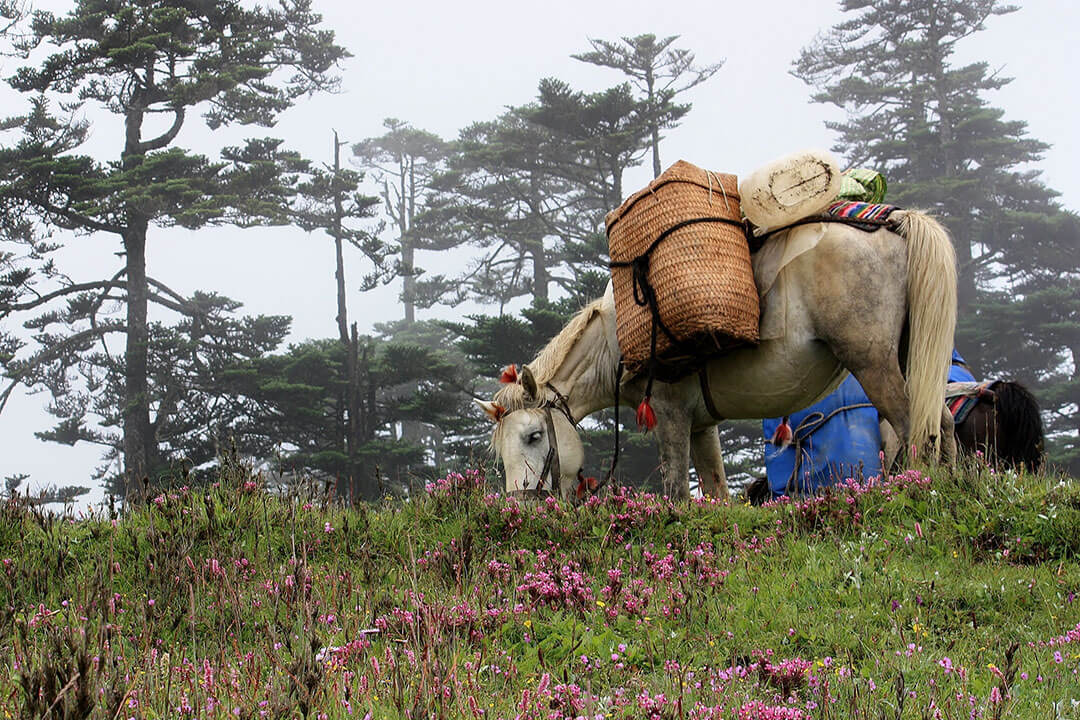
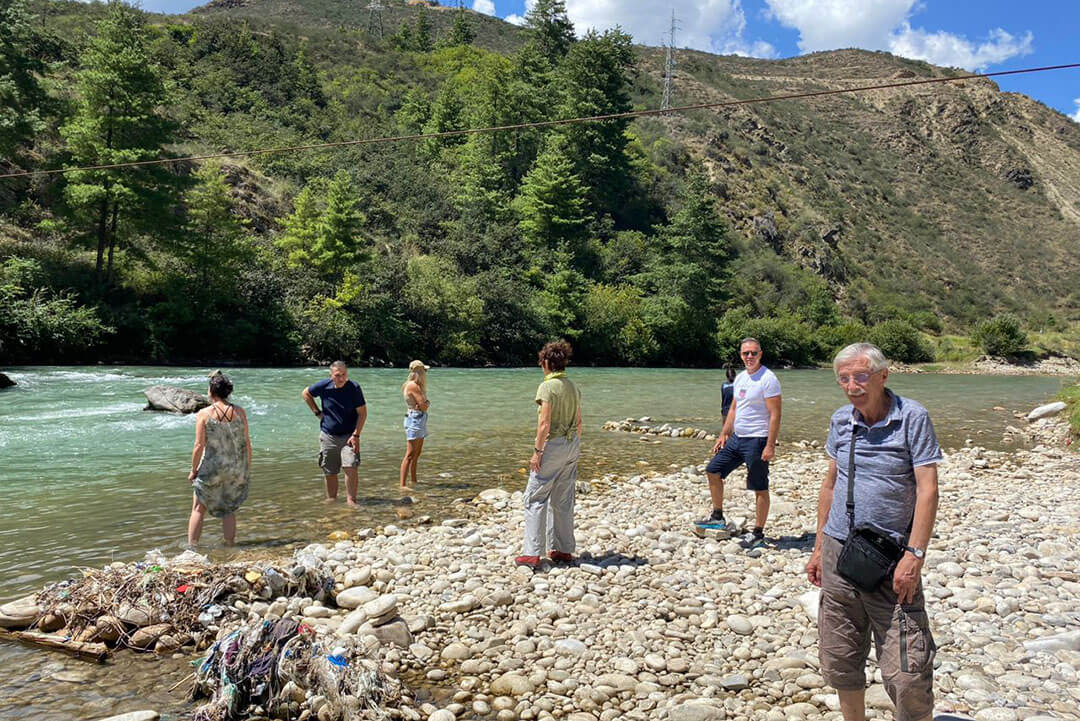
After breakfast, transfer to Katsho to begin the Trans Bhutan trail hike, following the historic path used for generations by locals to trade with the people of Paro. The trail meanders alongside the scenic Haa River, gradually ascending from Katsho village through yak pastures and into pine and rhododendron forests. Don’t miss the opportunity to explore the Cliffside Hermitage of Jungneydra with an optional additional hike.
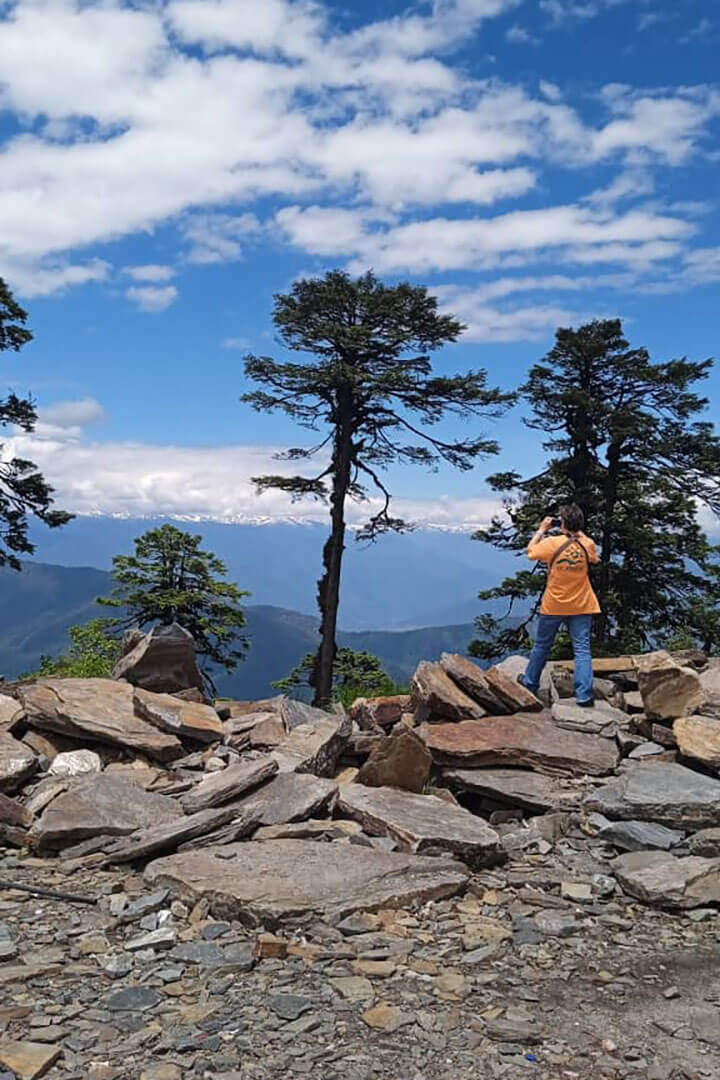
Begin your ascend starting at around 2800m above Katsho, the trail leads to the pass gradually at Kaleyla (approx 3700m), where it intersects the ridge trail between Chelela and Sagala. From here, marvel at the breathtaking vistas of the Himalayan range to the north, including Mount Jomolhari and Mount Jichudrakegang on clear days. A picnic lunch will be provided en route.
Descending from Kaleyla, the trail winds through lush rhododendron and bamboo forests into the Paro Valley. Upon arrival in the Ngopa gewog of Paro, meet your transport and drive to the hotel.
If time permits, explore the Kichu Lhakhang and Dumtshe Lhakhang temples.
Overnight stay in Paro Meals Breakfast · Lunch · Dinner
After breakfast, embark on a short drive along farm road to Damchennag above Paro (2800m), where you’ll reconnect with the Trans Bhutan Trail heading east. Begin your uphill hike, passing through settlements and apple orchards before entering the mossy forest. After about 2 hours, you’ll reach Jele Dzong, a temple inhabited by a few monks, situated on a ridge overlooking Paro Valley to the west and Tsaluna valley to the east. Explore the temple, which houses a large Buddha statue, before descending into Tsaluna Valley, a stretch known for exotic bird sightings, taking about 3 hours.
From Tsaluna, drive approximately 1 hour to Thimphu. Once there, visit the Centennial Farmer’s Market, and if time allows, take a drive to see the Giant Buddha Statue. The ridge offers breathtaking views of both sunset and sunrise.
Overnight stay in Thimphu Meals Breakfast · Lunch · Dinner
Thimphu, Bhutan’s capital, features a blend of contemporary and medieval attractions, from the revered Changangkha Temple to the iconic Memorial Chorten, Traditional Schools of Arts & Crafts, the traditional hand-made Paper Factory, the Textile Academy & Museum, and more. Explore the Traditional Medicine Institute, observe Bhutan’s National Animal at the Takin Preserve, and visit the National Library and the majestic Tashi Chho Dzong. Don’t miss witnessing the traditional game of Archery at Changlomithang ground. Thimphu offers diverse sightseeing options, catering to cultural immersion or adventurous exploration. Customize your experience by splitting your time between traditional sightseeing and a leisurely two-hour hike from the Giant Buddha to Changangkha, offering panoramic views of the capital. With a flexible itinerary, you can enjoy an experience tailored to your preferences.
Meals Breakfast · Lunch · Dinner
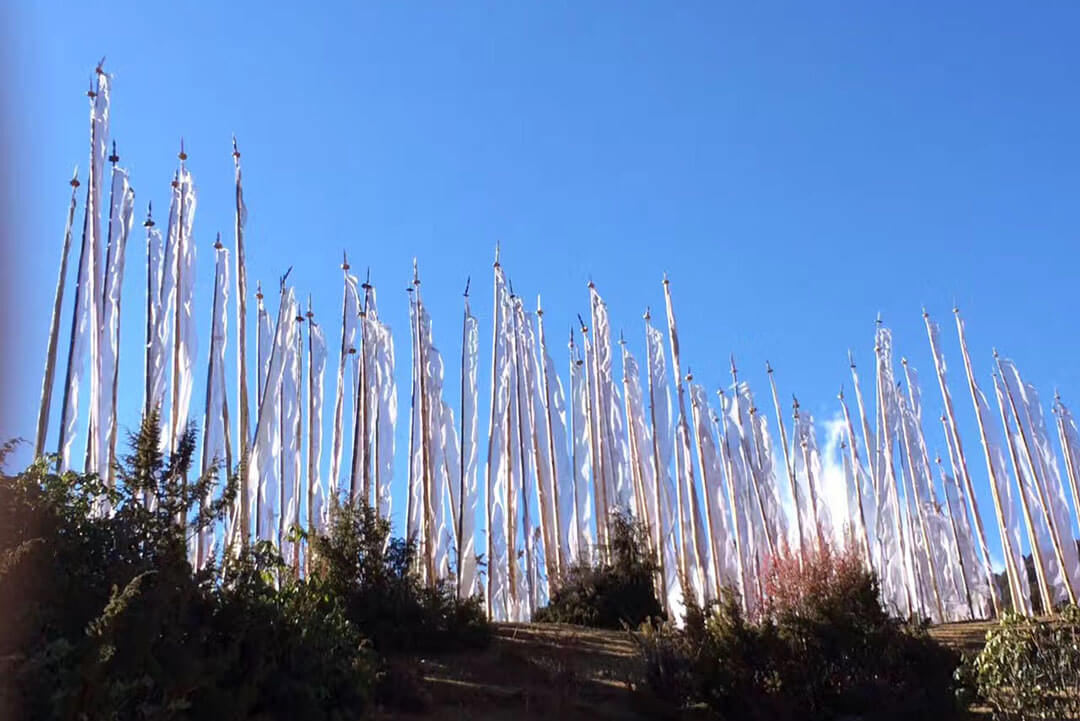
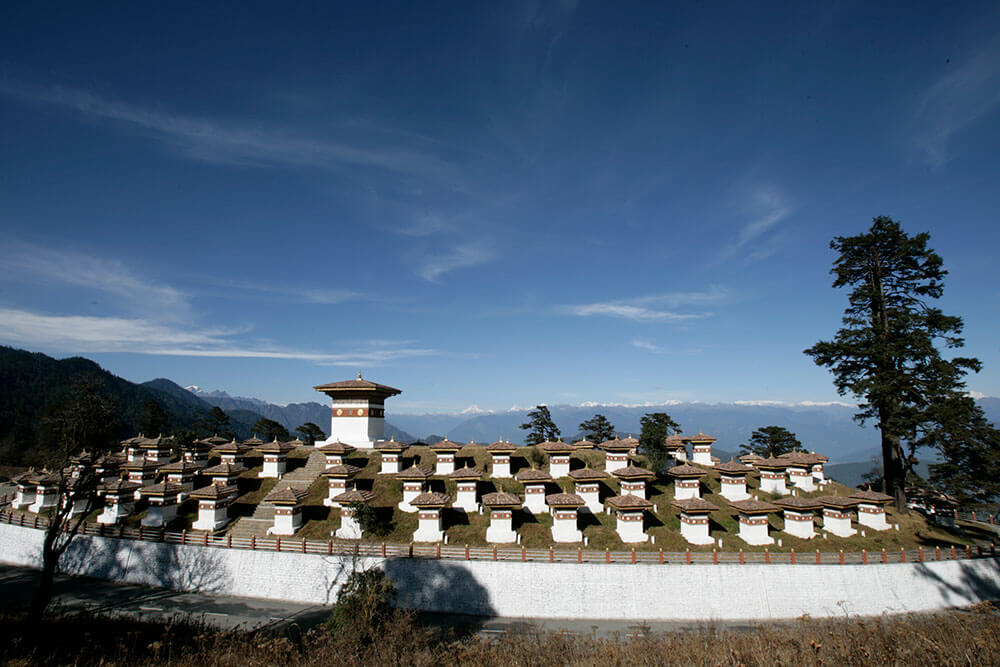
Drive eastward, ascending to Dochula Pass (3150m), a journey lasting around 40 minutes. Visit the site of 108 stupas and marvel at the breathtaking vistas of distant mountain peaks, particularly on clear days.
After descending from the pass, rejoin the special part of the Trans Bhutan Trail, known as the Divine Madman trail, steeped in popular legends and stories. This segment of the hike follows in the footsteps of the Divine Madman himself, who journeyed from Tibet to Bhutan in the 16th century to fulfill his destiny of suppressing evil energies. Visit the Toeb Chandana village house and the temple of the descendants, where the arrow of the Divine Madman fell; legend has it that when Drukpa Kuenley fired an arrow from Tibet to determine his path, it landed here in Toeb Chandana. The hike will last roughly about 3 hours, concluding in Mendrelgang/Thinleygang village, where we will drive the rest of the way. Visit Chimi Lhakhang temple, where you can hear more stories of Drukpa Kinley, the divine madman. Finally, explore Rinchengang village, nestled opposite the Wangdue Phodrang Dzong, characterized by its cluster of interconnected houses, narrow alleyways, and renowned locals skilled in stone and masonry work.
Meals Breakfast · Lunch · Dinner
Embark on your journey with a visit to Punakha Dzong, renowned as the most aesthetically beautiful dzong in Bhutan.
Crossing a long suspension bridge, you’ll once again join the Trans Bhutan Trail, leading you to Limukha (Lingmukha) village. Starting (approx 1400m) amidst picturesque paddy fields, the trail ascends gradually, offering a breathtaking view of the Punakha valley, leading to a chorten (stupa) marking the day’s highest point. Descend into the picturesque Lingmukha village (2100m), with some segments following the feeder road. Explore Lingmukha Lhakhang and immerse yourself in village life. This trek spans approximately 4 hours. Afterwards, drive back via Khuruthang town along the way.
Meals Breakfast · Lunch · Dinner
Drive back to Docula Pass (3150m), and embark on a hike to visit Lungchutse Retreat (3550m) and Tashigang Goempa (3200m). While not officially part of the Trans Bhutan Trail, this stunning nature trek is highly recommended.
Ascend gently through forests of rhododendron, juniper, giant hemlock, and birch trees for approximately 2 hours until you reach a retreat center and the beautiful Lungchutse temple, offering panoramic views of Bhutan’s major peaks to the north.
Afterwards, gradually descend for another hour to a hillock known as Trashigang Goempa, featuring a monastery and numerous retreat houses. Reunite with your vehicle and drive back to Paro.
You’ll still have some free time to explore any remaining sights in Paro, including the ancient Kichu temple and other attractions.
Meals Breakfast · Lunch · Dinner
Transfer to the trailhead for the hike to the iconic Taktsang monastery (3120m), a journey of about 2-3 hours.
After exploring the temples and waterfalls, instead of returning like most visitors, we will continue the hike further uphill to Zangdoperi temple (3200m) via Machephu caves. After visiting Zangdoperi and enjoying a panoramic view of Taktsang from above, we will proceed to Ugyen Tsemo temple (3250m), situated directly above the Tiger’s Nest monastery.
We’ll then make our way down from the other side of Taktsang, where another challenging-to-access temple is part of the main Taktsang complex.
Our return journey downhill follows a quieter trail through dense forests. This full-day adventure concludes with a farewell dinner in the evening.
Meals Breakfast · Lunch · Dinner
Transfer to airport on time for your outbound journey. In case, if the flight is in afternoon, we can make morning hours useful by visiting more of Paro Valley.
Meals Breakfast
Included
- Accommodations in hotels (as listed)
- All meals
- All transportation by good quality private vehicles.
- Entrance fees to the monuments
- Bottled water on drives
- English Speaking guide
- Bhutan Visa fees,
- Daily SDF – Sustainable Dev. Fees
- All necessary permits
Not included
- Flight cost.
- Travel /Medical Insurance
- Personal expenses such as bars, beverages, optional tips/gratuities.
- All other costs not listed in the included section
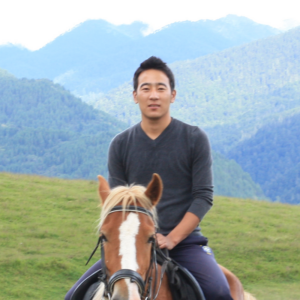
Namgay
Guide - Culture, Trek & Nature Growth in Tourism in Bhutan has also its share of impact on young minds. With tourists freely moving around, the curiosities to know them, talk to them holds ground firmly on young minds . Namgay is one among many youth whose imagination was captured…
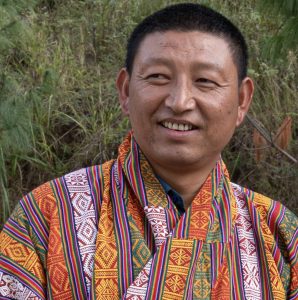
Yonten Phuntsho
Yonten Phuntsho is one of our senior most guide. And well versed on his business. Initially, he conceded an impression of a man of a few words but I was in for surprise with the knowledge of his job, great sense of humour and congenial personality- simply one cannot judge…
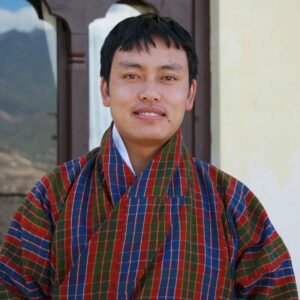
Sonam Pelden
Sonam Palden is smitten by games most notably national sports of Bhutan- Archery. While growing up in beautiful Ura valley in Bumthang, unlike other kid, he played with traditional traditional bows and arrows. He completed his class 12 from Punakha in 2003. Subsequently he pursued his passion for five years…



- Best Months — March, April, May, October, November
- Good Months — June, July, September, December
- Lean Months — January, February, August
What travelers most often ask us before a trip to Bhutan.
Are monument and park entrance fees included in my trip?
No. Since the 2023 policy update, the entry fees are not included and are in addition to the daily SDF (Sustainable Development Fee), you will need to pay for these tickets separately at each location, or your tour operator (like Wind Horse) can include them as a pre-paid “service” in your tour package.
Most Dzongs & Museums charge Nu. 500, with Takstang @1000/
For details on the latest entry fees to the monuments, parks, and attractions, visit Bhutan Entrance fees:
Yes, flights to Bhutan can be affected by weather conditions. Paro Airport is located in a narrow valley and requires visual flying conditions, meaning flights operate only during daylight hours and in suitable weather.
During the monsoon season (June–September), low clouds, rain, or reduced visibility may cause short delays or, in rare cases, cancellations. In winter, early-morning fog can sometimes delay departures. However, Bhutan’s airlines are highly experienced in operating in these conditions, without compromising the safety.
When disruptions occur, airlines usually reschedule flights for the next available weather window. We recommend allowing some buffer time at the start or end of your trip and having flexible onward travel plans.
Wind Horse closely monitors flight operations and assists guests with rebooking and logistics if weather-related changes arise.
Bhutan’s official currency is the Bhutanese Ngultrum (BTN), which is pegged 1:1 with the Indian Rupee, so the two currencies are equal in value. Indian Rupees are accepted in Bhutan.
Yes. Bhutan is considered one of the safest countries in the world for travelers, including solo travelers and solo women travelers. Crime rates are very low, violent crime is rare, and Bhutanese society places a strong emphasis on respect, community, and hospitality.
Solo women travelers generally feel comfortable traveling in Bhutan. Harassment is uncommon, and locals are welcoming and helpful.
When traveling on guided tours or treks, you are accompanied by licensed guides and drivers, which adds an extra layer of safety and support.
As with travel anywhere, we recommend using common sense—being aware of your surroundings, dressing modestly, and following local customs. With these basic precautions, Bhutan is a relaxed, secure, and rewarding destination for solo travel.
The most popular times to visit Bhutan are spring (March–May) and autumn (late September–November), offering the best combination of weather, scenery, and cultural experiences.
- Spring (March–May):
Ideal for nature lovers, with valleys alive with blooming rhododendrons and wildflowers. Temperatures are mild, making it a great season for sightseeing and moderate trekking. - Autumn (late September–November):
Known for the clearest Himalayan views, crisp air, and deep blue skies. This is also the peak season for major festivals (Tshechus) and high-altitude trekking. - Winter (December–February):
An off-peak season with cold nights and early mornings, but generally clear, sunny days and stable weather. Snowfall is mostly limited to high mountain passes. While not suitable for high-altitude treks, winter is ideal for cultural tours and walks in lower valleys and subtropical forests. As most towns and villages in the eastern Bhutan and southern Bhutan are located at lower elevation, winter is best time to visit them. - Summer (June–August):
Warm and pleasant, with occasional monsoon rains, mostly in the evenings or at night. The countryside is lush and green, crowds are fewer, and low-season rates are available.
Independent trekking is not permitted in Bhutan. All trekkers must be accompanied by a licensed Bhutanese guide and a support team, where camp and food arrangements in needed.
Some trekking areas require National Park permits and some even need military clearance and those are not issued without the local tour operator’s undertaking and the presence of guides on the trails.
No. Indian citizens with Indian passport or valid travel document such as Voter IDs do not require a visa to enter Bhutan. However, an Entry Permit is mandatory.