Jomolhari Laya Gasa Trek – Above The Clouds
with Paro Tsechu Festival
Chomolhari Laya Gasa trek
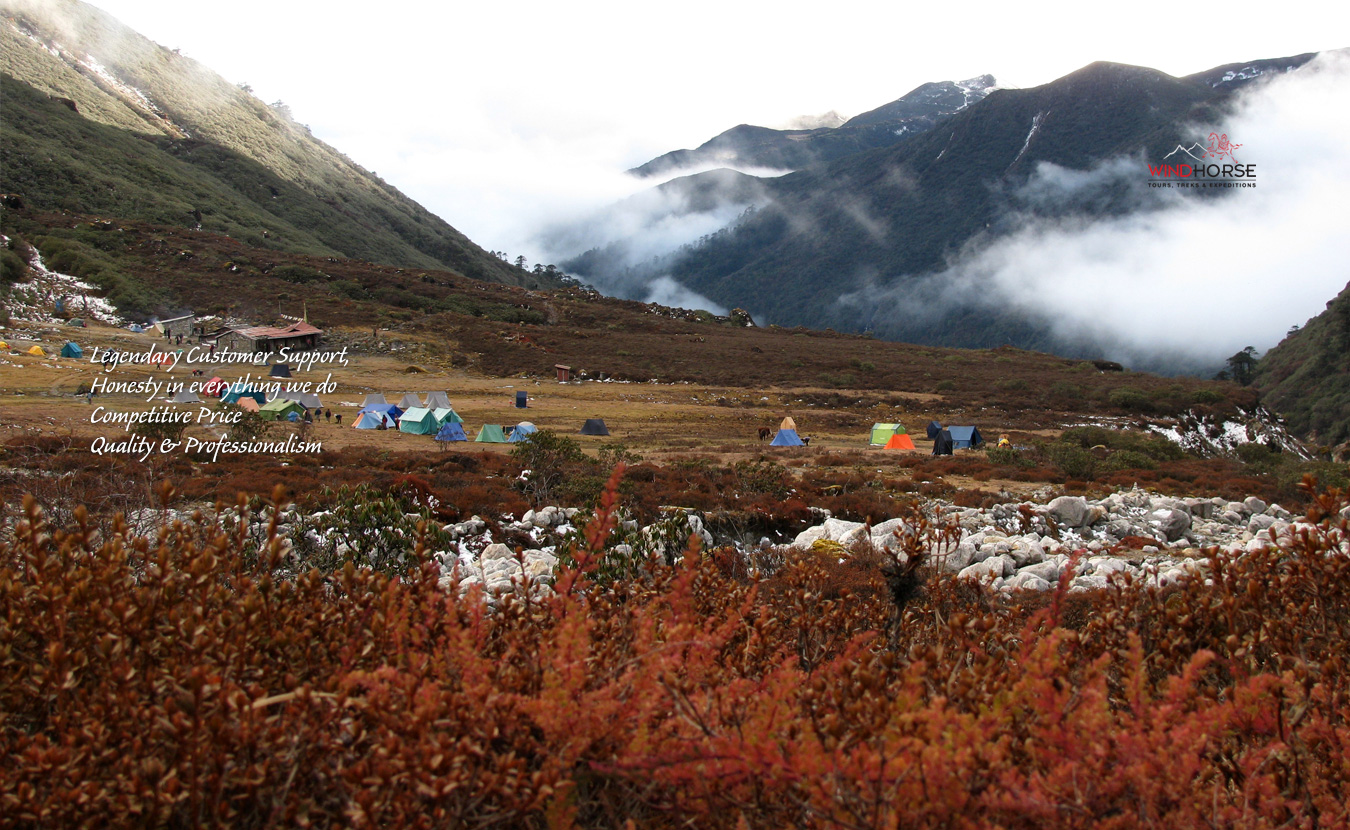
Jomolhari Laya Gasa Trek, also spelled Chomolhari Laya Gasa Trek, is not only one of Bhutan’s finest treks but also ranks among the most spectacular in the world. It offers a remarkable variety of trekking conditions—from scenic farmlands and dense forests to a stunning, high-altitude lunar landscape surrounded by majestic Himalayan peaks. Wildlife sightings are common, including blue sheep, takin, a variety of bird species, and even the elusive snow leopard.
Along the way, you’ll encounter remote Dzongs and scattered highland settlements such as Jangothang, Lingshi, Chebisa, and the unique village of Laya, each offering fascinating cultural insights. This moderately challenging trek forms a loop along Bhutan’s northwestern frontier with Tibet and is widely considered the most visually striking trek in the entire Himalayas.
At Wind Horse Tours, we take pride in having organized this trek as a private journey for over 25 years, and as a small group departure for more than a decade. We have made thoughtful adjustments over time to adapt to changing trail conditions and to enhance the overall experience.
Embark on the extraordinary Jomolhari Laya Gasa Trek, where you will ascend above the clouds for a truly unforgettable adventure. This once-in-a-lifetime journey promises to create enduring memories, deepen your connection with nature and culture, and challenge you in the most rewarding ways.
Day 1–3: In Paro
Arrival in Paro with cultural tours of the valley.
Hike to the iconic Taktsang Monastery (Tiger’s Nest) for acclimatization.
Day 4–6: Begin trek from Shana to Jangothang
Begin trekking through Jigme Dorji National Park.
Gradual altitude gain over three days, culminating at Jangothang Base Camp beneath Mt. Jomolhari.
Day 7: Acclimatization at Jangothang
Rest day with optional hikes offering close-up views of Jomolhari and its glaciers.
Day 8–9: To Lingshi & Chebisa
Cross Nyile La Pass (4,870m) to reach Lingshi.
Continue to the picturesque village of Chebisa, known for its waterfalls and blue sheep sightings.
Day 10–12: Shomulthang, Robultnang to Limithang
Traverse high passes and remote valleys.
Camp near yak herder settlements and spot wildlife like Takins in Tsharijarithang Valley.
Day 13–14: In Laya
Short trek to Laya, Bhutan’s highest settlement.
A day to explore the village and engage with the unique Layap culture.
Day 15: Laya to Gasa-Hot Spring – Punakha
From Laya, it is just about an hour to descend and reach the new road. A local pick-up will drive you till Gasa, where you meet your vehicle.
Spend some time at the hot-springs and then drive to Punakha valley.
Day 16: Punakha & Wangdiphodrang
Spend the day in this low altitude valley and do some sightseeing and take it easy.
Day 17 & 18: Thimphu
Drive to the capital, Thimphu and spend a day and a half here to explore its many attractions.
Day 19: Departure
Transfer to the airport in time for your departure flight.
Activities: Wildlife Bird & Nature, Trekking
Duration: Trek 12 days (including two rest days). total19Days
Max Elevation: 5,005m | Trek Distance: ~217 km
Difficulty: Moderately Strenuous – suitable for fit, experienced trekkers
Best Seasons: Spring (Apr–May) & Autumn (Oct & Nov)
Region: Northwestern Bhutan, bordering Tibet
with Paro Tsechu Festival
Mountain Festival & Royal Highland Festival in Laya
Consider this as a private trip, customised to your preferred dates and designed for you or your family alone. Call or email us and we will work through the possibilities with you.
19-day trip, from 2900 per person. Tell us your dates and group size and we will price it exactly.
Altitudes in metres. Distances and times are on foot only.
Swipe the chart sideways to see the rest of the trip.
We had the privilege of finally taking the Above the Clouds trek we had booked before Covid. It was FABULOUS. I had expected three things: that the trek would be hard, that it would be beautiful, and that Wind Horse would take good care of us. I was not disappointed. The trek was hard, but I expect, for me, it…
Thoughts about Bhutan Sometimes I am in awe and surprised that I really went to Bhutan and experienced what I did. I think it was absolutely amazing. My heart and spirit already jumped on the flight from Kathmandu to Paro. I found the dust, pollution and traffic congestion in Kathmandu difficult to deal with. I tried to look at it…
I apologize for the gap in time it has taken me to send you feedback. Bhutan is a place I will hold dear in my heart for the rest of my life. When people ask me about my experience in Bhutan I have to say "You just have to go there." Our "Above the Clouds" trek was an amazing experience. First…
Yonten Phuntsho is one of our senior most guide. And well versed on his business. Initially, he conceded an impression of a man of a few words but I was in for surprise with the knowledge of his job, great sense of humour and congenial personality- simply one cannot judge…
From the outset, Pema Namgyal knew what he wanted to do in life. He love to keep things simple. Right after finishing his Class 12 from school in Thimphu in 2004, he joined guiding course to aspire to be a guide. Initially he started as cultural guide but with time, he felt…
Guide - Culture, Trek & Nature Growth in Tourism in Bhutan has also its share of impact on young minds. With tourists freely moving around, the curiosities to know them, talk to them holds ground firmly on young minds . Namgay is one among many youth whose imagination was captured…
Answers written for this itinerary. The general Bhutan questions that apply to it are linked from our FAQ page.
The trek is most commonly undertaken during two seasons: spring and autumn. In the spring, the trek should begin after mid-March and end before mid-May. Alternatively, in the autumn season, trekkers should set out after the last week of September and conclude their journey by late November, enjoying clear days and beautiful views.
It is advisable to avoid trekking during the winter months from December to February due to potential snowfall and impassable routes for pack animals. On the other hand, the summer months, spanning from June to September, may bring occasional rainfall but also bring the upper regions of the trek to life with vibrant flowers. These months coincide with the active season for the nomadic communities, adding a unique cultural experience to the adventure.
The Jomolhari Laya Trek is categorized as moderately strenuous by Wind Horse, primarily due to its 12-day duration, which includes two rest days. The trek’s difficulty level varies throughout the journey. In the initial three days, you can expect relatively easy walks, averaging 3-5 hours per day. There are a couple of more demanding days when you’ll trek for a full 7-8 hours.
On an average day, you’ll walk approximately 6 hours, covering a distance of around 10-15 kilometers. Additionally, several mountain pass crossings are encountered, but these typically occur after the fourth day of the trek. By this point, trekkers have acclimated to the altitude, and their physical condition has improved. This gradual progression in difficulty allows trekkers to adapt to the challenges, making it a manageable and rewarding adventure.
Prior trekking experience is not strictly necessary for the Jomolhari Laya Trek, but it can significantly enhance your preparedness and enjoyment of the journey. One should be physically fit and mentally prepared for the weather, terrain, and sleeping in tents for an extended period.
The highest elevation reached on the Above the Clouds Jomolhari Laya Trek is 5005m at Sincela pass between Robluthang and Limithang on the 9th day of the trek.
The maximum Campsite altitude is 4,220m at Shomulthang on the 7th night of camping.
Your first crossing of the high pass is on the 5th day of the trek between Jangothang and Lingshi at Nyile La pass at 4870m.
Due to the well-planned itinerary, and gradual ascent strategies typically employed on the Jomolhari Laya Trek, the likelihood of experiencing altitude sickness is significantly reduced.
If altitude sickness were to occur, it’s likely to become noticeable by the third day of the trek at Jangothang, before embarking on the high mountain passes. This pivotal point in the journey offers trekkers a significant advantage in recognizing any symptoms and taking appropriate action. If such symptoms were to emerge, it is feasible to make a decision to retreat from the trek at this stage, potentially descending to lower altitudes for rest and recovery.
The trek often follows or remains near cell phone towers, with some dead spots in which case there are there are Military Posts with Radios or villages with Radio communication While satellite phones and two-way radios were once carried, improved cell phone coverage has made them less necessary in recent times.
Our experienced guides are trained in basic wilderness first aid and carry essential medical supplies. They can swiftly communicate with our office in Thimphu, enabling us to contact emergency services or arrange evacuations if necessary. It’s vital for trekkers to ensure they have appropriate Travel Insurance coverage to safeguard their trekking experience.
On this trek, we use high quality imported 4 season tents by leading manufacturers such as Mountain Hardware, North Face and Alps Mountaineering for sleeping.
In addition to the sleeping tent, we bring a Mess/dinning tent, also pitch simple pit toilet with a tent cover. We have a separate tent for staffs and Kitchen.
For more details about food, typical day on a trek, visit the our trekking in Bhutan page:
Jomolhari Laya Gasa Trek – Above The Clouds