
07.09.2006 Postak ! Thank you for everything and being patient with our bookings. it was difficult process but was one of my best trips,,sites were magnificant,highlight was Mt. Everest. I just got my pictures today and they are gorgious. We had great guide and driver,very helpful,very caring. Only difficult part was with shefali since she is brought up in USA,she…
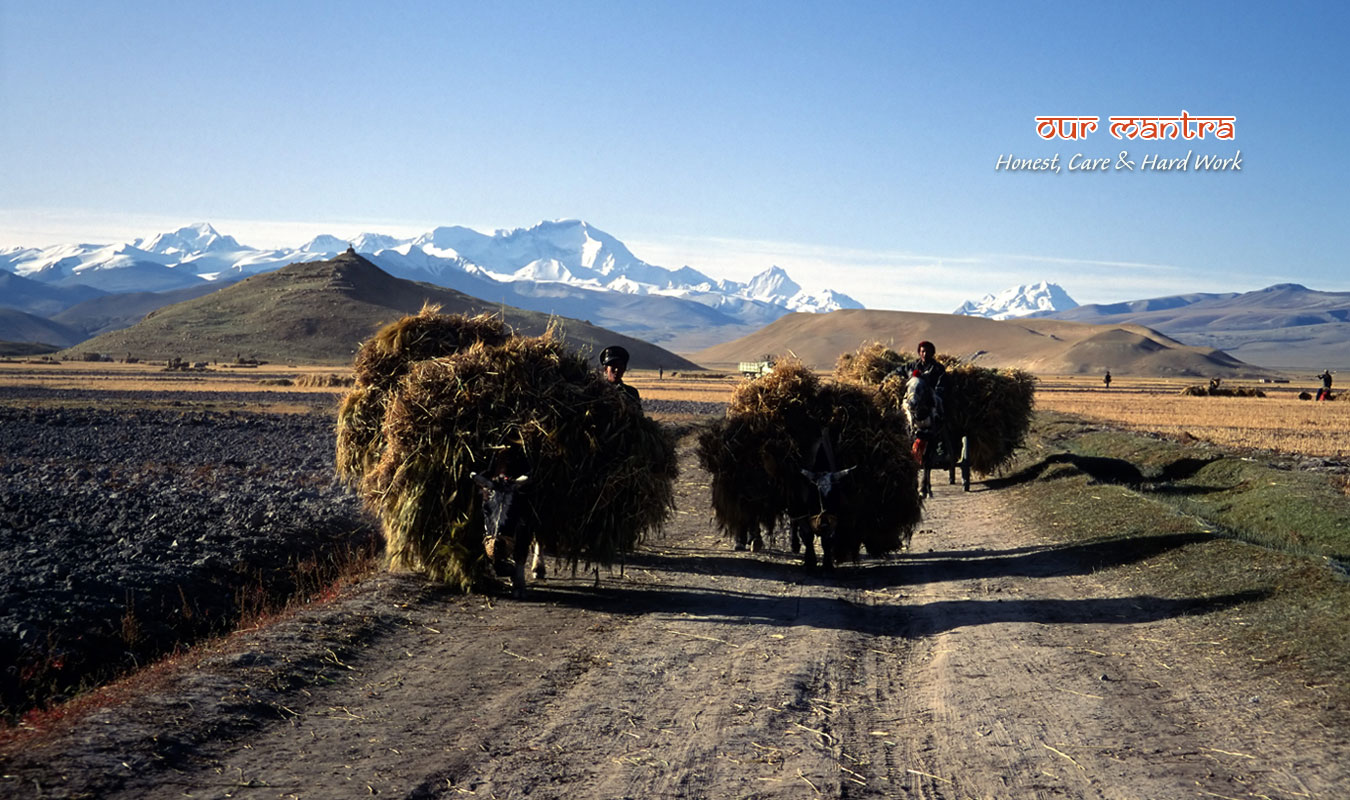
Tibet to Kathmandu Overland Tour via Everest Base Camp
A legendary trans-Himalayan journey from Lhasa to Kathmandu through sacred monasteries, high passes, and the North Face of Everest.
Embark on an unforgettable overland journey from Lhasa, Tibet to Kathmandu, Nepal, traversing some of the world’s most spectacular mountain landscapes. This classic trans-Himalayan route via the North Face of Mt. Everest blends cultural discovery, epic scenery, and light daily activity, with almost-daily easy walks to help you stay active, acclimatize better, and fully experience the landscapes and local culture.
Our adventure begins in the holy city of Lhasa, where we explore the majestic Potala Palace, the sacred Jokhang Temple, and the vibrant Barkhor pilgrimage circuit, while getting gently accustomed to the altitude through short walks around the city. From here, we travel along the legendary Friendship Highway, crossing high passes and turquoise lakes en route to Gyantse and Shigatse, the heartland of Tibetan Buddhism.
As we continue south-west, the route climbs toward the Rongbuk Valley, offering panoramic views of the world’s highest peaks—Everest (8,848m), Lhotse, Cho Oyu, and Makalu. From the base of Everest’s north face, marvel at nature’s grandeur and the mountain’s unmatched majesty before descending from the vast Tibetan Plateau into the lush valleys of Nepal.
This journey from Tibet to Kathmandu via Everest Base Camp is more than a road trip—it’s a balanced adventure of culture, easy walking, and awe-inspiring landscapes across the spiritual and geographic heart of the Himalayas.
Tibet to Kathmandu Overland Tour Outline Itinerary
Day 1: Arrive in Lhasa (3,650m)
Arrive at Lhasa Gonggar Airport and transfer to your hotel. Spend the afternoon resting and acclimatizing to the altitude. In the evening, gather for a welcome dinner and trip briefing. Overnights in a central location 4 star hotel.
Days 2–3: Explore Lhasa – Potala Palace, Jokhang, and Barkhor
Spend two full days exploring the spiritual and cultural treasures of Lhasa. Visit the iconic Potala Palace, the sacred Jokhang Temple, and join pilgrims walking the Barkhor Kora. Explore Sera and Drepung Monasteries, once among Tibet’s largest monastic universities.
Day 4: Drive to Gyantse (3,950m) via Yamdrok Tso Lake
Drive over the Khamba La Pass (4,794m) with sweeping views of Yamdrok Tso, one of Tibet’s most beautiful turquoise lakes. Continue past the Karo La Glacier to the historic town of Gyantse, home to the Kumbum Stupa and Pelkor Monastery.
Overnight in Gyantse at a 4-star hotel.
Day 5: Drive to Shigatse (3,900m)
A short drive through rural landscapes and traditional villages brings you to Shigatse, Tibet’s second-largest city. Visit the impressive Tashilhunpo Monastery, the traditional seat of the Panchen Lama.
Overnight in Shigatse at a a 4-star hotel.
Day 6: Drive to Rongbuk (5,000m) – Mt. Everest Base Camp Area
Today’s drive is long but unforgettable. Cross several high passes including Gyatso La (5,220m) and Pang La (5,150m), offering breathtaking panoramas of four of the world’s tallest peaks—Everest, Lhotse, Makalu, and Cho Oyu. Descend into Rongbuk Valley within Qomolangma (Everest) National Park.
Overnight in Rongbuk at simple clean basic accommodation.
Day 7: Drive to Kyirong or Nyalam Border Region
If the Kyirong border is open, travel there through scenic mountain valleys. Otherwise, continue to Nyalam, near the Nepal border. Overnight in Kyirong or Nyalam in the best available hotel ( 3 star in Nyalam or 4 star in Kyirong)
Day 8: Cross into Nepal and Drive to Kathmandu
After Chinese immigration formalities, walk across the border to meet your Nepalese guide and driver. Enjoy a scenic drive through the foothills and valleys to Kathmandu. Overnight in Kathmandu at a 4- star hotel.
Day 9: Explore Kathmandu
Spend the day exploring the cultural highlights of the Kathmandu Valley, including Swayambhunath Stupa (Monkey Temple), Pashupatinath Temple, and Boudhanath Stupa.
Day 10: Departure or Extension
Transfer to the airport for your onward flight or extend your journey with a tour to Bhutan, Pokhara, or other destinations with Wind Horse Tours.
10-day trip, from 1500 per person. Tell us your dates and group size and we will price it exactly.
Included
- Accommodations in mainly 4 star hotels except for one or two places where best available will be used.
- Daily breakfast and dinner in Tibet and only breakfast when in Kathmandu.
- All transfers and sightseeing as per itinerary.
- Local English speaking Tibetan Guide in Tibet and English speaking representative from Nepal at the border.
- Entrance fees for sights, parks, restricted areas covered by the trip.
- Tibet Permits
- Oxygen Cannister provided and also Oxygen cylinder available inside the vehicle in Tibet.
Not included
- Chinese Visa.
- Flights into Lhasa and out of Kathmandu
- Nepal Visa (can be obtained upon arrival for $25 at the border)
- Lunches
- Optional Tips and gratuities
- Insurance (Health and Emergency medical evacuation recommended)
Tashi
Mr. Tashi is from the Amdo region of Tibet. Studied Tibetan Buddhism and English literature in Varanasi India from for 5 years. He speaks excellent English and some Hindi, and wonderful Mandarin Chinese. His passion for the scenery of his homeland has led him to deepen his knowledge of Tibet’s less traveled paths,…
What travelers most often ask us before a trip to Nepal.
Yes. Most travelers require a tourist visa to enter Nepal. You can obtain a visa on arrival at Tribhuvan International Airport or at major land border crossings. Alternatively, you may apply in advance at a Nepalese embassy or consulate.
The official currency of Nepal is the Nepalese Rupee (NPR).
Nepal’s varied landscapes and seasons offer year-round experiences, from vibrant cultural festivals to Himalayan treks, with each season adding its own charm.The best times to visit Nepal are spring (March–May) and autumn (September–November). These seasons offer stable weather, clear skies, and excellent mountain views.
These months are ideal for popular treks such as the Everest Base Camp Trek and the Annapurna Circuit Trek, as well as cultural tours and scenic mountain flights. October and November are especially popular due to pleasant temperatures, clear visibility, and major cultural festivals.
For wildlife safaris, the best time to visit is October to March, when cooler temperatures and dry conditions provide excellent opportunities for wildlife viewing in national parks such as Chitwan National Park and Bardia National Park.
Spring and autumn are the most popular and best seasons for trekking in Nepal. Spring lasts from March to May, and autumn runs from September to November. These seasons offer stable weather, clear skies, and breathtaking mountain views.
This is the ideal time for iconic routes such as the Everest Base Camp Trek and the Annapurna Circuit Trek, as well as scenic mountain flights near Mount Everest.
Spring brings blooming rhododendron forests, colorful landscapes, and mild temperatures, making trekking especially beautiful. Autumn, on the other hand, offers crystal-clear visibility, dry trails, and comfortable trekking conditions. For these reasons, both seasons are considered the peak trekking periods in Nepal.
The monsoon season, from June to August, brings heavy rainfall, which makes trails slippery and increases the presence of leeches, making trekking more challenging. However, treks in rain-shadow regions such as Upper Mustang, Dolpo, and Nar Phu Valley remain relatively dry and are suitable for trekking during this time.
Winter, from December to February, brings cold temperatures and snowfall at higher elevations, which can make high-altitude trekking difficult. However, lower-altitude treks such as Ghorepani Poon Hill, Everest View Trek, Langtang Valley Trek, Helambu Valley Trek, and Panchase Trek are still accessible and offer peaceful landscapes with fewer crowds.
Spring (March–May) & Autumn (September–November)
These are the best seasons for cultural travel. The weather is pleasant and ideal for exploring heritage sites, temples, and local markets in cities like Kathmandu and Bhaktapur.
October and November are especially vibrant, as Nepal celebrates its two biggest festivals—Dashain and Tihar. Expect colorful decorations, family gatherings, temple visits, and rich cultural traditions across the country.
Summer/Monsoon (June–August)
Cultural tours are still possible, particularly in the mornings when rain is lighter. The countryside is lush and green, though occasional weather-related travel disruptions may occur.
Winter (December–February)
A good time for cultural visits in the Terai region and cities like Pokhara. Clear skies and fewer tourists make sightseeing more relaxed and enjoyable.
Wildlife Safaris & Adventure Activities
October–March is the ideal period for wildlife safaris and adventure experiences. Cooler temperatures and clear skies offer excellent conditions for jungle safaris, wildlife viewing, white-water rafting, paragliding, hot air ballooning, mountain flights, bungee jumping, Skydiving, ziplining, etc.
Yes. You can obtain a visa on arrival at Tribhuvan International Airport. This is the quickest and most convenient option for most travelers.
Visa fees:
- 15 days – USD 30 per person
- 30 days – USD 50 per person
- 90 days – USD 125 per person
If you plan to stay longer, it is advisable to obtain a longer-duration visa upon arrival. Visa extensions are possible but cost more and may require several hours at the immigration office.
Yes. ATMs are widely available in major cities such as Kathmandu and Pokhara, and in some trekking regions like Everest and Annapurna. However, ATMs in remote areas may be unreliable due to power or internet outages. It is advisable to carry sufficient cash when traveling outside major cities.