Bhutan Festival Tour
Dechenphu
Cost breakdown
Price details
Per Person $1400 in twin/double sharing room.
$850 for SDF & Visa fees
$250 Single room Supplement
Incorporate one or more festivals - joyous expression of Buddhist culture
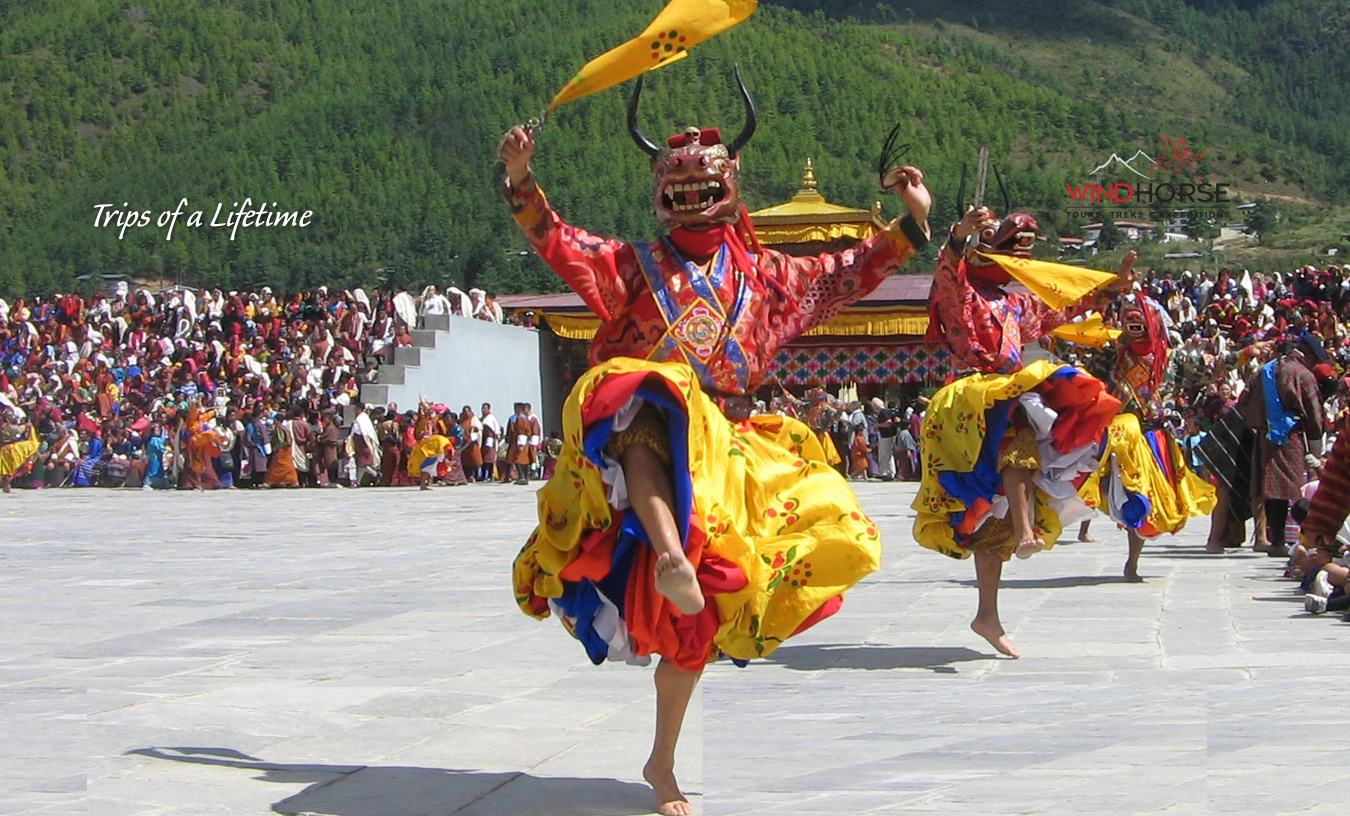
Bhutan Festival Tour is a 8 nights/ nine-day leisurely-paced tour that takes on at least one or multiple colourful festivals in this magical Kingdom .
Bhutan Festival takes one or multiple of Bhutan’s most colourful and popular festivals. Bhutan’s festivals are joyous expressions of its Buddhist culture. It offers Bhutanese an opportunity to become immersed in the meaning of their religion, as well as being an occasions for seeing people and being seen.
People wear their finest traditional clothes, put on their most beautiful jewellery, bring delicious picnic lunch and join in the festivities.
In addition to these festival, this tour covers highlights of Paro, Thimphu, Phobjikha, Wangdue & Punakha valleys, which are Bhutan’s most historic towns and districts. The pace of this tour allows you to fully absorb and appreciate the rich culture, and natural beauty of this peaceful kingdom without feeling that you are bused around.
In the early spring, we attend Punakha Tsechu and Punakha Dromchoe. Bit later into main spring, we attend attend Talo village festival, along with the famous Paro Tsechu festival, where we also see the unfurling of giant Thangka. In the autumn, you’ll see three festivals of Wangdiphodrang, Gangtey and Thimphu tsechu festival.
As these festival periods are extremely popular and therefore the flights and hotels tend to get booked out soon. So plan and book early if you wish to join this exciting tour with small group travelers like you from around the world.
Thimphu:
Thimphu was established as the capital of Bhutan in 1961. Its population is around hundred thousand. It has a youthful exuberance that constantly challenges the country’s conservatism and proud tradition. The ever-present juxtaposition of old and new is just one of its appealing qualities. Crimson-robed monks, Indian labourers, gho- and kira-clad professionals and camera-wielding tourists all strolling on; and nobody, it seems, is in a hurry. Thimphu is the world’s only capital without traffic lights.
During your two full days, we will visit many monuments and attractions of Thimphu, including Tashicho Dzong, the farmers market, Gaint Buddha Statue, Memorial Chorten, Traditional Art School, Indigenous Hospital, Textile museum, Handicraft workshops and more. Thimphu offers the best opportunity to do your own thing. It’s relaxed, friendly and pretty informal, and is most rewarding if you can be the same.
Punakha—Wangdue Valley:
Wangdue and Punakha valley is reached by crossing spectacular Dochula pass. On a clear day, you’ll see panoramic views of snow capped peaks of eastern Himalayan range, including Bhutan’s highest peaks. Punakha and Wangdue towns are located close to each other in one valley.
Punakha was the former winter capital of Bhutan and was established in this location, in part because Punakha is a warmer at a relatively low altitude of 4,100 feet (1300m), allowing for the production of two rice crops each year, along with growth of subtropical fruits such as oranges, mangos, and bananas.
During our stay here, we will visit the impressive Punakha Dzong fortress located at the confluence of Pho and Mo Chu Rivers. We’ll take an easy walk in the valley, visit some of its monasteries, villages, take short drives and enjoy this idyllic countryside dotted with farm houses and terraced hillsides.
Gangtey – Phobjikha Valley:
With the improved road condition in the recent years, we have also added one night in Gangtey also called Phobjikha Valley to this tour. This is a stunningly beautiful glacial valley located at about 2900m with breathtaking landscapes, rich biodiversity, and cultural significance.
The valley is part of the larger Jigme Singye National Park and is a major attraction for tourists seeking natural beauty and tranquility. During the winter months from late October until Feb, it is home to large number of migratory endangered black-necked cranes that arrive from Tibet and Central Asia.
Paro Valley & Takstang:
Emerald green Paro Valley at 7,500ft, is one of Bhutan’s most beautiful and most fertile valley. Numerous shrines, fortresses and farm houses dot the landscape and graceful willow trees grow along the edge of Pachhu river, which passes through paddy fields and farmlands.
During our time here, visit the ruins of Drugyal Dzong, a fortress which protected the valley against invaders from north. Visit beautiful 7th century Kichu Lhakhang temple, see many beautiful Buddhist wall paintings and iconography inside Dungtse Lhakhang, built in 1421. Among others you will also visit Bhutan National museum, housed in an ancient watchtower and visit Paro Rinphung Dzong, one of the most beautiful fortress /monastery in Bhutan.
We also dedicate a full day for excursion to famous Taktsang (Tiger’s nest) monastery, an quintessential Bhutan travel experience. We can arrange pony ride for uphill part.
Departure
Transfer to the airport according to your departure flight schedule.
Please note that the order of the itinerary, duration in each valley is altered based on the location of the festivals and events. For more information submit Request Detailed itinerary form.

Activities: Culture Tours, Festival Tours
Dechenphu
Per Person $1400 in twin/double sharing room.
$850 for SDF & Visa fees
$250 Single room Supplement
Druk Wangyal & National Day
Per Person $1400 in twin/double sharing room.
$850 for SDF & Visa fees
$250 Single room Supplement
Punakha Dromcho & Tsechu Festival
Per Person $1400 in twin/double sharing room.
$850 for SDF & Visa fees
$250 Single room Supplement
Talo & Paro Festivals
Per Person $1400 in twin/double sharing room.
$850 for SDF & Visa fees
$250 Single room Supplement
Wangdue & Thimphu Festival
Per Person $1400 in twin/double sharing room.
$850 for SDF & Visa fees
$250 Single room Supplement
Consider this as a private trip, customised to your preferred dates and designed for you or your family alone. Call or email us and we will work through the possibilities with you.
9-day trip, from 1400 per person. Tell us your dates and group size and we will price it exactly.
Anand, Thank you for your most warm and articulate email. There is no need for you to apologize for the timing of it. We hope you have been busy in a good way in the office helping many other travelers as they get to enjoy your wonderful country. Firstly, we want to say thank you and tell you how much…
Hi Anand, We had a great trip with Tsering and Yamraj. The ceremony in the temple at Gangtey was special and certainly a highlight. The festivals with mask dancing were fantastic. And, of course, the whole day at Tiger’s Nest was wonderful. Thanks to Yamraj for helping encourage Deborah to make it all the way and for carrying her pack…
Dear Anand, First, I would like to thank you and the entire staff of Wind Horse for the effort spent to set up our tours. We greatly appreciate the way that we were kept informed from the initial booking through our final departure. Your ground staff, both guides and drivers, were always well informed. In general both tours were very…
Guide - Culture, Trek & Nature Growth in Tourism in Bhutan has also its share of impact on young minds. With tourists freely moving around, the curiosities to know them, talk to them holds ground firmly on young minds . Namgay is one among many youth whose imagination was captured…
Yonten Phuntsho is one of our senior most guide. And well versed on his business. Initially, he conceded an impression of a man of a few words but I was in for surprise with the knowledge of his job, great sense of humour and congenial personality- simply one cannot judge…
Sonam Palden is smitten by games most notably national sports of Bhutan- Archery. While growing up in beautiful Ura valley in Bumthang, unlike other kid, he played with traditional traditional bows and arrows. He completed his class 12 from Punakha in 2003. Subsequently he pursued his passion for five years…
What travelers most often ask us before a trip to Bhutan.
Are monument and park entrance fees included in my trip?
No. Since the 2023 policy update, the entry fees are not included and are in addition to the daily SDF (Sustainable Development Fee), you will need to pay for these tickets separately at each location, or your tour operator (like Wind Horse) can include them as a pre-paid “service” in your tour package.
Most Dzongs & Museums charge Nu. 500, with Takstang @1000/
For details on the latest entry fees to the monuments, parks, and attractions, visit Bhutan Entrance fees:
Yes, flights to Bhutan can be affected by weather conditions. Paro Airport is located in a narrow valley and requires visual flying conditions, meaning flights operate only during daylight hours and in suitable weather.
During the monsoon season (June–September), low clouds, rain, or reduced visibility may cause short delays or, in rare cases, cancellations. In winter, early-morning fog can sometimes delay departures. However, Bhutan’s airlines are highly experienced in operating in these conditions, without compromising the safety.
When disruptions occur, airlines usually reschedule flights for the next available weather window. We recommend allowing some buffer time at the start or end of your trip and having flexible onward travel plans.
Wind Horse closely monitors flight operations and assists guests with rebooking and logistics if weather-related changes arise.
Bhutan’s official currency is the Bhutanese Ngultrum (BTN), which is pegged 1:1 with the Indian Rupee, so the two currencies are equal in value. Indian Rupees are accepted in Bhutan.
Yes. Bhutan is considered one of the safest countries in the world for travelers, including solo travelers and solo women travelers. Crime rates are very low, violent crime is rare, and Bhutanese society places a strong emphasis on respect, community, and hospitality.
Solo women travelers generally feel comfortable traveling in Bhutan. Harassment is uncommon, and locals are welcoming and helpful.
When traveling on guided tours or treks, you are accompanied by licensed guides and drivers, which adds an extra layer of safety and support.
As with travel anywhere, we recommend using common sense—being aware of your surroundings, dressing modestly, and following local customs. With these basic precautions, Bhutan is a relaxed, secure, and rewarding destination for solo travel.
The most popular times to visit Bhutan are spring (March–May) and autumn (late September–November), offering the best combination of weather, scenery, and cultural experiences.
Independent trekking is not permitted in Bhutan. All trekkers must be accompanied by a licensed Bhutanese guide and a support team, where camp and food arrangements in needed.
Some trekking areas require National Park permits and some even need military clearance and those are not issued without the local tour operator’s undertaking and the presence of guides on the trails.
No. Indian citizens with Indian passport or valid travel document such as Voter IDs do not require a visa to enter Bhutan. However, an Entry Permit is mandatory.
Bhutan Festival Tour