

 +1 612 869 4949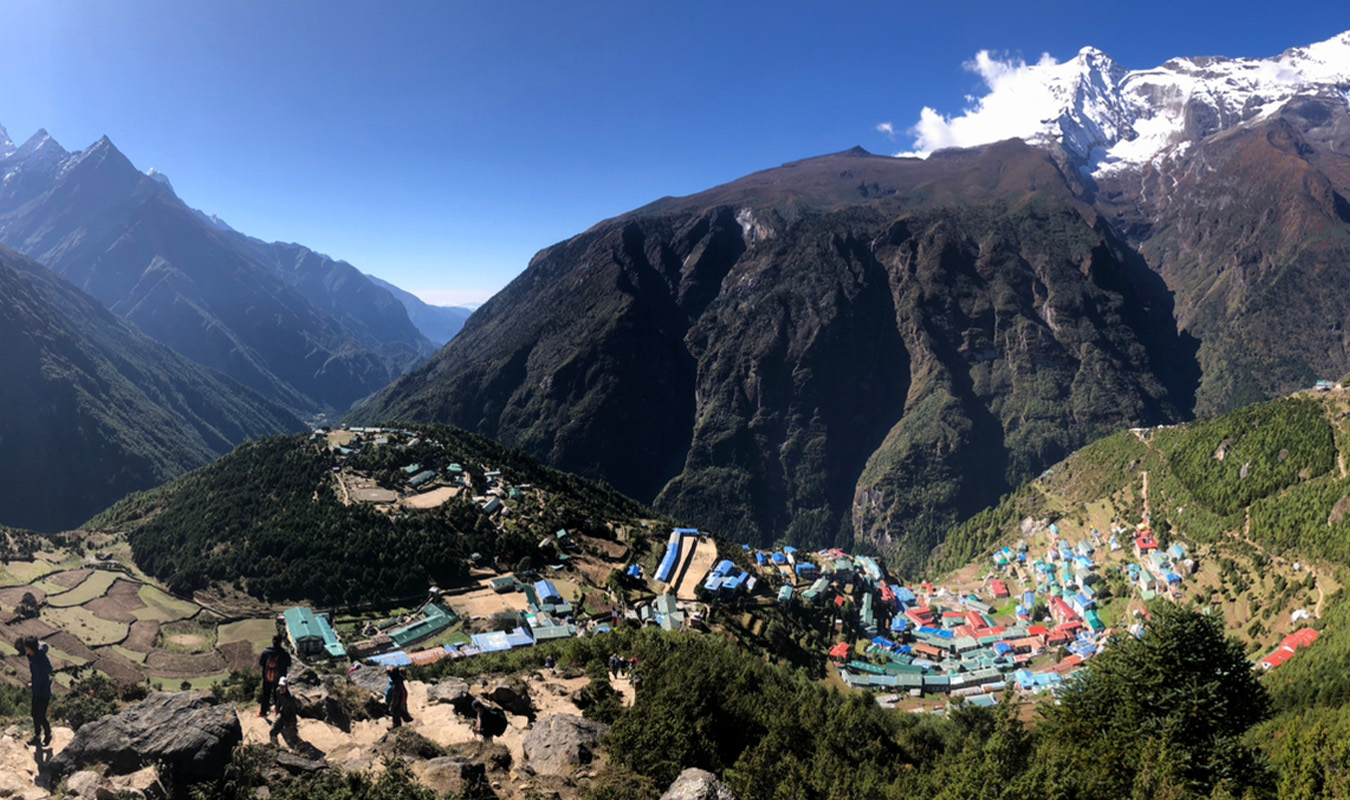

Everest Base Camp Trek with Helicopter Return
Everest Base Camp Trek with helicopter exit
-

Duration
13 Days -
 Trekking
 -
 Extension Tour
 -
Strenous

 Overview
 Costs
Costs Included
 Itinerary
 Trip Photos
Everest Base Camp Trek with Helicopter Return: Ultimate Adventure with Aerial Finale
Embark on the classic Everest Base Camp route, beginning with a scenic flight to Lukla. Trek through lush forests, Sherpa villages, and ancient monasteries, immersing yourself in the rich cultural tapestry of the Khumbu region. Reach Everest Base Camp (5,364 m) and witness the breathtaking sunrise from Kala Patthar (5,560 m), offering panoramic views of Everest and neighboring peaks.
Instead of retracing your steps, enjoy a thrilling helicopter flight back to Kathmandu from Gorak Shep. This aerial journey provides stunning bird’s-eye views of the Himalayas, including Everest, the Khumbu Valley, and surrounding glaciers—an unforgettable experience that you can’t get on foot.
Highlights of the Everest Base Camp Trek with Helicopter Return
- Explore Kathmandu’s UNESCO World Heritage Sites: Wander through the historic Durbar Squares and visit sacred landmarks like Swayambhunath, Boudhanath Stupa, and Pashupatinath Temple for a glimpse into Nepal’s spiritual and architectural heritage.
- Iconic Mountain Flight to Lukla: Begin with a thrilling flight over Himalayan foothills to Lukla—an unforgettable start to your trek.
- Cultural Immersion in Sherpa Heartland: Trek through Sherpa villages, experience warm hospitality, explore ancient monasteries, and immerse yourself in Sherpa culture.
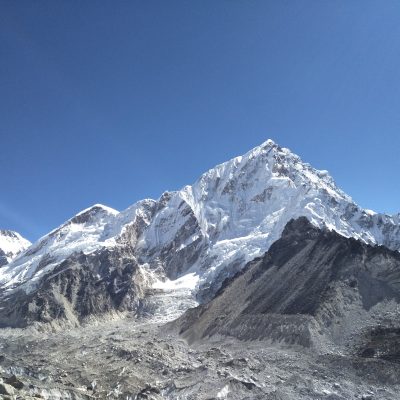
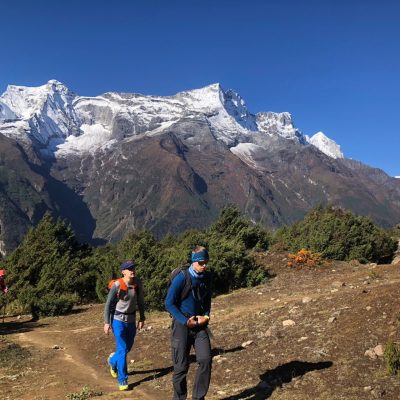
- Spectacular Himalayan Vistas: Admire towering peaks—Everest (8,848 m), Lhotse (8,516 m), Nuptse (7,861 m), Pumori (7,161 m)—that define the Khumbu skyline.
- Everest Base Camp (5,364 m: Reach the legendary Everest Base Camp by the Khumbu Glacier and icefall, a lifelong dream for many trekkers.
- Kala Patthar Sunrise (5,560 m): Rise early for a pre-dawn hike to Kala Patthar and watch a golden sunrise illuminating Everest, Lhotse, Nuptse, and Pumori.
- Helicopter Return from Gorak Shep: End with a scenic helicopter flight back to Kathmandu, enjoying breathtaking aerial views of Everest and the Khumbu region.
Classic EBC Trek vs Helicopter Return Trek
- Return Route: The Classic EBC Trek involves retracing the entire route back on foot over 3–4 days, while the Everest Base Camp Trek with Helicopter Return skips the descent by flying directly from Gorak Shep to Kathmandu.
- Time & Itinerary: The Classic EBC Trek typically spans 12–16 days, whereas the Everest Base Camp Trek with Helicopter Return can be completed in 10–12 days.
- Physical Strain: The Classic EBC Trek’s extended downhill trek can be physically demanding, especially on the knees and ankles, whereas the Helicopter Return Trek minimizes by eliminating the return hike.
- Scenic Experience: The Classic EBC Trek offers complete ground-level immersion with more time on the trail and extended interaction with locals, while the Everest Base Camp Trek with Helicopter Return concludes with a breathtaking aerial view of the Himalayas.
- Safety & Altitude: The gradual descent in the Classic EBC Trek allows for natural acclimatization and recovery, whereas the Helicopter Return Trek’s rapid descent by air helps reduce exposure to high elevation, minimizing the risk of altitude-related illnesses.
- Cost: The Classic EBC Trek is more economical overall, involving basic teahouse accommodations and trekking throughout, while the Everest Base Camp Trek with Helicopter Return involves a higher cost but compensates by reducing the number of days.
- Ideal For: The Classic EBC Trek is best suited for those with flexible schedules, a strong fitness level, and a desire for full immersion trekking, whereas the Everest Base Camp Trek with Helicopter Return is perfect for time-conscious travelers, senior participants, or anyone seeking a high-comfort, high-impact adventure with a spectacular conclusion.
Why Choose the Everest Base Camp Trek with Helicopter return?
The Everest Base Camp Trek with Helicopter Return is a thoughtfully designed adventure that delivers the full trekking experience through the Khumbu region—complete with cultural encounters, dramatic landscapes, and the iconic Everest Base Camp—followed by a spectacular helicopter exit from Gorak Shep.
Everest Base Camp Trek with Helicopter Return itinerary
Day 1. Arrival in Kathmandu
Day 2. In Kathmandu
Day 3. Fly to Lukla-Trek to Phakding
Day 4. Trek from Phakding to Namche Bazaar
Day 5. In Namche Bazaar
Day 6. Trek from Namche Bazaar to Tengboche
Day 7. Trek from Tengboche to Dingboche
Day 8. Acclimatization day – Excursion to Nangkartshang hill
Day 9. Trek from Dingboche to Lobuche
Day 10. Trek from Lobuche to Gorakshep – Excursion to Everest Base Camp
Day 11. Hike to Kala Patthar-Fly from Gorakshep to Kathmandu
Day 12. Free day in Kathmandu
Day 13. Departure
Overview
Trip Type
Trekking
 Activities Included
 Accommodation
3-4* hotels with modern amenities in Kathmandu, tea houses/village lodges during the trek.
Accommodation
3-4* hotels with modern amenities in Kathmandu, tea houses/village lodges during the trek.
 Meal
Only breakfast in Kathmandu with one welcome dinner, while all meals are included during the trek
Meal
Only breakfast in Kathmandu with one welcome dinner, while all meals are included during the trek
 Best Seasons
Best during the spring and the autumn.
Best Seasons
Best during the spring and the autumn.
 Route
Kathmandu-Lukla-Phakding-Namche-Tengboche-Dingboce-Lobuche-Gorakshep-Kathmandu
Route
Kathmandu-Lukla-Phakding-Namche-Tengboche-Dingboce-Lobuche-Gorakshep-Kathmandu
 Best Months
March, April, May, October, November
Best Months
March, April, May, October, November  Good Months
February, September
Good Months
February, September  Lean Months
June, July, August
Lean Months
June, July, August  Not Recommended Months
January, December
Not Recommended Months
January, December Detailed Itinerary
Expand AllArrival in Kathmandu
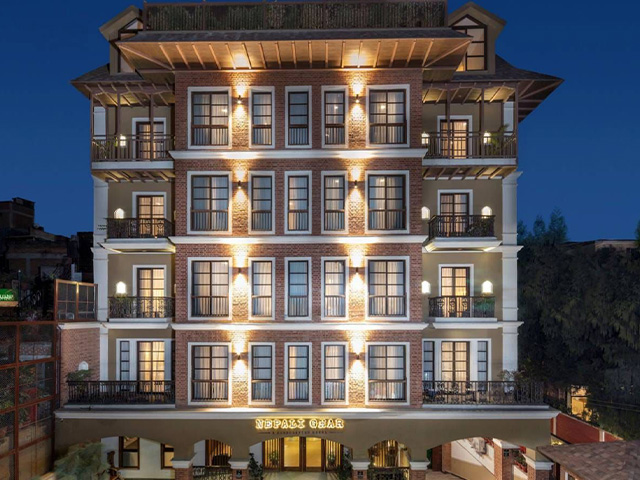
Upon your arrival at Kathmandu airport, a Wind Horse representative will meet and greet you, and transfer you to your hotel. No activities are planned for this day, so you will have the rest of the day at your leisure until the evening.
Later in the evening, your trip guide will meet you and present you with a brief orientation about the trek. After the briefing, you will enjoy dinner at a traditional Nepalese restaurant with a cultural performance. Overnight in Kathmandu.

 Altitude:
1350m
Altitude:
1350m
In Kathmandu
Today, you will visit three UNESCO World Heritage Sites in the Kathmandu Valley: Kathmandu Durbar Square, Boudhanath Stupa, and Pashupatinath Temple.
Kathmandu Durbar Square is one of the three Durbar (palace) squares in Kathmandu valley. Kathmandu Durbar Square is rich with its intricate wood carving and its history. Also known as the “Musuem of Temples” there are over 50 temples in the square. You will explore the area around the former palace of the kings of Nepal, viewing various temples and monuments.
Following the visit, you will drive to Boudanath Stupa. Boudanath Stupa is one of the largest Buddhist stupa in Nepal and also a World Heritage Site. Boudanath signifies peace and tranquility, and is a Centre of religious and spiritual significance. You will see thousands of pilgrims circumambulating the stupa, you will circumambulate with pilgrims and visit the surrounding monasteries.
Afterward, you will proceed to Pashupatinath Temple. The Pashupatinath temple is situated on the banks of the Bagmati river and is one of the most revered Hindu temple in Nepal. The main temple complex is not accessible to non-Hindus, but you can explore around the periphery of the temple complex which is quite large and impressive. Overnight in Kathmandu.

 Duration:
5-6hrs
Duration:
5-6hrs
Fly to Lukla-Begin trek to Phakding
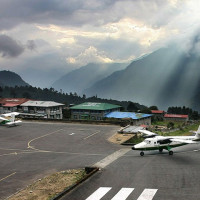
The mountain flight into Lukla is spectacular, and the landing is an exciting experience. One end of the runway is 60 meters higher than the other. The flight is typically on a small Dornier or Twin Otter aircraft, with duration of around 25–30 minutes.
Upon arrival at Lukla (2860m), you will meet your porters before commencing the trek towards Phakding. You will begin your Everest Base Camp Trek with Helicopter return from Lukla. You will descend gradually for about 2 hours to Thado Koshi, and then you will make your first ascent, gradually uphill all the way to Phakding (2610m). It takes about 2 hours from here to reach Phakding. Overnight in Phakding.
Please be advised that during the high season (March, April, May, October, and November), flights to Lukla are routed through Ramechhap (Manthali) airport, approximately a 4-5 hours’ drive away from Kathmandu. To accommodate this, you must start early (several hours before dawn around 2AM).
 Altitude:
Lukla at 2860m/Phakding at 2610 m
Duration:
3-4hrs trek, Approx. 8kms
Altitude:
Lukla at 2860m/Phakding at 2610 m
Duration:
3-4hrs trek, Approx. 8kms
 Tea House
Trek from Phakding to Namchhe Bazaar
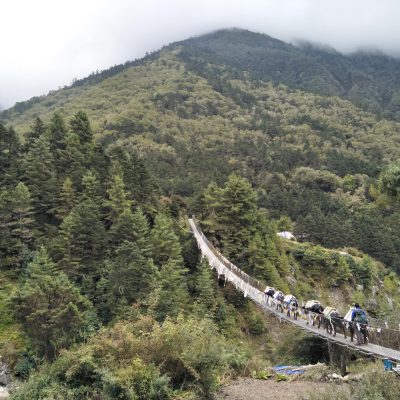
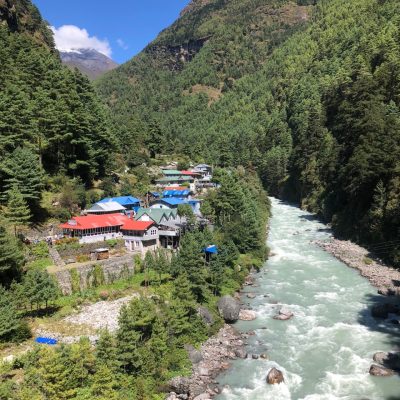
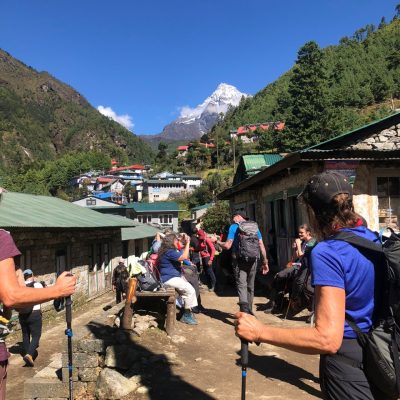
Following the Dudh Koshi River, the trail traverses through Sherpa settlements such as Bengkar and Chumao, and then enters into the Sagarmatha National Park at Monjo. You will than cross over the Hillary suspension bridge, and continue with a steep uphill climb to Chautara, where you get the first glimpse of Everest through the trees.
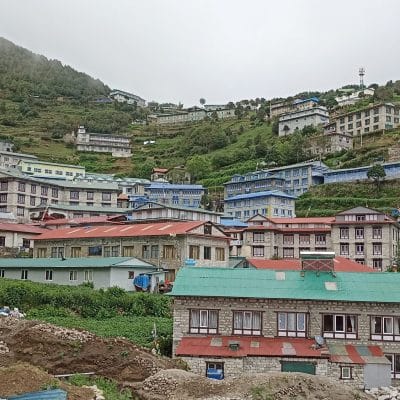
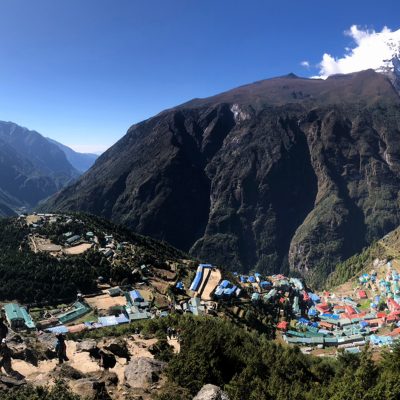
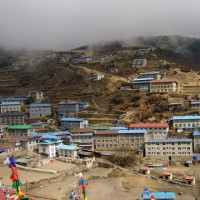
You will continue the ascent until you reach the vibrant Namche Bazaar (3440m), the pulsating heart of the Sherpa community, offering accommodations, cafes, and stores vending souvenirs and trekking essentials. Namche Bazaar serves as an ideal location to procure any forgotten items and acclimatize to the altitude for the remainder of the day. Overnight in Namche Bazaar.
Altitude:
3440m
Duration:
5-6hrs, Approx. 11kms. Elevation gain - 820m
Tea House
Namche Bazaar(acclimatization day)
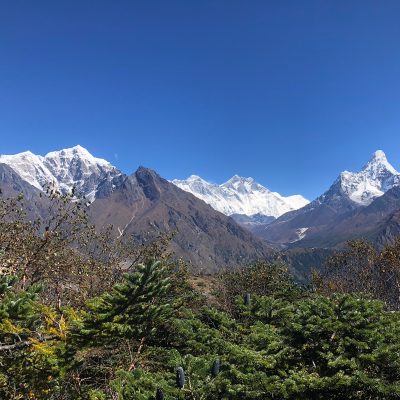
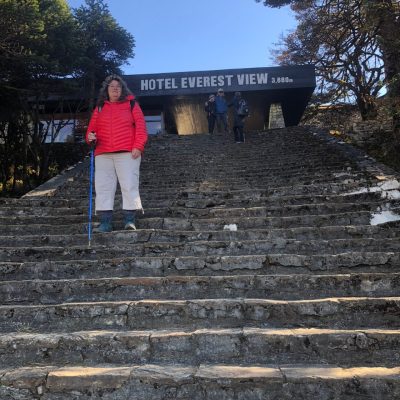
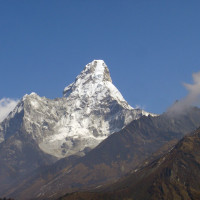
Today is your acclimatization day, it is important to acclimatize so that your body get used to the ever increasing altitude. To do this you will embark on a short hike to Everest View Hotel at Syangboche, situated at an altitude of 3880m. The Everest View Hotel is considered to be one of the best vantage point, offering breathtaking views of the mountains such as Mt. Everest, Ama Dablam, Lhotse, Nuptse and other peaks.
After relishing at the panoramic scenery, you also have the option to visit Khumjung village. A brief descent on the other side from the Hotel Everest view leads you to the large village of Khumjung, home to Hillary’s School. Following the visit, you will descend back to Namche, where you have the rest of the afternoon to relax or explore on your own. The whole journey including the Everest View Hotel will take about 5-6 hours round trip. Overnight in Namche Bazaar.
Altitude:
3440m
Duration:
5-6hrs
Tea House
Trek from Namche Bazaar to Tengboche
After a short climb out of Namche Bazaar, you’ll arrive at Kyangjuma, a spot with tea shops, where the trail from Khumjung also merges with the main Everest Base Camp Trek trail. The views of Everest and Ama Dablam are excellent from this part of the trek. The hike goes past forests and open hillside over a straight forward trail with few uphill sections. Continue by passing through the small settlement of Sanasa, from where the trail descends to the river at Phunki tenga (3300m).
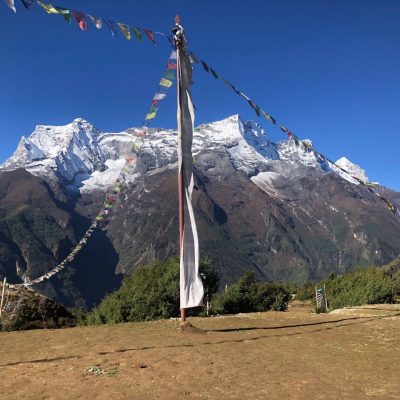
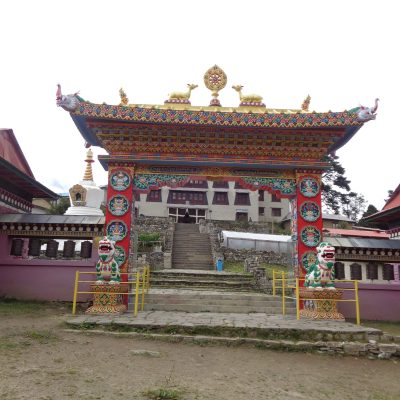
Hereafter, the trail ascends steeply through pine and rhododendron forests, following the side of a hill to reach the saddle on which the Tengboche Monastery sits at 3870m. On a clear day, the views are breathtaking through the rhododendron trees, showcasing the Himalayan giants such as Kwangde, Taboche, Everest, Nuptse, Lhotse, Ama Dablam, Kantega, and Thamserku. Visit Tengboche Monastery, the largest one in the Khumbu region. Overnight in Tengboche
Altitude:
3860m
Duration:
5-6hrs, Approx. 10kms. Ascent 780m, Descent 350m, Elevation gain - 309m
Tea House
Trek from Tengboche to Dingboche
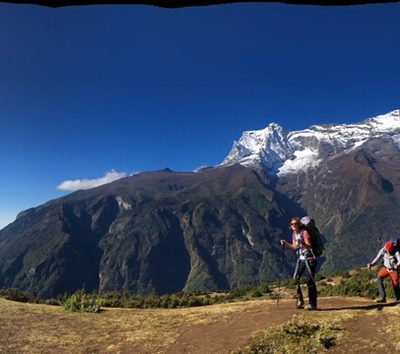
Descend through a forest of rhododendrons, birches, and conifers to reach Deboche (3820m), a village with a few lodges and a nunnery. Cross a beautiful hanging bridge and ascend to Pangboche village (3980m). There is an option to visit Pangboche Monastery, situated higher up than the village. After passing Pangboche, the trail ascends above the tree line, entering alpine meadows of scrub juniper and, in summer, a profusion of wildflowers.
Along the way you will encounter several yak herders’ camps and, after crossing a river and ascending a small ridge, arrive at Dingboche (4410m). A large village offering outstanding mountain views. Dingboche is also the only place in the region where barley is grown, and you will see old houses scattered around. You will arrive early, so you have plenty of time to wander around. Overnight in Dingboche.
Altitude:
4410m
Duration:
5-6hrs, Approx. 11kms, Descent 150m, Ascent 600m, Elevation gain: 550m
Tea House
Acclimatization day - excursion to Nangkartstang hill
At this stage of the trip, a second acclimatization day is essential due to the significant altitude gain. You have the option to take a short acclimatization hike to Nangkartshang hill.
The hill rises to the north of Dingboche village standing at nearly 5,100m. You’ll have panoramic views of peaks such as Taboche, Thamserku, and Ama Dablam. From this vantage point, enjoy vistas looking down onto the Imja Khola and Pheriche Valleys. Afterward the visit return to Dingboche for the night. Overnight in Dingboche.
Altitude:
Nangkartshang hill at 5073m
Duration:
4-5hrs, Approx. 5kms(round trip), Altitude change about 675m up and down.
Tea House
Trek from Dingboche to Lobuche
Leaving Dingboche, the path gently ascends through the highlands, characterized by sparse alpine shrubs. Cross a gushing stream, and after a brief climb, reach Thugla (4600m), the designated lunch stop for the day.
From Thugla, the ascent becomes steeper, passing by stone memorials adorned with colorful prayer flags, constructed in memory of departed souls of climbers. Continuing onward, after a short while, you will arrive at the small settlement of Lobuche (4950m).
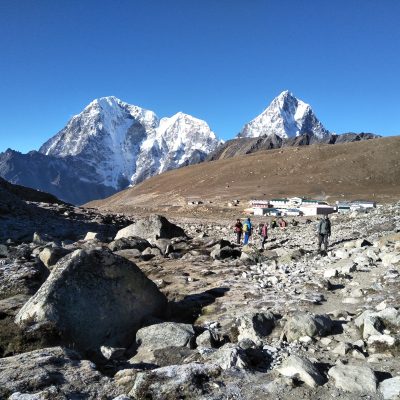
The village offers massive mountain vistas of Nuptse, Lobuche, and Pumori. In the evening, you can take a stroll along the side hills to aid in acclimatization. Overnight in Lobuche.
Altitude:
4940 m
Duration:
4-5hrs , Approx. 8kms, Elevation gain: 550m
Tea House
Trek from Lobuche to Gorakshep-Excursion to Everest Base Camp
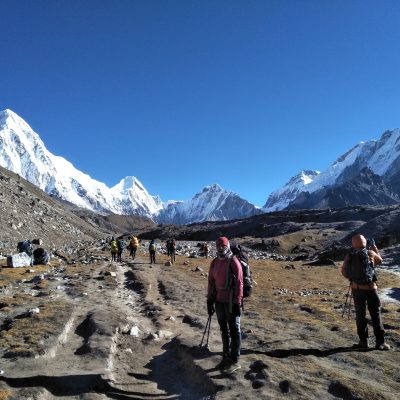
Today is one of the most anticipated days of the trek as you make our way to Everest Base Camp. The higher elevation makes today’s trek quite challenging. The first part of the journey involves a flat walk, and soon the trail weaves over undulating rocky terrain and glaciers until you reach Gorakshep (5,164m).
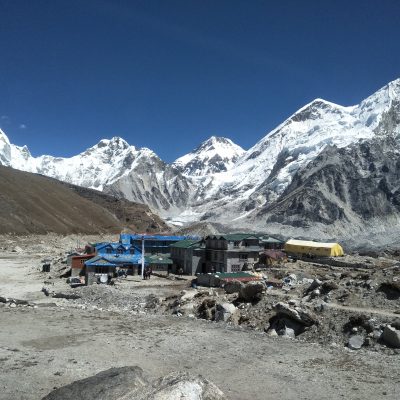
Gorakshep is a small and the last permanent settlement with trekking lodges, clinging to the edge of the Khumbu Icefall. Take a short break for lunch, and then continue further afield alongside the Khumbu glacier moraine for another hour and a half to reach Everest Base Camp (5,364m).
Congratulations on reaching the base camp! Take pictures and soak in the surrounding views of peaks, the Khumbu Glacier, Khumbu Icefalls, and the colorful expedition tents in contrast to the surroundings and retrace your steps back to Gorakshep. Overnight in Gorakshep.
Altitude:
Everest Base Camp at 5364m/Gorakshep at 5164m
Duration:
6-7hrs, Appox. 12kms, Ascent: 390m, Descent 150m
Tea House
Hike to Kalapatthar-Fly from Gorakshep to Kathmandu
Rise early for a short yet challenging hike to Kala Patthar (5,560m), ascending approximately 400m in an hour over a distance of mere 1.5 KM. (Note that recent measurements put Kala Patthar over 5600m.) After departing Gorakshep, the trail ascends sharply. After about a 100m climb, you’ll be treated with views of Lingtren, Khumbutse, and Changtse.
Continuing the climb, a grand panorama of the Khumbu glacier and Nuptse massif unfolds. The final ascent to the rocky viewpoint of Kala Patthar places you in the midst of an unbelievable Himalayan panorama, featuring peaks, icefalls, and glaciers.
After enjoying the beautiful moment, you will then descend back to Gorakshep for breakfast. After breakfast you will board a helicopter and fly back to Kathmandu, culminating this incredible journey with everlasting memories of the experiences encountered during the Everest Base Camp Trek with Helicopter return. Overnight in Kathmandu.
Altitude:
5540m at Kalapatthar
Duration:
3hrs, Approx. 3kms
Free day in Kathmandu
We have set aside this day as a free day, which you can spend as you please. You might wish to go souvenir shopping for your loved ones or, if you prefer, you can request a sightseeing tour of the Kathmandu Valley to witness its unique culture and history. Overnight in Kathmandu.
Departure
Transfer to the airport for your departure flight.
Cost Information
The cost is based on no. of participants to offer the lowest possible cost.
Included
- All transfers by private vehicle.
- 4 nights’ accommodation in 3-4* category hotels in Kathmandu.
- 8 nights’ accommodation in a tea house during the trek with an attached bathroom where possible.
- Only breakfast during the stay in Kathmandu.
- Three standard meals (breakfast/lunch/dinner) and with some hot drinks(tea/coffee) during the trek.
- One welcome/farewell dinner with a cultural performance in Kathmandu.
- 1 full day guided city tour in Kathmandu.
- English-speaking licensed trekking guide along with a porter (1 porter for every two trekkers).
- One way airfare between Kathmandu/Manthali-Lukla.
- Return flight from Gorakshep to Kathmandu in a helicopter.
- 1 hour sauna and steam along with massage after the completion of the trek.
- First aid kit, duffel bag, and trekking map.
- Trekking staff accommodation, wages, meals, trekking gears, and insurance.
- All necessary paperwork and permits for the trek (TIMS/National Park Fee/Rural Municipal Fee).
- All government tax and service charges.
Not included
- Nepal Visa.
- International airfare.
- Meals other than listed (lunch and dinner in Kathmandu).
- Personal expenses (laundry, telephone, bar, beverages).
- Bottled/boiled water, battery recharge, Wi-Fi and hot showers during the trek.
- Tips and gratuities to Guide, Porter and driver.
- Travel medical insurance covering rescue and emergency evacuation.
- Personal trekking gears and equipment’s.
- Trip cancellation cost due to your health, weather condition, political situation, and any other unforeseen events.
- Any other expenses other than the listed above.
Trip Photos
FAQs
- What is the Everest Base Camp Trek with Helicopter Return?
This Everest Base Camp Trek with Helicopter Return combines the classic Everest Base Camp journey with a scenic helicopter flight back to Kathmandu from Gorak Shep.
You follow the traditional route through the Khumbu region on foot, experiencing Sherpa culture and Himalayan landscapes, and then return by helicopter from Gorak Shep, avoiding the long descent.
- What makes the Everest Base Camp Trek with Helicopter Return so special?
It eliminates 3–4 days of descent on foot, alleviating fatigue and minimizing risk to knees and joints. It also avoids common weather-related flight cancellations from Lukla, offering a smoother and more flexible finish to your trek.
Also, it transforms your descent into an aerial adventure, offering unmatched views of Himalayan giants like Everest, Lhotse, Nuptse, Ama Dablam, and the Khumbu Glacier
- How long does the Everest Base Camp Trek with Helicopter Return take?
The trek typically takes 12–13 days, including arrival, sightseeing, trekking, acclimatization days, and the helicopter return. This shorter itinerary is ideal for those with limited time.
- How challenging is this trek?
This trek is considered moderate to moderately challenging. You can expect 4–8 hours of trekking daily with steady accents at high altitude, reaching 5,644 meters (Kala Patthar). While no technical climbing is required, good physical fitness and stamina are essential.
- When is the best season to go?
The best time to trek to Everest Base Camp is during Spring (March–May) and Autumn (September–November). These seasons offer clear skies, excellent visibility, and stable weather.
Besides Winter (December–February) and monsoon (June–August) are technically possible but come with risks such as intense cold, rain, muddy trails, and limited services, making them less favorable.
- Who is this trek suitable for?
This trek is perfect for:
- Travelers with limited time
- Those wanting a full Everest experience without the long return walk
- Adventurers seeking a more comfortable and time-efficient option
Previous trekking experience is helpful but not mandatory.
- What is the highest altitude reached during the trek?
The highest altitude reached during this Everest Base Camp Trek with Helicopter return:
- Everest Base Camp: 5,364 m
- Kala Patthar (highest viewpoint): 5,644 m
Kala Patthar offers the best panoramic views of Mount Everest and surrounding peaks.
- How many people are in a group?
Group sizes are typically small (2–4 participants), ensuring a more personalized and flexible trekking experience.
- What permits are required for this trek?
For the Everest Base Camp trek, trekkers need two permits:
- Khumbu Pasang Lhamu Rural Municipality Permit
- Sagarmatha National Park Entry Permit
Both permits are included in our trekking package and will be arranged for you before the trek starts.
- What accommodation is provided in Kathmandu?
In Kathmandu, you will stay in 3–4 star hotels with modern amenities such as Wi-Fi, hot showers, and comfortable rooms.
- What accommodation is available during the trek?
Accommodation during the trek consists of teahouse lodges, which are small, family-run guesthouses along the trail. These lodges usually offer twin-bedded rooms with basic beds. The rooms are generally unheated, and bathrooms are often shared.
As you gain altitude—especially in Dingboche, Lobuche, and Gorakshep—the facilities become more basic compared to those in the lower regions.
There are also upscale luxury lodges available along parts of the route, particularly from Lukla to Tengboche or Diboche. These lodges offer private rooms, attached bathrooms, and better heating, but they come at a higher price.
- Are private rooms available?
Private rooms may be arranged in advance, but they are limited, especially during peak trekking seasons.
- What kind of food can I expect?
Teahouses along route offer a mix of Nepali and Western meals. Popular dishes include:
- Dal Bhat (rice, lentil soup, and vegetables)
- Noodles and pasta
- Fried rice
- Potatoes and eggs
- Bread, pancakes, and porridge
- Soups and fresh vegetables
You can also find drinks and snacks such as tea, coffee, hot chocolate, lemon drinks, chocolate bars, and soft drinks.
- Is drinking water included in the package?
No, bottled or boiled drinking water is not included and must be purchased separately (prices increase with altitude). We recommend you use a reusable bottle with purification tablets or a filter (cost effective).
- Are hot showers available?
Yes, hot showers are available at most teahouses along the Everest Base Camp route, usually for an additional fee, depending on the location and altitude. However, availability becomes more limited at higher elevations. In some places, instead of a regular shower, you may only be offered a bucket of hot water for washing.
- Is there mobile coverage during the trek?
Yes, Mobile coverage is available in lower villages (Lukla, Namche Bazaar), limited or no signal above Dingboche and Lobuche.
- Is Wifi available along the route?
Wi‑Fi is available at many tea houses (for a small fee), and Everest Link data packages can provide internet access. However, reliability diminishes beyond Dingboche and Lobuche.
- What about altitude sickness and acclimatization?
Your itinerary includes rest days in Namche Bazaar and Dingboche, along with short acclimatization hikes to nearby higher terrain. Since altitude sickness often begin above 2,500 m. To help prevent it, stay hydrated, maintain a slow pace, eat nutritious meals, rest regularly, and consider preventive medication like Diamox, only under medical advice.
- Is travel insurance required?
Yes, a comprehensive travel insurance is strongly recommended, and should specifically include helicopter evacuation coverage. Medical facilities are limited in the region, so that coverage is essential in case of emergencies.
- What if the helicopter return flight to Kathmandu is canceled due to weather?
Due to weather conditions, delays may occur. Options include:
- Staying an extra day until weather improves (lodging costs are your responsibility).
- Booking a charter helicopter flight (with additional cost), charter operators sometimes fly even when regular services are grounded.
- If weather doesn’t improve, descending on foot to Lukla, then flying to Kathmandu.
We recommend scheduling 1–2 buffer days after your trek to avoid missing your international departure in case of delays.
- How much weight does each porter carry?
We recommend you limit your personal trek luggage to no more than 15 kg. Each porter can carry up to 30 kg (one duffel bags per client). On the Lukla flight, baggage must not exceed 15 kg including your hand bag.
- Where can I store extra items while trekking to Everest Base Camp?
You can either store extra baggage at your hotel in Kathmandu or leave them at our Kathmandu office until your return.
- What views and experiences does the helicopter return offer?
The helicopter flight from Gorak Shep to Lukla & to Kathmnadu offers truly breathtaking views. You’ll soar above the Himalayas with unforgettable vistas of Mount Everest, Lhotse, Nuptse, and the Khumbu Glacier. It’s a spectacular way to cap off your trek and see the expansive beauty of the region from above.
- Are there additional expenses during the trek?
Yes, common extra costs include: drinking water, Wi-Fi and device charging, hot showers, and snacks and beverages.
- How much should I budget for personal expenses?
Plan on carrying USD 15–20 per person per day for extras like bottled water, snacks, hot showers. ATM access is available only up to Namche, so exchange sufficient cash in local currency to last for the entire trek.
Overview
Trip Type
Trekking
Activities Included
Accommodation
3-4* hotels with modern amenities in Kathmandu, tea houses/village lodges during the trek.
Meals
Only breakfast in Kathmandu with one welcome dinner, while all meals are included during the trek
Route
Kathmandu-Lukla-Phakding-Namche-Tengboche-Dingboce-Lobuche-Gorakshep-Kathmandu
 Max Group Size
maximum of 4 pax
Best Seasons
Best during the spring and the autumn.
Best Months
March, April, May, October, November
Good Months
February, September
Lean Months
June, July, August
Not Recommended Months
January, December
Max Group Size
maximum of 4 pax
Best Seasons
Best during the spring and the autumn.
Best Months
March, April, May, October, November
Good Months
February, September
Lean Months
June, July, August
Not Recommended Months
January, December