Annapurna Circuit Trek
Encircling the Annapurna Massif
-
Duration
12 Days -
Trekking
-
Strenous
Annapurna Circuit Trek: Adventure, Culture & Natural Splendor
The Annapurna Circuit Trek remains a premier adventure for those craving a comprehensive Himalayan experience. Encircling the mighty Annapurna Massif, this trek delivers a dynamic blend of mountain grandeur, cultural immersion, spiritual discovery, and physical challenge—all within a thoughtfully structured yet thrilling journey.
This route is not merely a physical journey—it unfolds as a spiritual, cultural, and natural odyssey. Trek through lush valleys and rhododendron forests, experience Tibetan-influenced villages, traverse barren high-altitude deserts, and conquer the soaring Thorong La Pass—all while being shadowed by the majestic Himalayan peaks.
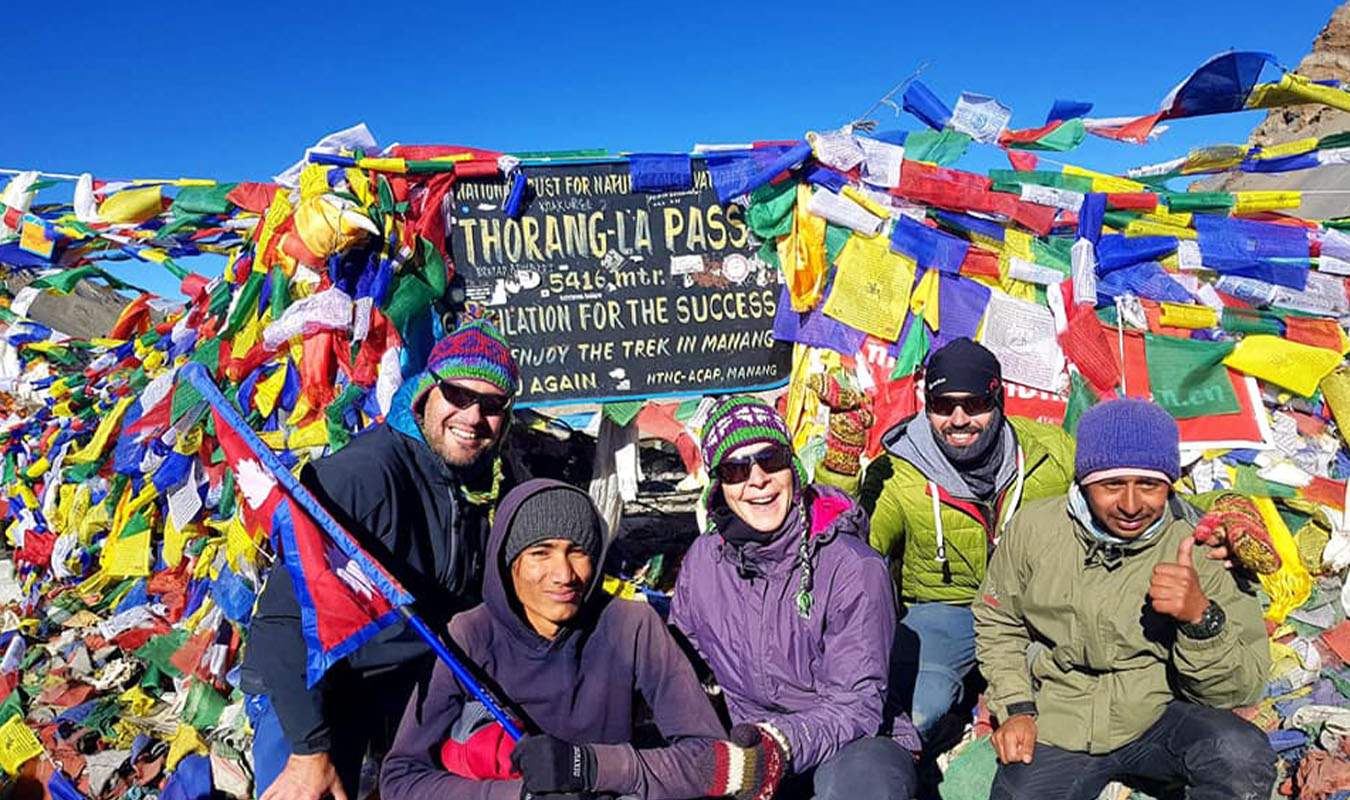
Crossing Thorong La (5,416 m) marks a defining moment: a testament to your stamina and spirit. The reward? Sweeping panoramic views of Annapurna, Dhaulagiri, Manaslu, Gangapurna, Nilgiri, and Tilicho Peak. After the pass, the terrain shifts dramatically as you descend into the Mustang region—a high Tibetan-flavored landscape of arid valleys, wind-sculpted monasteries, and time-frozen villages.
Wind Horse Tours brings this epic trek to life through expert logistics, genuine cultural connection, and attention to your pace. Each day brings a sense of achievement, each village a story to hear, and each vista a vivid memory.
Why do the Annapurna Circuit Trek?
- Jaw-Dropping Mountain Panoramas: Revel in uninterrupted views of towering Himalayan giants—Annapurna I (8,091 m), Dhaulagiri (8,167 m), Machhapuchhre (“Fishtail”), Manaslu, Gangapurna, and Tilicho Peak.
- Spectacular Landscape Diversity: Journey through a full ecological corridor—from subtropical jungles and rice terraces, up through rhododendron and pine forests, then into alpine deserts and the Tibetan plateau .
- Iconic High-Point: Thorong La Pass-Ascend one of the world’s highest trekking passes (5,416 m), arriving at a 360° Himalayan panorama—an unforgettable symbol of personal triumph .
- Authentic Cultural Encounters: Experience life in Gurung, Thakali, Manangi, Magar, and Tibetan-influenced villages. Meet warm-hearted residents, visit monasteries and stupas, spin prayer wheels, and pay respects at the sacred Muktinath Temple—a revered site for both Hindus and Buddhists
Annapurna Circuit Trek Highlights
- Thorong La Pass: The trek’s climactic highlight, offering sweeping mountain vistas and a true test of endurance
- Manang Village: An ideal acclimatization hub with Tibetan-style settlements, monasteries, local farm life, yak-cheese workshops, and side hikes to Gangapurna Lake or Ice Lake.
- Milarepa’s Cave: A sacred meditative cave at 4,100 m near Braga, associated with the 11th century Tibetan saint Milarepa—offering spiritual depth and panoramic views
- Braga Monastery: A 500 year old gompa perched above Braga, showcasing striking thangkas, prayer wheels, and a monastic atmosphere of reflection
- Muktinath Temple: Situated at 3,800 m, this spiritual gem features the sacred 108 spouts, an eternal flame, and deep reverence across Buddhist and Hindu traditions
- Kali Gandaki Gorge: Trek through one of the deepest gorges in the world, flanked by Annapurna and Dhaulagiri—an astounding natural spectacle
- Tilicho Lake (Optional ): Visit one of the world’s highest glacial lakes (4,919 m), with pristine alpine waters that reflect surrounding peaks
Crafted for Adventurers with Heart and Pace
- Balanced Itinerary: With acclimatization stopovers, thoughtful pacing, and opportunities for side hikes such as Milarepa’s Cave or Gangapurna Lake.
- Local Connection: Stay in tea houses and small lodges run by villagers, savor home-cooked meals, and support community-led conservation.
- Guided by Experts: Licensed local guides and attentive support ensure a safe, insightful, and comfortable trekking experience.
The Annapurna Circuit Trek is more than a journey—it’s a life-enriching odyssey. From whispering prayer flags to mountain-sized panoramas; from spiritual retreat to cultural immersion, it offers a transformational experience that lingers long after your return.
Trek itinerary
Day 1. Arrival in Kathmandu
Day 2. In Kathmandu
Day 3. Drive from Kathmandu to Tal
Day 4. Drive from Tal to Manang
Day 5. In Manang (exploration day)
Day 6. In Manang (exploration day)
Day 7. Trek from Manang to Yak Kharka
Day 8. Trek from Yak Kharka to Thorong Phedi
Day 9. Trek from Thorong Phedi to Muktinath (via the Thorong La pass)
Day 10. Drive from Muktinath to Pokhara
Day 11. Fly from Pokhara to Kathmandu
Day 12. Departure
Detailed Itinerary
Expand AllArrival in Kathmandu
In Kathmandu
Drive from Kathmandu to Tal
Drive from Tal to Manang
In Manang (exploration day)
Trek from Manang to to Yak Kharka
Trek from Manang to Thorong Phedi
Trek from Thorong Phedi to Muktinath via Thorong La pass
Drive from Muktinath to Pokhara
Fly from Pokhara to Kathmandu
Departure
Cost Information
Price starts from US$1180-US$2150 depending upon the number of traveler.
Included
- All transfers by private vehicle.
- 3 nights accommodation in Kathmandu and 1 night in Pokhara in 3-4* category hotels.
- 3 nights’ accommodation in tea house lodge & 3 nights accommodation in tourist standard hotel during the trek.
- Only breakfast during the stay in Kathmandu and Pokhara.
- Breakfast, lunch, and dinner along with coffee/tea during the trek.
- One welcome or farewell dinner with a cultural performance in Kathmandu.
- 1 full day guided city tour in Kathmandu.
- English-speaking licensed trekking guide along with a porter (1 porter for every two trekkers).
- One way airfare between Pokhara-Kathmandu.
- First aid kit and duffel bag.
- Trekking staff accommodation, wages, meals, trekking gears, and insurance.
- All necessary paperwork and permits for the trek (ACAP/TIMS card).
- All government tax and service charges.
Not included
- Nepal Visa.
- International airfare.
- Meals other than listed (lunch and dinner) in Kathmandu and Pokhara.
- Personal expenses (laundry, telephone, bar, beverages).
- Bottled/boiled water, battery recharge and Wi-Fi and hot showers during the trek.
- Tips and gratuities to Guide, Porter and driver.
- Travel medical insurance covering rescue and emergency evacuation.
- Personal trekking gears and equipment’s.
- Trip cancellation cost due to your health, weather condition, political situation, and any other unforeseen events.
- Any other expenses other than the listed above.
Group Travel Dates
FAQs
- What is the Annapurna Circuit Trek?
The trek is one of Nepal’s most iconic trekking routes, circling the Annapurna massif. It offers a diverse journey through:
- Subtropical forests
- Alpine meadows and high mountain valleys
- Arid, Tibetan-style landscapes
The trek’s defining highlight is crossing Thorong La Pass (5,416 m)—one of the highest trekking passes in the world—offering breathtaking 360° views of the Himalayas.
- Why is this trek so popular?
This trek is consistently ranked among the world’s best because it combines:
- Exceptional landscape diversity (from tropical to alpine to desert-like terrain)
- Rich cultural experiences (Gurung, Thakali, and Tibetan-influenced communities)
- Accessibility with comfort (well-developed teahouse infrastructure)
- Panoramic views of major peaks (including Annapurna, Dhaulagiri, and Manaslu)
It’s not just a trek—it’s a complete Himalayan experience blending nature, culture, and adventure.
- How difficult is this trek?
This trek is considered moderate to strenuous, making it suitable for fit beginners as well as experienced trekkers.
Expect:- 5–8 hours of walking per day
- High-altitude terrain with thin air
- Cold and unpredictable weather, especially near the pass
The most challenging section is crossing Thorong La Pass, which requires endurance, proper acclimatization, and mental resilience.
- How many days does the trek take?
The duration varies depending on your itinerary and pace:
- Standard itinerary: 12–14 days
- Extended routes: 15–21 days
Optional side trips include Tilicho Lake and Nar Phu Valley.
- What is the highest point of the trek?
The highest point is Thorong La Pass (5,416 m).
At this altitude:- Oxygen levels drop to about 50% of sea level
- Weather can change rapidly (strong winds, snow, extreme cold)
Crossings are typically done early in the morning for safety and more stable conditions.
- When is the best season for this trek?
The best seasons are Spring (March–May) and Autumn (September–November).
- Spring: Blooming rhododendrons, warmer temperatures, stable weather
- Autumn: Clear skies, excellent mountain views, mild temperatures
- Monsoon (June–August) brings rain in lower valleys, while winter can render the pass impassable due to snowfall.
- Do I need prior trekking experience?
No prior trekking experience is required, but good physical fitness is essential.
You should be able to walk several hours per day for multiple consecutive days.With proper preparation, acclimatization, and determination, most people can complete the trek successfully.
- What permits are required?
For this trek you You will require the Annapurna Conservation Area Permit (ACAP).
- Is a guide or porter mandatory?
Yes. As of July 2023, all foreign trekkers in Nepal must be accompanied by a licensed guide. A guide helps with:
- Navigation and logistics
- Safety and emergency management
- Cultural insights and local interaction
Porters are optional but highly recommended if you prefer to trek comfortably without carrying heavy luggage.
- What type of accommodation is provided?
- Kathmandu & Pokhara: 3–4 star hotels (with breakfast)
- During the trek: Teahouse lodges (full board)
- What are teahouse lodges like?
Teahouses are small, family-run lodges along the trail offering:
- Basic twin-sharing rooms
- Shared bathrooms
- Warm communal dining areas (often with stoves)
Facilities become more basic at higher elevations.
- What food is available along the route?
Teahouses serve a mix of Nepali and Western dishes, including:
- Dal Bhat (rice, lentils, vegetables)
- Noodles and pasta
- Fried rice
- Potatoes and eggs
- Bread, pancakes, and porridge
- Soups and seasonal vegetables
Drinks include tea, coffee, hot chocolate, lemon drinks, and soft drinks.
- Is drinking water included?
No, drinking water is not included.
You can buy bottled or boiled water (prices increase with altitude). We recommend you use a reusable bottle with purification tablets or a filter (cost effective). - How reliable is mobile network coverage?
Mobile coverage is available in lower regions but becomes weak or unavailable at higher elevations.
- Is WiFi available?
Yes, WiFi is available in many teahouses, but it becomes slower and more expensive at higher altitudes.
- Can I charge my devices along the trail?
Yes. Most lodges provide facilities to charge phones, and other electronic devices with an extra cost. In some remote locations, charging may be limited or powered by solar energy.
- Is altitude sickness a risk?
Yes, it is the primary concern above 3,000 m. Common symptoms include: Headache, Nausea, Fatigue. and Dizziness.
- How does the itinerary help with acclimatization?
Itineraries are designed with:
- Gradual ascent
- Acclimatization days (typically in Manang)
Guides are trained in first aid and altitude sickness (AMS) management
- What precautions should I take?
- Walk slowly (“climb high, sleep low”)
- Stay well hydrated
- Avoid alcohol at high altitude
- Follow your guide’s advice
- Is travel insurance necessary?
Absolutely—comprehensive travel insurance is a must. It should explicitly cover high-altitude trekking, emergency medical treatment, and helicopter evacuation above 5,000 m.
- What level of fitness should I have?
You should be comfortably active, capable of walking 6–8 hours per day over rugged terrain, including uphill climbs. It’s best to prepare with cardiovascular workouts and strength training before your trek.
- How much does the trek cost and what is included?
Typically, Annapurna Circuit Trek packages range from USD 1,200 to USD 1,600 per person, depending on group size. The package includes:
- 3–4 star hotel accommodation in Kathmandu & Pokhara (with breakfast)
- Private transportation (Kathmandu–Tal, Muktinath–Pokhara)
- Trekking permits
- Teahouse accommodation during the trek
- Three meals per day (with tea/coffee) during the trek
- Domestic flight (Pokhara–Kathmandu)
- Guide and porter services
- Ground transport
- How much extra should I expect to carry?
Budget around USD 15–20 per day for extras such as:
- Bottled water & soft drinks
- Snacks
- Hot showers
- WiFi and charging
There are no ATMs along the route, so carry enough cash in Nepali currency.
- Are tips expected?
Yes, tipping is customary in Nepal’s trekking industry and is a way to show appreciation for guides and porters.

+1 612 869 4949