

TID 8682 Darjeeling, Sikkim and Bhutan Tour - Extension to West Sikkim. (Nov 23 - Dec 06, 2014) Dear Anand, We arrived 3 hours ago in Vienna, because after finishing your tour we travelled 13 days across West Bengal. Your guides and drivers were very professional. We can recommend these gentlemen for further tours. That we had problems with hiking…
Darjeeling Sikkim Bhutan Tour
Cultural Tour of Darjeeling, Sikkim & Bhutan
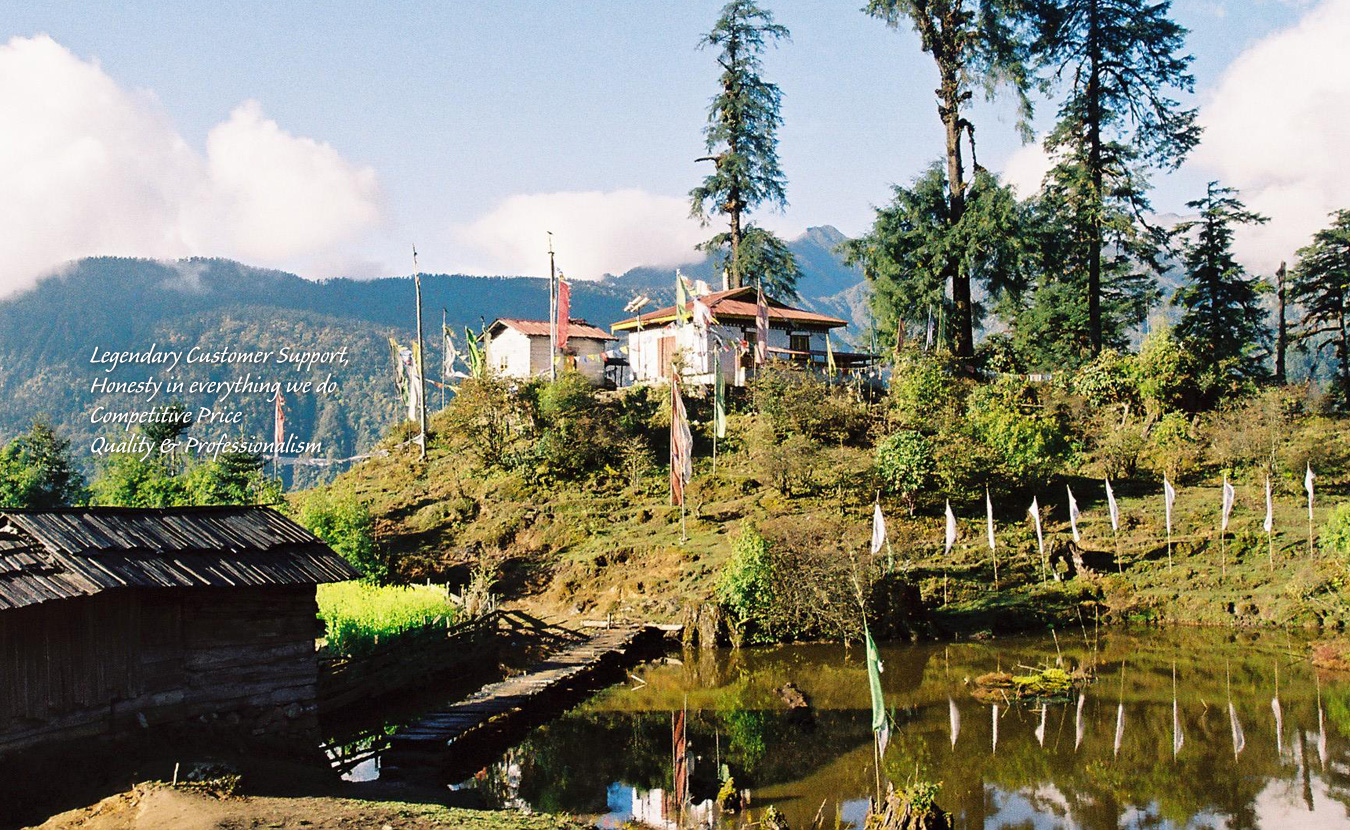
Explore Darjeeling Sikkim Bhutan Tour, the most isolated Himalayan regions. Centuries-old Buddhist monasteries cling to mountain cliffs and rice paddies stair-step down steep hillsides. Your journey begins with an arrival transfer to Darjeeling, where we include a ride on the narrow-gauge mountain railway and sunrise over Kangchenjunga from Tiger Hill. Visit the capital of Sikkim, Gangtok, and passing on to Rumtek, visit the Karmapa’s Monastery. Travel to Kalimpong, once an important trading post for these parts of the world.
From Kalimpong, our road then descends into the plains known as Duars, filled with lush tea gardens and some remote villages that are much isolated from the mainstream. Cross into Phuntsholing, Bhutan. Discover Bhutan’s captivating cultural mix, reflected in its beautiful shrines, temples, and handicrafts as you travel from south to western Bhutan; in the towns and villages of Paro, Thimphu, and Punakha valley. Explore the Dzongs, ancient fortresses that once protected the kingdom.
Darjeeling Sikkim Bhutan Tour Outline Itinerary
Day 1: Arrive in Bagdogra – Darjeeling
Day 2: Sightseeing tour in Darjeeling
Day 3: Darjeeling – Gangtok
Day 4: Gangtok Sightseeing
Day 5: Rumtek & Kalimpong
Day 6: Kalimpong – Chalsa(Dooars)
Day 7: Chalsa-Phuntsholing-Thimphu
Day 8: Thimphu-Punakha
Day 9: Punakha – Thimphu
Day 10: Thimphu – Paro
Day 11: Paro (Takstang trek)
Day 12: Departure
We can also suggest dates to coincide with local Bhutan festivals in Bhutan or Sikkim.
Trip highlights
- Colonial character in form of Churches and Tea gardens in Darjeeling.
- Historical and religious attractions in Gangtok (Sikkim)
- Scenic drives through tea estates
- Visit off-the-beaten villages from Chalsa
- Diversity of Environment and Culture
- Quaint and Pristine environ in Bhutan with a rich historical legacy in for of Dzong ( erstwhile Fortress converted into Administrative unit) and monasteries.
Day by day
The full day-by-day itinerary.
Upon arrival at Bagdogra airport/NJP station, meet our representative and transfer to Darjeeling, which takes about 3+ hours. The journey passes through small towns, villages, and tea estates, as you climb up the hills. After high tea in the evening, take a stroll around Chowrastha Mall and into the Bazaar area.
Overnight in Darjeeling Meals Dinner
Before dawn, you have an option to hire/share a cab to visit Tiger Hill for a sunrise view (extra). After breakfast, begin our sightseeing tour. Visit Himalayan Mountaineering Institute and Padmaja Naidu Himalayan Zoological Park. Then visit the Tibetan Self-Help Center which boasts of high-quality Tibetan handicrafts and on the way back, visit a tea estate. In the afternoon, visit Dali Gompa monastery, and the rest of the time is free to stroll around the town or take a toy train joy ride until Ghoom(Optional).
Overnight in Darjeeling Meals Breakfast · Dinner
Drive through the tea gardens and descend through sub-tropical Teesta valley and enter Sikkim at Rangpo. After permit formalities, continue to drive to Gangtok, the capital of Sikkim. (Total 4-5hr). In Gangtok, visit Namgyal Institute of Tibetology a repository of Tibetan works, iconography, and religious arts, and the nearby Deorali Dodrul Chorten surrounded by 108 prayer wheels. In the evening walk through the iconic MG Marg, a Pedestrian cobbled Boulevard lined on both sides with interesting neon-lit shops, and also visit the Lal Bazaar vegetable and food market.
Overnight in Gangtok Meals Breakfast · Dinner
Visit a Flower Exhibition Center-wide arrays of orchids, some indigenous plants, and flowers on display. Drive to Enchey monastery affiliated to Nyingmapa order of Tibetan Buddhism and continue further uphill to reach view Points such as Ganesh Tok, Hanuman Tok, and Tashi viewpoint which overlooks gorgeous view below. On the way back visit the Directorate of Hand-loom and Handicrafts which houses workshops for carpet weaving, Blackstrap loom, Bamboo craft, Painting school followed by a museum and handicraft sale emporium. The afternoon is free to rest or pursue your own interests.
Overnight in Gangtok Meals Breakfast · Dinner
Drive for about an hour to Rumtek monastery on the opposite hilltop. This was the main seat of Karma Kagyu lineage in exile. The architecture itself is the replica of the original monastery in Tsurphu Tibet. After visiting this famous monastery, drive to Kalimpong (3hr), another hill town with good views, a bursting bazaar, and rich history. Visit Durpin Dara viewpoint, commanding a panoramic view of the whole town, Teesta river below, and the backdrop peaks. Favorable climate and conducive soil contribute to the growth of horticulture extensively, so we’ll visit some of the Flower nurseries. Remnants of the colonial era are still conspicuous in form of medieval Churches, homes, and schools such as over century-old Dr. Grahams Homes campus. After the visit drive to Deolo Hill, the highest point in Kalimpong with a panoramic view of Kalimpong town and neighboring hills. On the way back stroll through the charming bazaar.
Overnight in Kalimpong Meals Breakfast · Dinner
Descend from the hills into Dooars, flanked by lush green sub-tropical vegetation, and tea gardens – originally planted by the British. These lush green areas constitute the floodplains and foothills bordering Bhutan, Darjeeling, and the plains of Assam. It takes a little over 2hr to reach Chalsa. In the afternoon, explore the nearby tea gardens, off the beaten road villages, an open school under a tree, tea garden worker’s colony, and the small bazaar area. The option is available to visit the nearby National Park and Wild Life Sanctuary. (Entrance fees and safari fee extra).
Overnight in Chalsa in a resort set with nice lawns and fruit trees Meals Breakfast · Dinner
After early breakfast, drive for about 2hrs through the plains to cross the border into Phuentsholing, Bhutan. After completing immigration formalities, drive up the hills to the capital Thimphu, which takes another 5+hrs. En-route, stop and visit the Rinchending monastery and other villages and towns along the way. Thimphu being the capital has a lot of monuments and attractions – some contemporary and some medieval. Upon arrival, you can choose to rest or relax after long hours of drive or instantly get a feel of the pulses of Thimphu by visiting Tashicho Dzong – the main government seat. Evening free to take a stroll around the town.
Overnight in Thimphu Meals Breakfast · Lunch · Dinner
Drive across spectacular Dochula pass (3100m) that separates Thimphu from Punakha valley. Take a brief stop at Dochula to experience the spellbinding view of snow-clad peaks of the Himalayas. Descend into sub-tropical and agrarian Punakha valley. Once there, visit astounding Punakha Dzong, one of the most beautiful Dzong, located at the confluence of the two rivers. Late in the afternoon embark on a short hike of 45 mins to visit Khamsum Chorten. The hike is a mixture of paddy fields and the village trail walk. The view of the meandering Punakha River, terraced rice field, and village below is simply spectacular.
Overnight in Punakha Meals Breakfast · Lunch · Dinner
Visit Chhimi Lhakhang temple dedicated to saint Drukpa Kinley (15c) popularly known for his offbeat antics and jokes, and as a protagonist in most of the local folklores. Drive further to Wangdue and visit the remains of its Dzong and continue to Thimphu. Upon arrival in Thimphu, we can begin with a visit to Memorial Chorten, Buddha Statue, Takin Reserve, Zilukha Nunnery, Textile museum, and the weekend market as per your interest and time.
Overnight in Thimphu Meals Breakfast · Lunch · Dinner
After breakfast, visit the remaining attractions if you have missed the previous day and then drive to Paro. The drive to Paro takes about an hour. Paro is one of the serene and loveliest valleys in Bhutan. Upon arrival, cross the archaic wooden cantilever bridge to visit Rinpung Dzong erstwhile fortress converted into the office of district administration and monastic body now. Also, visit the nearby National Museum that houses some of the finest specimens of Bhutanese arts. Then we drive a short distance to visit some monasteries that define Paro such as Kichu & Dungtse Lhakang. Subsequently, walk into the village and visit a local farmhouse, strike in conversation with locales to gain insights into their daily life.
Overnight in Paro Meals Breakfast · Lunch · Dinner
Transfer to the trailhead and hike to iconic Taktsang Monastery(Tiger’s Nest Monastery) one of the most sacred and pilgrimage sites for Himalayan Buddhists. One can marvel at its architecture and gravity-defying location precariously clinging to a vertical granite cliff. There is an option to hire a mule or pony for the uphill part but you should be able to walk downhill. If for some reason, you are unable to visit Taktsang, our Guide can arrange other suitable alternatives. Even after Taktsang, we may have time to visit some sights in Paro and to wander around the charming township of Paro.
Overnight in Paro Meals Breakfast · Lunch · Dinner
Transfer to the airport in time for your departure flight. Depending on the Druk Air schedule, you can fly to Bangkok, Delhi, Kolkata, or Kathmandu.
Meals Breakfast · Lunch
Included
- Accommodations in listed hotels or similar.
- Only breakfast and dinner in Darjeeling and Sikkim and all meals in Bhutan.
- All Private transfers by best quality vehicle.
- All sightseeing with entrance fees.
- English speaking local guide and driver from start till finish.
- Bhutan visa, taxes, and permits
Not included
- Flights (priced based on the sectors)
- Indian Visa.
- Bar/Beverages, Laundry, Telphone, optional tips, and other personal expenses.
- Travel Medical Insurance.
TID 571: Darjeeling Sikkim & Bhutan (Sept. 19-Sept. 30, 2012) We just returned from our trip and are going through our mail. I want to let you know that Bhutan was the highlight of our 14 week trip. We thought it would be good but it was actually great/fascinating. Thanks for organizing it.
Stephen Freeman x 03 - 09 Mar/01 Apr, 2011 Dear Sonam, Now that we have returned home after our trip to Bhutan and India following our memorable week touring in Sikhim and Darjeeling with you, I would like to thank you and your team at Windhorse Travel for putting it together to meet our needs, and for the wonderful tour…

Nima Dhondup Bhutia
Nima Dhondup Bhutia is the senior most guide for Darjeeling, Sikkim and Doars Tour. From past political turmoil to changing tourism scenario in the region, he has seen it all from close quarter. His career as guide started from 1980, and going great gun still. His experience along with amicable…
Namgay
Guide - Culture, Trek & Nature Growth in Tourism in Bhutan has also its share of impact on young minds. With tourists freely moving around, the curiosities to know them, talk to them holds ground firmly on young minds . Namgay is one among many youth whose imagination was captured…
Sonam Loday
A good sense of humour is the currency that prevail everywhere regardless of the time or circumstances. An asset that that has potential to make even the ordinary trip into extraordinary. Sonam Loday has this traits in abundance. This is intrinsic and come as naturally as bees to the flower.…
What travelers most often ask us before a trip to Bhutan.
Are monument and park entrance fees included in my trip?
No. Since the 2023 policy update, the entry fees are not included and are in addition to the daily SDF (Sustainable Development Fee), you will need to pay for these tickets separately at each location, or your tour operator (like Wind Horse) can include them as a pre-paid “service” in your tour package.
Most Dzongs & Museums charge Nu. 500, with Takstang @1000/
For details on the latest entry fees to the monuments, parks, and attractions, visit Bhutan Entrance fees:
Yes, flights to Bhutan can be affected by weather conditions. Paro Airport is located in a narrow valley and requires visual flying conditions, meaning flights operate only during daylight hours and in suitable weather.
During the monsoon season (June–September), low clouds, rain, or reduced visibility may cause short delays or, in rare cases, cancellations. In winter, early-morning fog can sometimes delay departures. However, Bhutan’s airlines are highly experienced in operating in these conditions, without compromising the safety.
When disruptions occur, airlines usually reschedule flights for the next available weather window. We recommend allowing some buffer time at the start or end of your trip and having flexible onward travel plans.
Wind Horse closely monitors flight operations and assists guests with rebooking and logistics if weather-related changes arise.
Bhutan’s official currency is the Bhutanese Ngultrum (BTN), which is pegged 1:1 with the Indian Rupee, so the two currencies are equal in value. Indian Rupees are accepted in Bhutan.
Yes. Bhutan is considered one of the safest countries in the world for travelers, including solo travelers and solo women travelers. Crime rates are very low, violent crime is rare, and Bhutanese society places a strong emphasis on respect, community, and hospitality.
Solo women travelers generally feel comfortable traveling in Bhutan. Harassment is uncommon, and locals are welcoming and helpful.
When traveling on guided tours or treks, you are accompanied by licensed guides and drivers, which adds an extra layer of safety and support.
As with travel anywhere, we recommend using common sense—being aware of your surroundings, dressing modestly, and following local customs. With these basic precautions, Bhutan is a relaxed, secure, and rewarding destination for solo travel.
The most popular times to visit Bhutan are spring (March–May) and autumn (late September–November), offering the best combination of weather, scenery, and cultural experiences.
- Spring (March–May):
Ideal for nature lovers, with valleys alive with blooming rhododendrons and wildflowers. Temperatures are mild, making it a great season for sightseeing and moderate trekking. - Autumn (late September–November):
Known for the clearest Himalayan views, crisp air, and deep blue skies. This is also the peak season for major festivals (Tshechus) and high-altitude trekking. - Winter (December–February):
An off-peak season with cold nights and early mornings, but generally clear, sunny days and stable weather. Snowfall is mostly limited to high mountain passes. While not suitable for high-altitude treks, winter is ideal for cultural tours and walks in lower valleys and subtropical forests. As most towns and villages in the eastern Bhutan and southern Bhutan are located at lower elevation, winter is best time to visit them. - Summer (June–August):
Warm and pleasant, with occasional monsoon rains, mostly in the evenings or at night. The countryside is lush and green, crowds are fewer, and low-season rates are available.
Independent trekking is not permitted in Bhutan. All trekkers must be accompanied by a licensed Bhutanese guide and a support team, where camp and food arrangements in needed.
Some trekking areas require National Park permits and some even need military clearance and those are not issued without the local tour operator’s undertaking and the presence of guides on the trails.
No. Indian citizens with Indian passport or valid travel document such as Voter IDs do not require a visa to enter Bhutan. However, an Entry Permit is mandatory.