

 +1 612 869 4949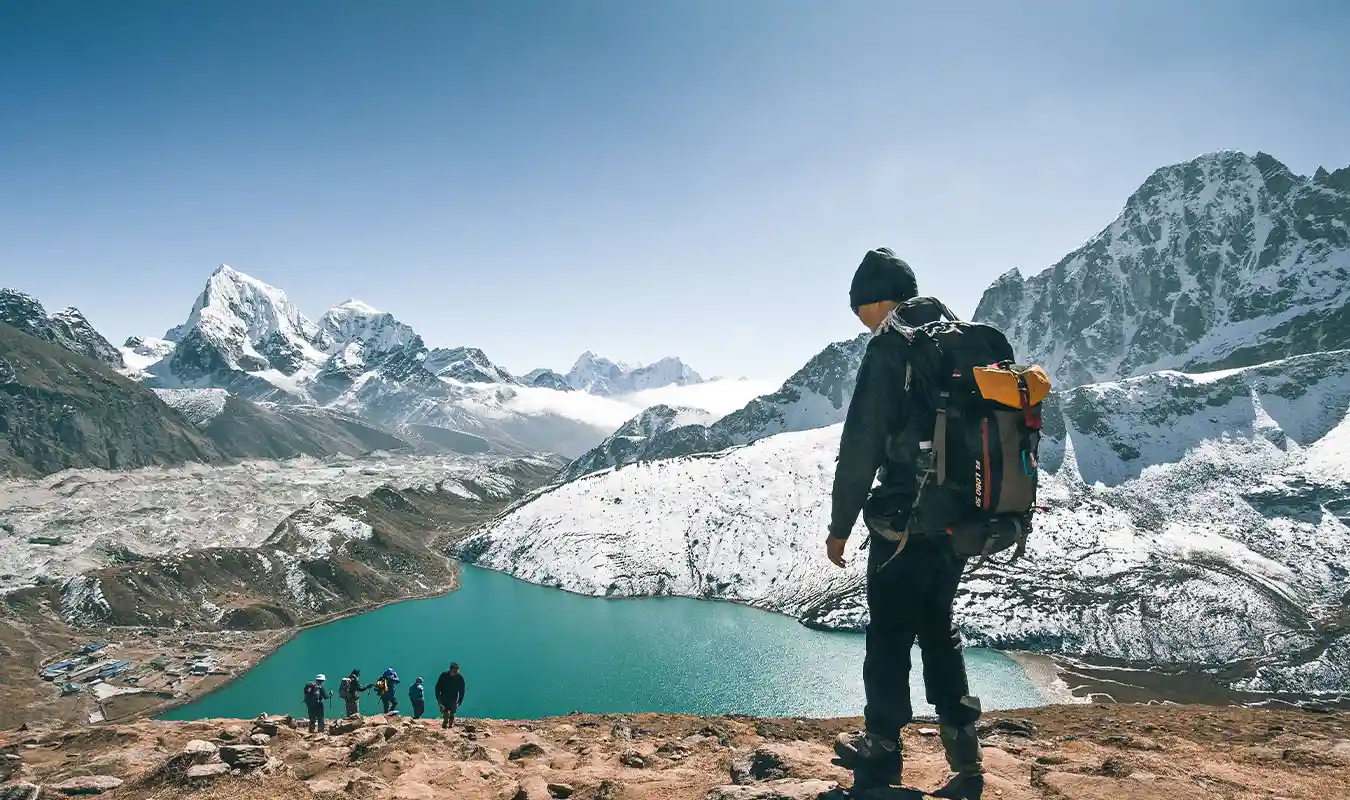

Gokyo Lakes Trek
An spectacular journey beyond the Everest Base Camp
-

Duration
15 Days -
 Trekking
 -
Strenous

 Overview
 Costs
Costs Included
 Itinerary
 Tour Leader
 Trip Photos
Gokyo Lakes Trek: A hidden Gem in the Khumbu region
he Gokyo Lakes Trek is an unforgettable journey through the Khumbu region to Gokyo Valley, a hidden jewel of glacial lakes, soaring peaks, and vibrant Sherpa culture. As the world’s highest freshwater lake system, it delivers pristine wilderness, majestic mountain views, and far smaller crowds than the classic Everest Base Camp route.
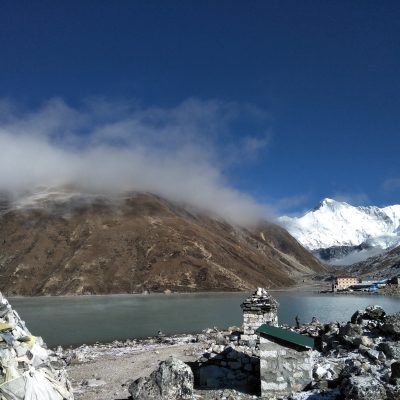
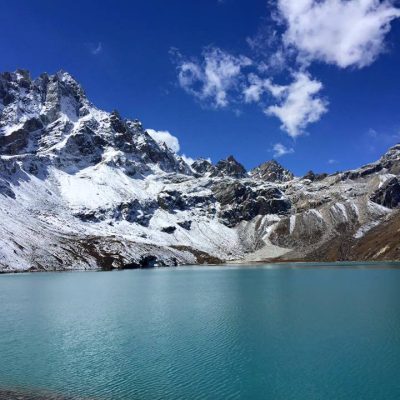
The Gokyo Lake system comprises of six pristine lakes, most notably the largest, Thonak Cho, and the sacred Gokyo Cho. Designated a Ramsar wetland, this natural wonder is both an ecological treasure and a place of spiritual reverence. Many trekkers pause to immerse themselves in the serene atmosphere. And the vistas from Gokyo Ri is considered equal or even more impressive than from the Everest Base Camp.
The Gokyo Lakes Trek is a captivating and quieter alternative to the classic Everest Base Camp (EBC) . This journey takes you through breathtaking landscapes offering stunning views of some of the world’s highest peaks. Moreover, Gokyo Ri, at an altitude of 5,357, provides an awe-inspiring panoramic view of Everest, Lhotse, Makalu, and Cho Oyu, among other peaks.
The Gokyo Lakes Trek begins with a scenic flight from Kathmandu to Lukla, offering stunning Himalayan views. From there, the trail descends along the Dudh Koshi River, passing Sherpa villages such as Phakding and Jorsale, before reaching Namche Bazaar.
From Namche the trek continues further through Dole and Machhermo, traversing alpine meadows and yak pastures towards the serene Gokyo Valley. Trekkers typically spend two days at Gokyo, one to explore the lake cluster, and another to summit Gokyo Ri (5,357 m) for phenomenal panoramas of Everest, Lhotse, Makalu, and Cho Oyu.
The return journey traces the same path: descending through Machhermo, Dole, Namche, and back to Lukla, followed by a flight to Kathmandu. This 10–12 day trek offers a rich variety of scenery, from forests and glaciers to high-altitude lakes and Sherpa culture, without the crowds typical of the Everest Base Camp trail.
Why choose Gokyo Lakes Trek ver Everest Base Camp Trek?
- Solitude in the Himalayas: The Gokyo route offers a quieter traverse compared to the bustling EBC trail. Even during peak seasons, the path remains peaceful with less traffic.
- Superior Views: Gokyo Ri offers 360° vistas of Everest, Lhotse, Makalu, Cho Oyu and Nuptse, the panoramas that rival, if not exceed, those from Kala Patthar.
- Ecological & Cultural Variety: Enjoy a rich tapestry of landscapes and cultural interactions in lesser-known Sherpa villages.
- Flexible Extension Options: For those seeking more, you can continue via Cho La Pass (5,420 m) to the Everest Base Camp.
Gokyo Lakes Trek Highlights
- Scenic Flight to Lukla: Begin with a breathtaking flight from Kathmandu to Lukla, offering aerial views of the Himalayas.
- Gokyo Ri Panorama: Sweeping Himalayan views which many trekkers consider even more breathtaking than Kala Patthar.
- Sacred High-Altitude Lakes: Explore the UNESCO-designated Gokyo wetlands, some of the highest freshwater lakes on Earth
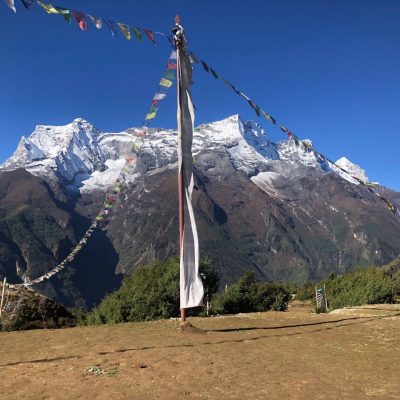
- Cultural Immersion: Visit Sherpa villages, Buddhist monasteries, mani walls, and prayer flags across Khumjung, Dole, Machhermo, and Gokyo.
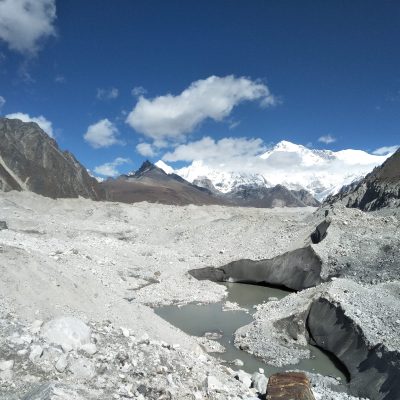
- Glacial Majesty: Walk along the Ngozumpa Glacier, the largest glacier in Nepal
- Wildlife & Flora: Traverse biodiverse zones, from rhododendron forests to alpine meadows, with sightings of Himalayan tahr, musk deer, pheasants, and more.
- Diverse Terrain: From rhododendron forests and yak pastures to rocky ridges, moraine pathways, and calm lakesides, the landscape is as varied as it is breathtaking.
Gokyo Lakes Trek Itinerary
Day 1: Arrival in Kathmandu
Day 2: In Kathmandu
Day 3: Fly from Kathmandu to Lukla-Trek to Phakding
Day 4: Trek from Phakding to Namche Bazaar
Day 5. In Namche Bazaar (acclimatization day)
Day 6: Trek from Namche Bazaar to Dole
Day 7: Trek from Dole to Machhermo
Day 8: Trek from Machermo to Gokyo
Day 9: Exploration day in Gokyo
Day 10. Trek from Gokyo to Dole
Day 11. Trek from Dole to Namche
Day 12. Trek from Namche to Lukla.
Day 13. Fly from Lukla to Kathmandu.
Day 14. Free day in Kathmandu
Day 15. Departure
Overview
Trip Type
Trekking
 Activities Included
 Accommodation
3-4* category hotels in Kathmandu and basic village lodge/guest house during the trek
Accommodation
3-4* category hotels in Kathmandu and basic village lodge/guest house during the trek
 Meal
Only breakfast in Kathmandu, while three standard meals during the trek
Meal
Only breakfast in Kathmandu, while three standard meals during the trek
 Best Seasons
Best during the spring and fall
Best Seasons
Best during the spring and fall
 Route
Kathmandu-Lukla-Phakding-Namche-Dole-Macherma-Gokyo-Dole-Namche-Lukla-Kathmandu
Route
Kathmandu-Lukla-Phakding-Namche-Dole-Macherma-Gokyo-Dole-Namche-Lukla-Kathmandu
 Best Months
March, April, May, October, November
Best Months
March, April, May, October, November  Good Months
February, September
Good Months
February, September  Lean Months
June, July, August
Lean Months
June, July, August  Not Recommended Months
January, December
Not Recommended Months
January, December Detailed Itinerary
Expand AllArrival in Kathmandu
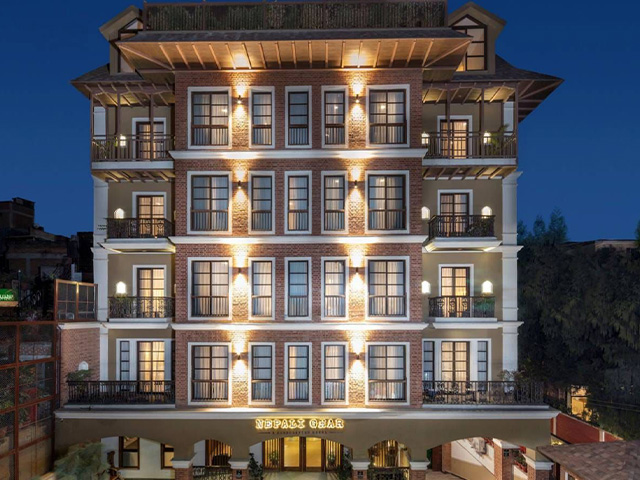
Upon your arrival at Kathmandu airport, a Wind Horse representative will meet and greet you, and transfer you to your hotel. No activities are planned for this day, so you will have the rest of the day at your leisure until the evening.
Later in the evening, your trip guide will meet you and present you with a brief orientation about the trek. After the briefing, you will enjoy dinner at a traditional Nepalese restaurant with a cultural performance. Overnight in Kathmandu.

 Altitude:
1350m
Altitude:
1350m
In Kathmandu
Today, you will visit three UNESCO World Heritage Sites in the Kathmandu Valley: Kathmandu Durbar Square, Boudhanath Stupa, and Pashupatinath Temple.
Kathmandu Durbar Square is one of the three Durbar (palace) squares in Kathmandu valley. Kathmandu Durbar Square is rich with its intricate wood carving and its history. Also known as the “Musuem of Temples” there are over 50 temples in the square. You will explore the area around the former palace of the kings of Nepal, viewing various temples and monuments.
Following the visit, you will drive to Boudanath Stupa. Boudanath Stupa is one of the largest Buddhist stupa in Nepal and also a World Heritage Site. Boudanath signifies peace and tranquility, and is a Centre of religious and spiritual significance. You will see thousands of pilgrims circumambulating the stupa, you will circumambulate with pilgrims and visit the surrounding monasteries.
Afterward, you will proceed to Pashupatinath Temple. The Pashupatinath temple is situated on the banks of the Bagmati river and is one of the most revered Hindu temple in Nepal. The main temple complex is not accessible to non-Hindus, but you can explore around the periphery of the temple complex which is quite large and impressive. Overnight in Kathmandu.
 Altitude:
1350m
Altitude:
1350m
 Duration:
5-6hrs
Duration:
5-6hrs
Fly from Kathmandu to Lukla- Begin trek to Phakding
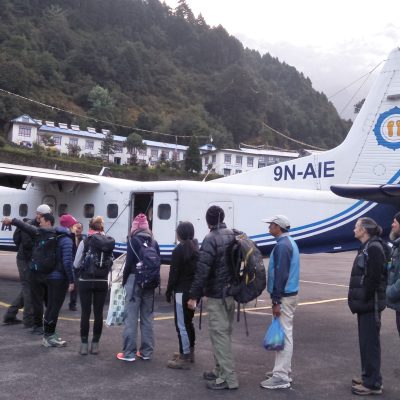
The mountain flight into Lukla is spectacular, and the landing is an exciting experience. One end of the runway is 60 meters higher than the other. The flight is typically on a small Dornier or Twin Otter aircraft, with a duration of around 25–30 minutes.
Upon arrival at Lukla (2800m), you will meet your guides and porters before commencing the trek towards Phakding. You will descend gradually for about 2 hours to Thado Koshi, and then you will make your first ascent, gradually uphill all the way to Phakding (2620m). It takes about 2 hours from here to reach Phakding. Overnight in Phakding.
Please be advised that during the high season (March, April, May, October, and November), flights to Lukla are routed through Ramechhap (Manthali) airport, approximately a 4-5 hours’ drive away from Kathmandu. To accommodate this, you must start early (several hours before dawn around 2 am).
 Altitude:
2620m
Duration:
3-4hrs, Approx. 8kms
Altitude:
2620m
Duration:
3-4hrs, Approx. 8kms
 Tea House
Trek from Phakding to Namche Bazaar
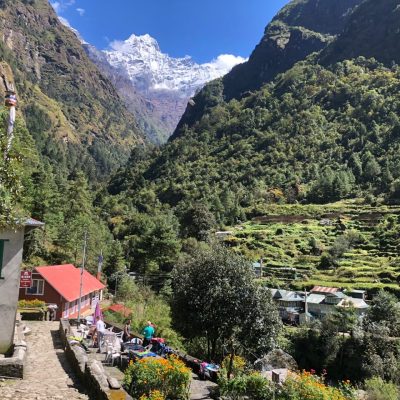
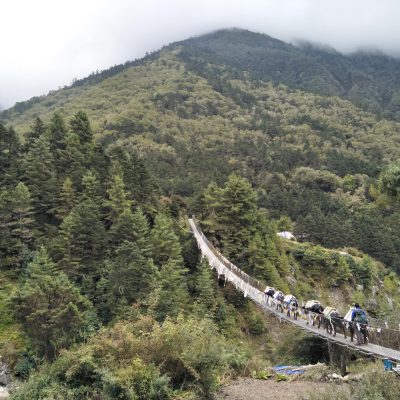
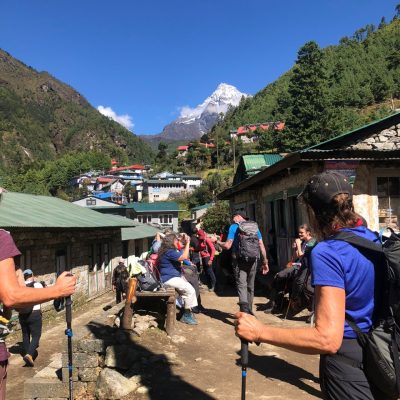
Following the Dudh Koshi River, the trail traverses through Sherpa settlements such as Bengkar and Chumao, and then enters into the Sagarmatha National Park at Monjo. You will than cross over the Hillary suspension bridge, and continue with a steep uphill climb to Chautara, where you get the first glimpse of Everest through the trees.
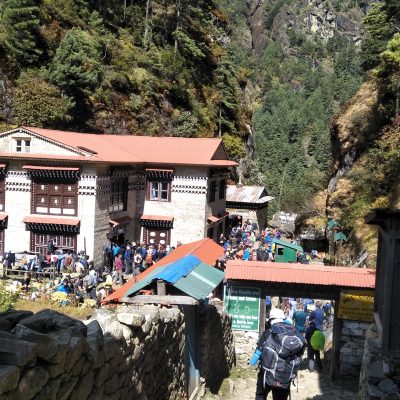
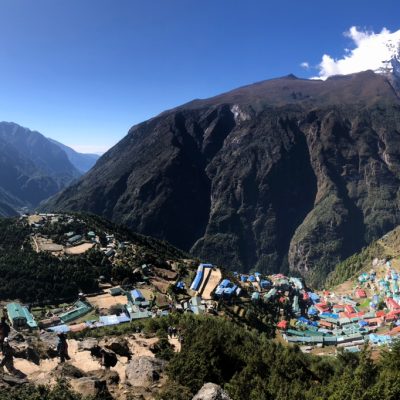
You will continue the ascent until you reach the vibrant Namche Bazaar (3440m), the pulsating heart of the Sherpa community, offering accommodations, cafes, and stores vending souvenirs and trekking essentials. Namche Bazaar serves as an ideal location to procure any forgotten items and acclimatize to the altitude for the remainder of the day. Overnight in Namche Bazaar.
Altitude:
3440m
Duration:
5-6hrs, Approx. 11kms
Tea House
In Namche Bazaar-Acclimatization day
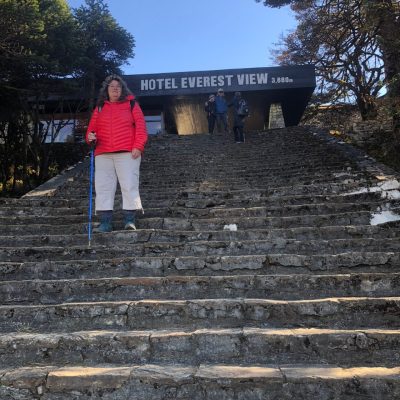
Today is set as an acclimatization day, it is important to acclimatize so that your body get used to the ever increasing altitude. To do this you will embark on a short hike to Everest View Hotel at Syangboche, situated at an altitude of 3880m. The Everest View Hotel is considered to be one of the best vantage point, offering breathtaking views of the mountains such as Mt. Everest, Ama Dablam, Lhotse, Nuptse and other peaks.
After relishing at the panoramic scenery, you also have the option to visit Khumjung village. A brief descent on the other side from the Hotel Everest view leads you to the large village of Khumjung, home to Hillary’s School. Following the visit, you will descend back to Namche, where you have the rest of the afternoon to relax or explore on your own. The whole journey including the Everest View Hotel will take about 5-6 hours round trip. Overnight in Namche Bazaar.
Altitude:
3440m at Namche Bazaar/3880m at Everest View Hotel
Duration:
5-6hrs
Tea House
Trek from Namche Bazaar to Dole
The trek from Namche Bazaar to Dole traverses through diverse terrains with stunning views. The hike is over a relatively accessible path that presents incredible views while ascending along the Dudh Koshi valley.
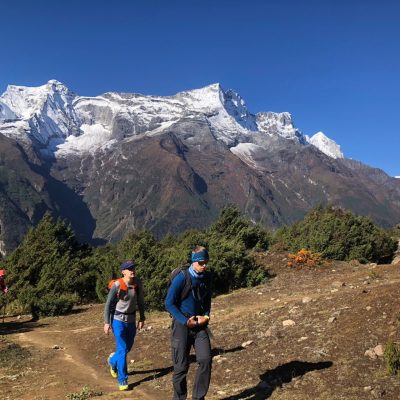
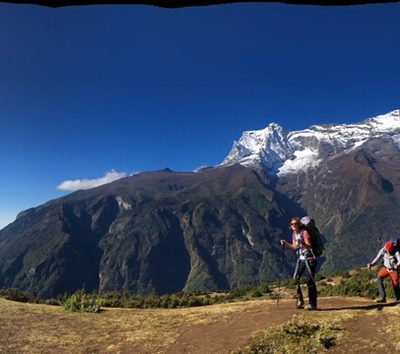
At Sanasa, the trail diverges: one path continues toward Everest Base Camp, while the other heads toward the Gokyo Valley. Leaving the Everest Base Camp route, your Gokyo lakes trek route turn left, and proceed toward Mong La Pass (3900m). Though the ascent is steep, the pass rewards you with breathtaking panoramic views of Ama Dablam, Thamsherku, Tawoche, and Kumbila.
Crossing over Mong La, the trail descends sharply towards the Dudh Koshi and then ascends towards the village of Phortse Tenga. Departing from Phortse Tenga, the trail ascends amidst birch, fir, and rhododendron forests, guiding your way toward the picturesque village of Dole. Overnight in Dole.
Altitude:
4040m
Duration:
6-7hrs, Approx. 12kms
Tea House
Trek from Dole to Machhermo
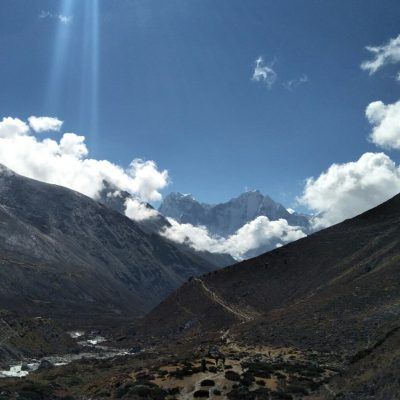
Today’s hike is alongside the Dudh Koshi River, that offers a captivating view as you head towards Machhermo. Machhermo serves as a summer pastoral settlement and an essential stopover for trekkers heading towards the Gokyo Valley.
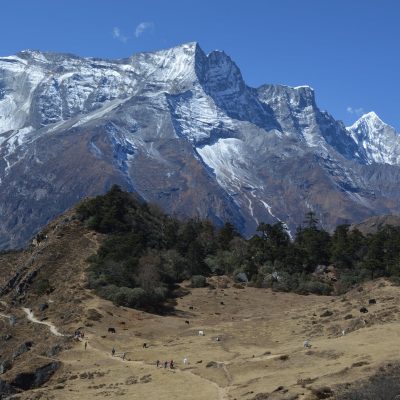
The trail from Dole to Machhermo is relatively straightforward, featuring a gradual incline. Along the way you will pass through yak pastures, enjoying the views of Cho Oyu, Kangtega, and Thamsherku. You’ll traverse villages such as Labarma and Luza, each offering unique glimpses into the local culture amidst the beautiful natural surroundings. Overnight in Machhermo.
Altitude:
4400m
Duration:
3-4hrs, Approx. 6kms
Tea House
Trek from Machhermo To Gokyo
Departing from Machhermo, the trail initially climbs up to a ridge, presenting breathtaking views of Kangtega, and then meanders through open country towards Gokyo. As you climb higher, the landscape changes to rockier, drier terrain, offering unparalleled views of Cho Oyu, Cholatse, and the neighboring peaks.
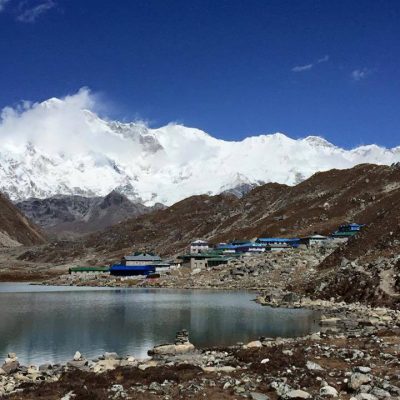
The trail then descends to the Dudh Koshi valley, and a steep ascent will take you along the terminal moraine of the Ngozumpa glacier. You will come across the first and second lakes before reaching the third lake. Gokyo village sits by the third lake, framed by the towering presence of Gokyo Peak in the backdrop. Overnight in Gokyo.
Altitude:
4760m
Duration:
4-5 hrs, Approx. 7kms
Tea House
Exploration day in Gokyo
Hiking up to Gokyo Ri at an altitude of 5,330 meters is an extraordinary adventure that offers panoramic vistas of some of the world’s tallest peaks such as Mount Everest, Makalu, Cho Oyu, Lhotse, Pumori, Nuptse, and others.
Begin your hike early in the morning to make the most of the daylight and to witness the sunrise over the Himalayas. Once at the summit of Gokyo Ri, take your time to absorb the incredible vistas. The view of the mountains and the surrounding Gokyo Valley is truly captivating.
You will get unobstructed views of four of the highest peaks Mt Everest (8,848m), Cho Oyu (8,210m), Lhotse (8,516m), and Makalu (8,463m). Soak in the beauty, and appreciate the natural magnificence of the Himalayas before descending to your lodge at Gokyo.
After lunch, depending on your energy levels and available time, you can take a walk around the 4th or 5th Gokyo Lakes. These locations provide different vantage points and perspectives of the surrounding mountains. Overnight in Gokyo.
Altitude:
Gokyo Ri at 5340m
Duration:
3-4hrs (round trip Gokyo Ri), Approx. 4kms
Tea House
Trek from Gokyo to Dole
Today the hike goes alongside the Dudh Koshi river with the breathtaking views of the Gokyo lakes along with the towering peaks of Taboche and Cholatse. You will come across several charming villages such as Machhermo, Lhabarma, and Luza, each offering a distinct peek into the rich local culture and Sherpa way of life. Overnight in Dole.
On this day onwards, if you wish you can cross over the Cho La pass and combine the Gokyo Lakes Trek with the Everest Base Camp Trek as per the below itinerary:
Day 10. Trek from Gokyo to Thangnak
Day 11. Trek from Thangnak to Dzongla via the Cho La pass
Day 12. Trek to Gorakshep & Excursion to Everest Base Camp
Day 13. Hike to Kalapathhar & Trek from Gorakshep to Pheriche
Day 14. Trek from Pheriche Namche Bazaar
Day 15. Trek from Namche Bazaar to Lukla
Day 16. Fly from Lukla to Kathmandu
Day 17. Free day in Kathmandu
Day 18. Departure
Altitude:
4038m
Duration:
6-7kms, Approx. 14kms
Tea House
Trek to Namche Bazaar
Descending from Dole, you will navigate a steep pathway that winds through forests with rhododendron and pine trees to Phortse Tenga. This serene village nestled in a river valley offers a perfect and scenic location for a well-deserved rest.
Continuing onward from Phortse Tenga, the trail gradually ascends towards Mongla, presenting panoramic vistas of the surrounding mountains. Further along, the path descends towards Sanasa, intersecting with the classic Everest trekking route.
From Sanasa, the journey follows the iconic Everest Base Camp Trek route, leading you toward the vibrant and bustling hub of Namche Bazaar. Overnight in Namche Bazaar.
Altitude:
3440m
Duration:
5-6hrs, Approx. 11kms
Tea House
Trek to Lukla
Your final day of the trek drops you back down to the Dudh Koshi River, crossing numerous suspension bridges and retracing your route past Jorsalle, Monjo, Bengkar, Phakding, Ghat, and Cheplung, before ending your Gokyo Lakes Trek adventure at Lukla. The last section from Ghat to Phakding is a steep climb of approximately 3 kilometers. Overnight in Lukla.
Altitude:
2860m
Duration:
6-7hrs
Tea House
Fly to Kathmandu
Board an early morning flight to Kathmandu. Upon arrival, proceed to transfer to your hotel. The remainder of the day is at your leisure, allowing you to relax and unwind. Overnight in Kathmandu.
Altitude:
1350m
Duration:
30min
Free day in Kathmandu
Today has been set aside as a contingency day to accommodate any potential flight cancellations from Lukla due to the unpredictable mountain weather, which often happens. However, if the flight proceeds as planned, you have the freedom to utilize this day as you desire. You could consider exploring souvenir shopping options or, upon request, we can organize a sightseeing tour of the Kathmandu Valley for you. Overnight in Kathmandu.
Altitude:
1350m
Departure
Transfer to the airport in time for your departure flight to your next destination.
Cost Information
Included
- All transfers by private vehicle.
- 4 nights’ accommodation in 3-4* category hotels in Kathmandu.
- 10 nights’ accommodation in a tea house during the trek with an attached bathroom where possible.
- Only breakfast during the stay in Kathmandu.
- Three standard meals (breakfast/lunch/dinner) and with some hot drinks on the trek.
- One welcome dinner with a cultural performance in Kathmandu.
- 1 full day guided city tour in Kathmandu.
- English-speaking licensed trekking guide along with a porter (1 porter for every two trekkers).
- Roundtrip Kathmandu/Manthali-Lukla-Kathmandu/Manthali airfare
- 1 hour sauna and steam along with 1 hour massage after the completion of the trek.
- First aid kit, duffel bag, and trekking map.
- Trekking staff accommodation, wages, meals, trekking gears, and insurance.
- All necessary paperwork and permits for the trek (TIMS/National Park Fee/Rural Municipal Fee).
- All government tax and service charges.
Not included
- Nepal Visa.
- International airfare.
- Meals other than listed (lunch and dinner in Kathmandu).
- Personal expenses (laundry, telephone, bar, beverages).
- Bottled/boiled water, battery recharge, Wi-Fi and hot showers during the trek.
- Tips and gratuities to Guide, Porter and driver.
- Travel medical insurance covering rescue and emergency evacuation.
- Personal trekking gears and equipment’s.
- Trip cancellation cost due to your health, weather condition, political situation, and any other unforeseen events.
- Any other expenses other than the listed above.
Guides
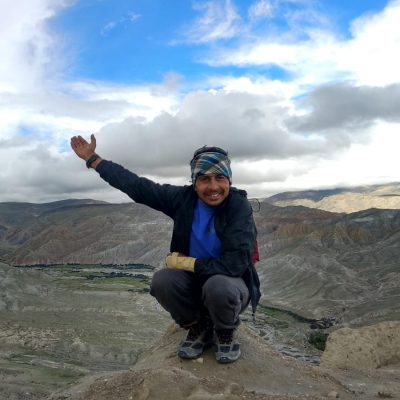
Hem Raj Bastola

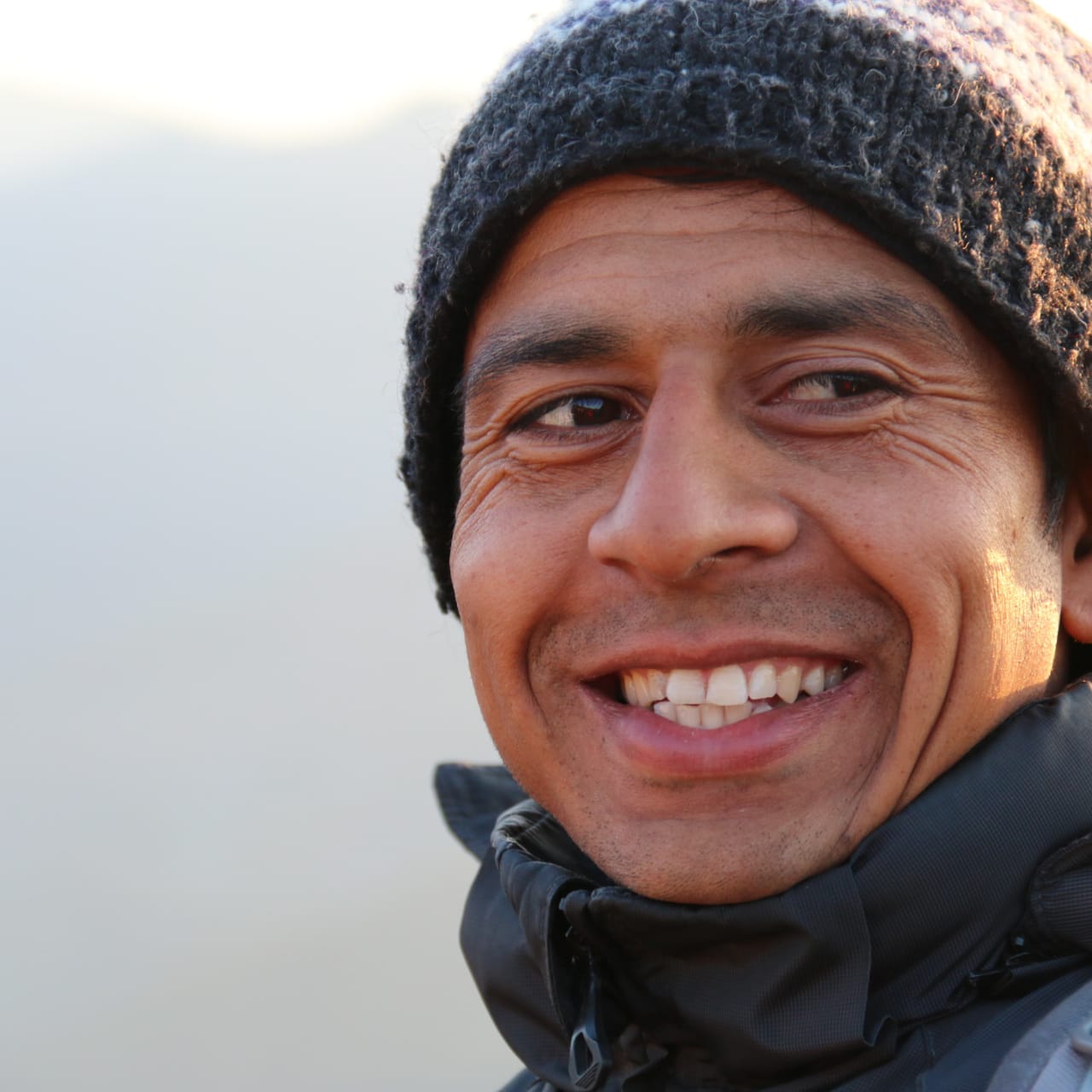
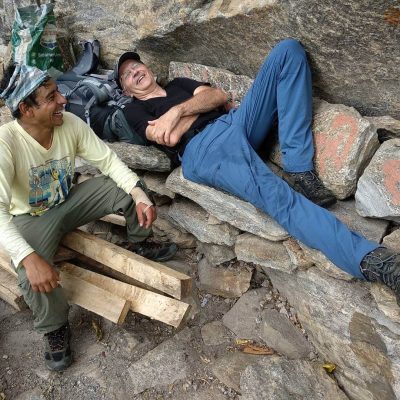
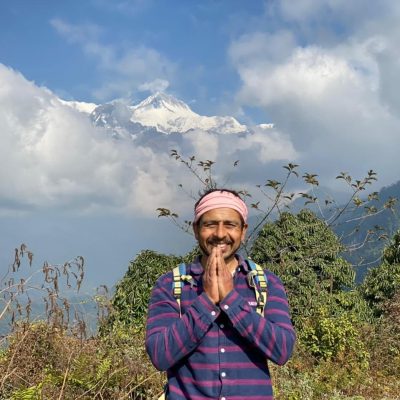
Hem Raj Bastola is a permanent inhabitant of Pokhara-22, a rural area in the outskirts of Pokhara. He has been working as a tour and trekking guide since 2010. Formerly he has worked as a guest service agent in a hotel in Pokara. He started his career as a Cave guide, ticket salesman at Gupteshwor Mahadev Cave in Pokhara. So most of his working experience is related to tourism and hospitality industry. Beside his guiding profession, he enjoys reading and writing poetry. His poets have been published in different forums and medias. When he is not Guiding , he is a full time farmer; raising cows, goats and farming with his wife and two children.
Having done all the treks in Annapurna region, upper Mustang and Manaslu area over many times, he is our expert in the area. He is extremely patient, empathetic and joyful person is what each our guests say !

Kumar Parajuli

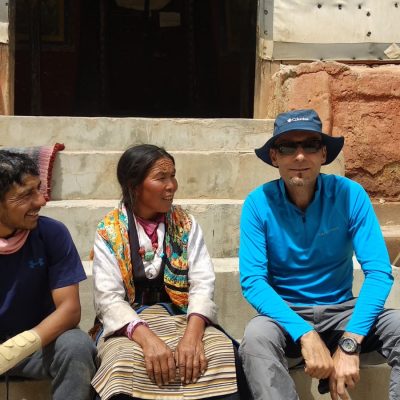
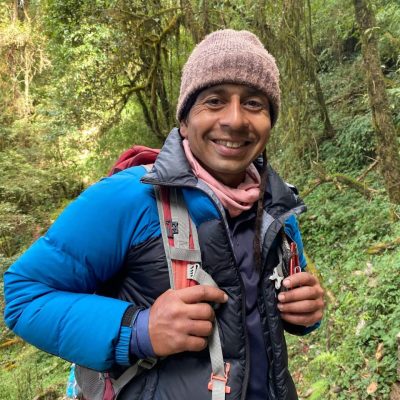
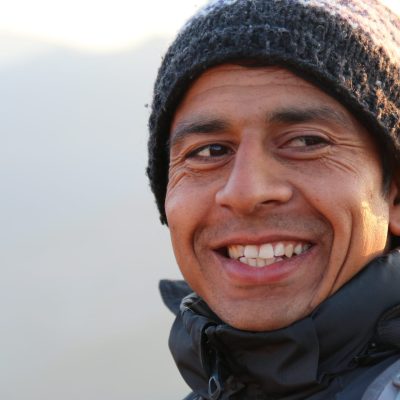
In his early days, Kumar had to walk for hours to reach his school, passing through small villages, hills, and rivers with beautiful views of snow-capped mountains along the way. This sparked his curiosity about the rest of the country and its culture, leading him to develop a strong interest in learning about new places and meeting new people.
After he completed high school, he started his career as a trekking guide due to his passion for nature, culture, and adventure. Over the course of time, he has received extensive training in mountain safety, trekking, and cultural guiding. Kumar has led several groups on treks to popular regions like Annapurna, Everest, and Langtang, showcasing his expertise as a trekking guide. Furthermore, he is equally well-versed in the cultural attractions of Nepal, serving as a cultural guide as well.
Joining Wind Horse Tours as a Nepal partner was a significant milestone in his career. Kumar believes that working as a guide not only allows him to explore the beauty of Nepal but also provides ample opportunities to immerse himself in the diverse cultures of the country. In his leisure time, he enjoys hanging out with friends and continuing his explorations. He is excited about the prospect of traveling and discovering new places beyond Nepal in the future.
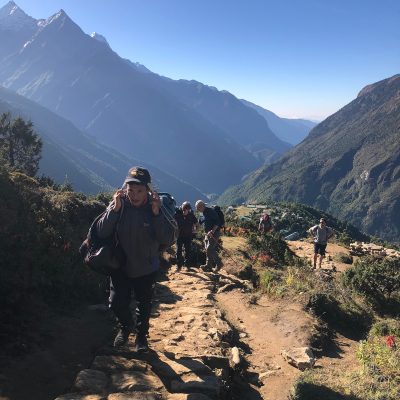
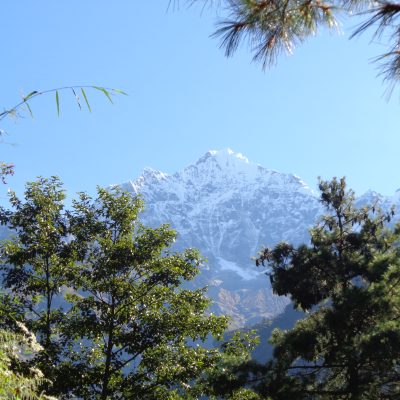
Trip Photos
FAQs
- What is the Gokyo Lakes Trek?
The Gokyo Lakes Trek is a scenic Himalayan journey in the Khumbu region that leads to the stunning Gokyo Valley, home to the world’s highest freshwater lake system. Compared to the classic Everest Base Camp trail, the Gokyo route is quieter, less crowded, and offers a more tranquil trekking experience.
- How long is the Gokyo Lakes Trek?
A typical Gokyo Lakes Trek itinerary spans around 14-15 days, including arrival and cultural sightseeing in Kathmandu, trekking days, and return travel. The trekking portion itself usually takes about 10 to 12 days, depending on acclimatization needs, pace, and optional side trips such as climbing Gokyo Ri or exploring additional lakes in the valley.
- Where does the trek start and end?
The journey begins with a scenic mountain flight from Kathmandu to Lukla, one of the most famous airstrips in the world. From there, the trail follows the Dudh Koshi River through charming Sherpa villages like Phakding and Namche Bazaar, the bustling heart of the Everest region. After reaching the Gokyo Valley and its surrounding viewpoints, you retrace your steps back to Lukla for the return flight to Kathmandu.
- What makes this trek unique?
What sets the Gokyo Lakes Trek apart is its rare combination of natural beauty and solitude.
- Exploration of the world’s highest freshwater lake system, including the stunning turquoise Gokyo Lakes
- A quieter and more peaceful alternative to the busy Everest Base Camp trail, with fewer trekkers and a more serene environment
- Dramatic landscapes featuring glaciers, high-altitude lakes, and sweeping Himalayan vistas
- Panoramic views from Gokyo Ri (5,357 m), considered one of the best viewpoints in Nepal for seeing multiple 8,000-meter peaks
- How difficult is this trek?
The Gokyo Lake Trek is considered moderate to strenuous, requiring a good level of physical fitness and mental endurance. The trek involves:
- 5–7 hours of daily walking
- Steep ascents and descents on uneven terrain
- High-altitude conditions above 5,000 meters
Prior trekking experience is beneficial, though not mandatory, if proper acclimatization and preparation are followed.
- What is the highest point of the trek?
The highest point of the trek is Gokyo Ri at 5,357 meters. This iconic viewpoint rewards you with one of the most spectacular panoramas in Nepal, offering sweeping views of Mount Everest, Lhotse, Makalu, and Cho Oyu.
- How crowded is it compared to Everest Base Camp?
The Gokyo Lakes trail is significantly quieter with about 70% less trekkers than the classic EBC route, offering a more serene experience in the Everest region.
- When is the best time to do this trek?
The ideal seasons for the Gokyo Lakes Trek are spring (March to May) and autumn (September to November). Spring brings mild temperatures and blooming rhododendron forests, while autumn offers crystal-clear skies and the best mountain visibility.
- What kind of landscapes will I experience?
The trek showcases an extraordinary range of landscapes, including:
- Lush forests of pine, oak, and rhododendron in the lower regions
- River Valleys with suspension bridges and cascading waterfalls
- Alpine meadows and yak grazing pastures as you gain altitude
- Glacial moraines and rugged terrain near the Ngozumpa Glacier
- High-altitude lakes and dramatic Himalayan scenery surrounded by towering peaks
- Is it possible to do the Gokyo Lake Trek solo?
No, it is not possible to do the Gokyo Lake Trek solo. As per the new regulation all foreign trekkers must be accompanied by a licensed trekking guide
- What fitness level is required for the Gokyo Lake Trek?
The Gokyo Lake Trek requires a good level of fitness. Regular cardio training and prior hiking experience are highly recommended.
- What permits are required?
You will require the Sagarmatha National Park Permit & the Khumbu Pasang Lhamu Rural Municipality Permit.
- Are permits included in the package?
Yes, all permits and required paperwork are included in your trekking package.
- Can I obtain permits independently?
Permits are generally arranged through a trekking agency, especially when traveling with a guide.
- What type of accommodation is provided?
In Kathmandu, we usually arrange comfortable tourist standard boutique hotels and well-rated heritage properties (3-4* category). While during the trek comfortable tea house lodges with basic facilities.
- What are teahouses like on this trek?
Accommodation on trek primarily consists of teahouse lodges, which are small, family-run guesthouses along the trail. These lodges usually offer:
- Twin-sharing rooms
- Basic bedding
- Communal dining areas
- Shared bathrooms
As you gain altitude, the facilities become more basic compared to those in the lower regions.
- Are attached bathrooms available?
Attached bathrooms are available in some lower villages depending on the season and prior notice, while shared facilities are more common at higher elevations.
- What meals are included?
Only breakfast in Kathmandu with the choice of eating at the restaurant of your preference, while all meals (breakfast, lunch, dinner) along with some tea and coffee during the trek
- What kind of food is available during the trek?
Teahouses along the Everest Base Camp trekking route offer a mix of Nepali and Western meals. Popular dishes include Dal Bhat (rice, lentil soup, and vegetables), Noodles and pasta, Fried rice, Potatoes and eggs, Bread, pancakes, and porridge, Soups and fresh vegetables. You can also find drinks and snacks such as tea, coffee, hot chocolate, lemon drinks, chocolate bars, and soft drinks.
- Is drinking water available?
Yes, bottled or boiled drinking water is available with an extra cost. The price tends to increase as you climb higher. We recommend carrying a reusable water bottle along with water purification tablets, a filter, or a UV purifier.
- Are hot shower available during the trek?
Yes, hot showers are available at most teahouses, usually for an additional fee, depending on the location and altitude. However, availability becomes more limited at higher elevations. In some places, instead of a regular shower, you may only be offered a bucket of hot water for washing.
- How much luggage can a porter carry on the trek?
A porter can carry 18–20 kg in total for two trekkers. This means each trekker can pack around 9–10 kg in the duffel bag carried by the porter.
- What is the baggage weight limit in the Lukla flight?
Flights between Kathmandu and Lukla have a 15 kg baggage allowance per passenger, including 10 kg checked baggage and 5 kg hand carry.
- Is mobile network coverage available?
Mobile coverage is available in lower areas like Lukla and Namche Bazaar but becomes weak or unavailable at higher altitudes.
- Is WiFi available during the trek?
Yes, most teahouses provide WiFi services through paid networks like Everest Link. However:
- Internet speed is generally slow
- Connectivity may be inconsistent or unavailable in higher areas
- Can I charge my devices?
Yes, charging is available at teahouses for an additional fee. In remote areas, electricity may rely on solar power.
- Is altitude sickness a concern?
Yes, altitude sickness can occur above 2500 meters, to minimize this:
- Follow a gradual ascent with proper acclimatization
- Stay well-hydrated
Avoid alcohol and overexertion - Inform your guide immediately
- If symptoms persists descent to lower altitude immediately
- What safety measures are included?
- Experienced licensed trekking guide
- First aid kit
- Planned acclimatization days
- Evacuation facilities if required
- Is travel insurance required?
Yes, travel insurance covering medical expenses, high altitude trekking, and emergency evacuation is highly recommended.
- What extra costs should I expect?
Extra expenses include boiled/bottled drinking water, Wifi and charging, hot showers, snacks & beverages, and other personal expenses.
- How much should I carry for extras?
Plan on to carry USD 15-20 per day per person in local currency depending on your spending habit.
- How much does this trek cost?
The cost depends on factors such as the type of accommodation and group size. Typically, the price ranges from USD 1,500 to USD 1,800 per person, depending on the number of participants in the group. This package usually includes:
- Accommodation in Kathmandu (3–4 star category hotel)
- All necessary trekking permits
- Accommodation during the trek in basic tea house
- Three meals per day along with some tea/coffee during the trek
- Domestic flights (Kathmandu–Lukla–Kathmandu)
- Guide and porter services
- How can I book this trek?
Once your travel dates are finalized, simply complete the booking form on our website and submit your details along with the required deposit. Upon receiving the initial payment, we will send you a booking confirmation and proceed with all necessary land arrangements.
- Do you accept cash payment on arrival?
Yes, the remaining balance can be paid in cash upon arrival in Kathmandu. We accept major currencies including: USD, GBP, EUR, AUD, etc.
Overview
Trip Type
Trekking
Activities Included
Accommodation
3-4* category hotels in Kathmandu and basic village lodge/guest house during the trek
Meals
Only breakfast in Kathmandu, while three standard meals during the trek
Route
Kathmandu-Lukla-Phakding-Namche-Dole-Macherma-Gokyo-Dole-Namche-Lukla-Kathmandu
 Max Group Size
2-8
Best Seasons
Best during the spring and fall
Best Months
March, April, May, October, November
Good Months
February, September
Lean Months
June, July, August
Not Recommended Months
January, December
Max Group Size
2-8
Best Seasons
Best during the spring and fall
Best Months
March, April, May, October, November
Good Months
February, September
Lean Months
June, July, August
Not Recommended Months
January, December