

Phuentsholing–Jaigaon Office
The office where Bhutan, Sikkim, Darjeeling and Nepal meet — and where your trip stops being three countries and becomes one journey.
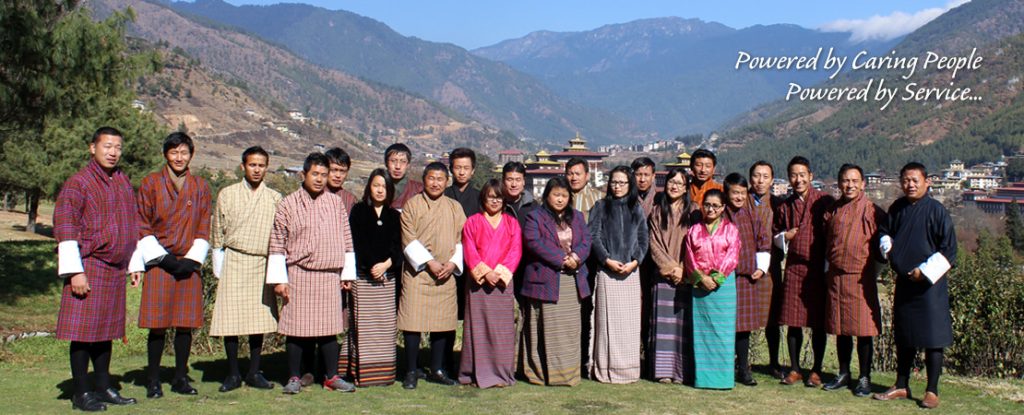
Bhutan–Sikkim–Nepal itineraries are the hardest trips in the eastern Himalaya to run, and almost all of the difficulty happens within a few kilometres of this office.
Three governments. Three permit regimes. Two land borders. Vehicles that cannot cross, so guests change cars and sometimes drivers. Indian restricted-area permits for Sikkim, Bhutanese entry processing, Nepali visas — each issued by a different authority on a different schedule.
Most operators hand this over to an agent and hope. We opened an office here instead, and it is the reason a Bhutan–Sikkim or Bhutan–Nepal combination with us feels like one trip rather than three bookings taped together.
Phuentsholing is the main overland gate into Bhutan. Only two other land crossings — Gelephu and Samdrup Jongkhar — are open to foreign travellers at all, and both are far to the east.
At a glance
- Opened
- 2011, in Phuentsholing
- Liaison office and Sikkim/Darjeeling operations
- Relocated
- 2022, to Jaigaon
- West Bengal, India — the Indian side of the same crossing
- Role today
- Sales, support & coordination
- Working with our operations teams in Thimphu, Delhi and Kathmandu
- Team
- Anand Thapa & Binita Thapa
- Customer experience, and accounts, sales & support
- Time zone
- IST (GMT+5:30)
- 30 minutes behind Thimphu
- Covers
- Bhutan · Sikkim · Darjeeling · Duars
- And the road to the Nepal border at Kakarbhitta
Why we are on the Indian side now
We opened in Phuentsholing in 2011, as a liaison office and the operations base for our Sikkim and Darjeeling programmes. At its busiest it ran with eight full-time staff, handling the volume of traffic that crosses at this gate.
Then Bhutan closed its borders, and stayed closed far longer than anyone expected. Our Phuentsholing team could not work. But we already had people living on the Jaigaon side, a few hundred metres away in India, and they could. So the office moved to them.
It has been in Jaigaon since 2022. In practice this is the same office serving the same crossing — Phuentsholing and Jaigaon are one town with a gate through the middle of it — but we would rather say plainly which side we are on than let a guest arrive expecting otherwise.
The role has changed too. Where it was once primarily operations, it is now sales and support, and the coordination point between our regional teams.
Fifteen years working the same border: the officials, the timings, the days the Indian side shuts for a strike, which hotels in Jaigaon are worth putting a guest in and which are not. That knowledge does not transfer and it cannot be bought in.
What this office handles
Most of it is invisible to guests, which is the point. You notice a border office only when it isn’t there.
- Crossing the border. Entry and exit documentation, stamps and processing on both sides, with someone who knows the officers by name.
- Handover between countries. Vehicles cannot cross, so guests change cars here. We coordinate the Bhutanese and Indian guides and drivers so the handover takes minutes, not an afternoon.
- Indian visa support through the consulate in Phuentsholing, for guests who need one after arriving in Bhutan.
- When Indian roads close. Bandhs and strikes shut the road to Bagdogra with little notice. This office finds the alternative — a different route, a rescheduled flight, a night somewhere sensible.
- When Paro flights don’t fly. Weather closes Paro often enough that we plan for it. We run the overland transfer to Bagdogra so a cancelled flight does not cost you the rest of the trip.
- Hotels and transport in the border area — sourced locally, inspected by people who live here.
- Sales and support for guests and travel-agent partners, and back-up for our Minneapolis and Nijmegen teams when something urgent lands outside their hours.
A gateway to four destinations
Phuentsholing sits at the southwest corner of Bhutan, pressed against Jaigaon in West Bengal — one continuous town divided by an ornate gate. North is the road up to Thimphu. South and east is the Indian plain.
Within a few hours’ drive: the tea estates and forest reserves of the Duars, Darjeeling and Kalimpong, the hill road into Sikkim, Bagdogra airport, and the Nepal border at Kakarbhitta. It is the single most useful place to stand if you are building a trip across this region.
It is also, for what it’s worth, one of the more interesting border towns in Asia.
Visit or call the office
We are on the Jaigaon side, in India. If you are staying in Phuentsholing, we are a short walk through the gate.
Jaigaon, West Bengal, India Open in Google Maps →
Saturday, 10am – 1pm
Guests crossing at this border are given a direct mobile number for the team here before they travel. If something goes wrong at the gate, you are not calling a switchboard in another country.
The team here
See the full team, all offices →A small team, deliberately. This office does not need many people — it needs people who have worked this crossing long enough to know how it behaves.
Both work across the gate daily, alongside our operations teams in Thimphu, Delhi and Kathmandu.


While you are here
Most guests pass through in a morning. If you have an afternoon — waiting on a permit, or breaking the drive up to Thimphu — it is a more rewarding town than it first appears.
- Zangtopelri Lhakhang — the temple in the middle of Phuentsholing town, busy with local worshippers rather than visitors.
- Kharbandi Goemba — up the hill above the town, with a view out across the Indian plain that explains the geography better than any map.
- The riverside vegetable market, daily, where the produce from both countries arrives.
- The Jaigaon bazaar — loud, crowded, and the best place to understand how two economies live off one gate. Market days at Mangalbari are Tuesday and Saturday.
- Walking through the gate itself. Few borders anywhere let you step between two countries this casually, and the change in the street on either side is immediate.
Trips that cross here
This office exists for journeys that do not stop at one border.
Planning a trip that crosses a border?
Tell us where you want to go. We will tell you what is possible, what it costs, and who will be looking after you.