
 +1 612 869 4949
Frequently Asked Questions (Definative Bhutan 2026 Faqs)
Bhutan Entry, Visas & Permits
- How much are monument entry fees in Bhutan ?
Are monument and park entrance fees included in my trip?
No. Since the 2023 policy update, the entry fees are not included and are in addition to the daily SDF (Sustainable Development Fee), you will need to pay for these tickets separately at each location, or your tour operator (like Wind Horse) can include them as a pre-paid “service” in your tour package.
Most Dzongs & Museums charge Nu. 500, with Takstang @1000/For details on the latest entry fees to the monuments, parks, and attractions, visit Bhutan Entrance fees:
- Do I need a visa to visit Bhutan
International Tourists:
Yes. All international visitors—except citizens of India, Bangladesh, and the Maldives—require a visa to visit Bhutan. Bhutan issues an electronic visa (e-Visa) only; visas are not issued by Bhutanese embassies or missions overseas.
The visa carries a one-time application fee of USD 40 and is issued upon payment of the applicable daily Sustainable Development Fee (SDF).If you are organizing your trip through a licensed Bhutanese tour operator, it is best to have them arrange both your visa and SDF. There are no additional service charges for visa and SDF processing when your tour is arranged by an operator.
Indian Citizens:
Indian passport holders do not require a visa but must obtain an Entry Permit to enter Bhutan. This can be applied for online (e-Permit) or obtained on arrival at Paro Airport or at land border entry points such as Phuentsholing, upon payment of the applicable daily SDF. - Can I travel to Bhutan independently or solo without a tour operator or tour guide ?
Yes—but specific regulations still apply.
Since 2022, Bhutan has relaxed the former mandatory “all-inclusive” tour model. Under the country’s High Value, Low Volume tourism policy, travelers now have greater flexibility, while certain services remain regulated.Here’s how independent travel in Bhutan works:
What you can arrange yourself
- You are free to:
- Apply for your own e-Visa (USD 40) or Entry Permit
- Pay the mandatory Sustainable Development Fee (SDF) directly via the official Bhutan Travel & Immigration portal
- Book your own flights (Drukair or Bhutan Airlines)
- Book your own hotels and accommodations
Independent exploration
Once in Bhutan, you may explore the streets, shops, cafés, and restaurants of Thimphu and Paro independently. A guide is not required for walking around town, shopping, or dining in these two valleys.When a guide is mandatory:
A licensed Bhutanese guide is required for:
- Visiting any dzong (fortress), monastery, temple, or museum, even within Thimphu or Paro
- Traveling to any district beyond Paro and Thimphu, such as Punakha, Haa, or Bumthang
- All trekking and high-altitude hikes
Guides are required to protect sacred sites, ensure visitor safety, and comply with national tourism regulations.
Transportation rules
While you may walk independently within city centers, tourists are generally not permitted to use public transport for inter-district travel. Travel between towns must be arranged using a registered private vehicle with a licensed driver.Why many independent travelers still choose an agent
Although independent booking is possible, coordinating:- Monument access
- Guides on specific days
- Route permits beyond Thimphu and Paro
- Vehicles and inter-district logistics
- Trek arrangements and co-ordination
can be complex. In practice, many travelers find that arranging guides, vehicles, and permits independently can result in higher overall costs and added complexity, rather than the flexibility they initially expect
At Wind Horse Tours, we support independent travelers by offering:
- Zero service fees for visa processing and SDF payments
- Cost savings, through preferential hotel and transport rates from long-standing partnerships and our own fleet
- On-demand support of a local and global office, with experienced guides and drivers available only when required—allowing you to maintain independence while staying fully compliant with Bhutanese travel regulations
- Options to take a private tour or join one of many small group journeys
.
- What are the passport requirements?
Your passport must be valid for at least six months from your date of arrival in Bhutan.
Indian citizens:
Indian passport holders may travel using a valid passport, or alternatively, an original Voter ID card may be used in place of a passport.You will need on digital passport size photo to apply visa yourself or you can send one to your Bhutan Tour Operator
- What is the SDF (Sustainable Development Fees) and how much is it?
The Sustainable Development Fee (SDF) is a daily levy paid to the Royal Government of Bhutan to support nation-building initiatives, including education, healthcare, infrastructure, and environmental conservation.
As of 2026, the SDF rates are:
- International tourists: USD 100 per person, per night (reflecting the 50% discount on the standard USD 200 rate, valid until August 2027)
- Indian citizens: Nu. 1,200 per person, per night (approximately ₹1,200)
- Children aged 6–12 years: 50% discount on the applicable SDF rate
- Children under 6 years: Exempt (no SDF payable)
SDF does not cover any food, accommodations or anything and it is a daily fee to be in the country.
- Bhutan SDF Refund Policy: Can I get a refund if I leave early?
Yes. The Sustainable Development Fee (SDF) is refundable for any nights not spent in Bhutan, including cases where you shorten your trip or cancel at the last minute.
How do I claim an SDF refund?
- If you paid the SDF yourself, refund requests must be submitted online through the official Bhutan Travel Portal using your login credentials.
- If you booked through Wind Horse Tours, our team will handle the refund process on your behalf at no additional cost.
When is the refund processed?
Refunds are processed by the Department of Immigration only after you have exited Bhutan and cleared immigration. This allows the authorities to verify your actual departure date and calculate the correct refund amount.
Are there any deductions?
The government refunds the full nightly SDF of USD 100 per night for international visitors and Nu. 1,200 per night for Indian visitors. However, bank transfer fees or credit card processing charges (typically 3–5%) may be deducted from the amount returned to you.
- When should I apply for Bhutan Visa ?
When to Apply: Recommended: 30–45 days before your trip.
Earliest: Up to 90 days in advance.
Latest: At least 10–15 working days prior.Your visa is only processed after the government receives your full Sustainable Development Fee (SDF) and visa fees. Since international bank transfers can take up time to clear and the Department of Immigration requires at least 5 working days for approval, applying early prevents last-minute travel delays.
The Wind Horse Advantage: Early Peace of Mind: We aim to clear your visa and send your final travel documents one month prior to departure.
SDF Protection: If your plans change or you cancel mid-trip, we work directly with local authorities to secure a refund of your unused SDF nights.
Boarding Guarantee: You must present your printed Visa Clearance Letter to board your flight; we ensure this is in your hands well before you head to the airport.
- How to extend your Bhutan visa or stay after arrival? Procedures and Fees
Yes, you can extend your stay while already in the country.
However, you must initiate the request at least 3 to 5 working days before your current visa or permit expires to avoid overstay penalties and ensure your record is updated before you attempt to exit the country.
The process depends on how you originally applied:Via Tour Operator: If you are traveling with an agency, simply inform them of your new dates. They will handle the extension through the Department of Immigration and settle the additional fees on your behalf.
Online (Self-Applied): If you applied for your own e-Visa or e-Permit, you can log back into the Bhutan Immigration Services Portal using your original credentials to submit an extension request
How much does it cost to extend my Bhutan stay?
For international tourists, a trip extension requires a one-time $40 visa fee and a nightly $100 SDF. For Indian nationals, the cost is a nightly Nu. 1,200 SDF (no visa fee required). Please note that additional charges for your hotel, guide, and vehicle will also apply for the extra days.
- Can I decide on what I see in Bhutan or do I have to go with a planned tour?
You can decide what you want to see in Bhutan and how you want to experience it. You do not have to follow a fixed tour itinerary unless you are part of a group tour with a set schedule.
For most travelers, a pre-planned itinerary is prepared in advance, but once you arrive in Bhutan, it can often be adjusted in consultation with your guide, provided the changes do not affect pre-booked services such as hotels or permits.
On private trips, both the guide and itinerary are flexible, allowing you to tailor the experience to your personal interests, pace, and preferences.
- Can I enter Bhutan by land and exit by air (or vice versa)?
Yes, you can enter Bhutan by land and exit by air or vice versa.
Land Entry or Exit points in Bhutan with its counterparts in India
- Phuentsholing : Jaigoan, Alipurduar district, West Bengal on the India side.
Located 155km/4+hrs drive from Bagdogra airport. - Samdrup Jongkhar : Darranga, Tamulpur district, Assam on the Indian side.
It is located about 100km/3hrs drive from Guwahati airport. - Gelephu (Mindfulness city) : Hatisar, Chirang district, Assam
Located 230kms/6hrs drive from Guwahati airport
- Phuentsholing : Jaigoan, Alipurduar district, West Bengal on the India side.
- What is the new GST tax in Bhutan?
Starting January 1, 2026, Bhutan has introduced a 5% Goods and Services Tax (GST) on most tourism-related services, including hotels, tour operator services, guides, and transportation.
Please note that the Sustainable Development Fee (SDF) is exempt from GST and remains unchanged.
This new GST replaces the earlier 10% sales tax that was applied mainly to hotels and restaurants. As a result, accommodation and food costs may effectively decrease, while services such as guides and transportation may see a slight increase. Overall, the change is designed to simplify taxation and create a more transparent pricing structure.
Weather, Climate, Clothing & Packing Guide for Bhutan
- When is the best time to visit Bhutan?
The most popular times to visit Bhutan are spring (March–May) and autumn (late September–November), offering the best combination of weather, scenery, and cultural experiences.
- Spring (March–May):
Ideal for nature lovers, with valleys alive with blooming rhododendrons and wildflowers. Temperatures are mild, making it a great season for sightseeing and moderate trekking. - Autumn (late September–November):
Known for the clearest Himalayan views, crisp air, and deep blue skies. This is also the peak season for major festivals (Tshechus) and high-altitude trekking. - Winter (December–February):
An off-peak season with cold nights and early mornings, but generally clear, sunny days and stable weather. Snowfall is mostly limited to high mountain passes. While not suitable for high-altitude treks, winter is ideal for cultural tours and walks in lower valleys and subtropical forests. As most towns and villages in the eastern Bhutan and southern Bhutan are located at lower elevation, winter is best time to visit them. - Summer (June–August):
Warm and pleasant, with occasional monsoon rains, mostly in the evenings or at night. The countryside is lush and green, crowds are fewer, and low-season rates are available.
- Spring (March–May):
- How cold does it get in Bhutan in winter?
Winter days in Bhutan are often sunny, but nights can drop below freezing in core valleys such as Paro and Thimphu.
Average daytime temperatures in Paro, Thimphu, and other areas of similar altitude (including Gasa and Trongsa) range between 8°C and 14°C (46°F–57°F). Nighttime temperatures typically fall between –5°C and –1°C (23°F–30°F).
Punakha and Wangdue, which lie at a lower elevation than Paro and Thimphu, are noticeably warmer. Daytime temperatures average 16°C to 20°C (61°F–68°F), while nighttime temperatures range from 3°C to 8°C (37°F–46°F).
Bumthang and Gangtey (Phobjikha) valleys are located at higher elevations and therefore experience colder winters. Average daytime temperatures range from 4°C to 10°C (39°F–50°F), and nighttime temperatures can drop to between –5°C and 1°C (23°F–34°F).
The southern towns—including Phuentsholing, Gelephu, and Samdrup Jongkhar, as well as other settlements along the Indian border—enjoy mild and pleasant winter weather with dry, crisp air. Average daytime temperatures range from 23°C to 25°C (73°F–77°F), and nighttime temperatures typically range between 13°C and 15°C (55°F–59°F).
Eastern Bhutan, including Trashigang, Mongar, and Lhuentse, is generally warmer than the western and central regions. These districts experience a semi-tropical to temperate climate, making them comfortable for winter travel. Average daytime temperatures range from 13°C to 21°C (55°F–70°F), with nighttime temperatures averaging 3°C to 10°C (37°F–50°F).
- Does it snow in Thimphu and Paro?
Yes—but only occasionally.
Snowfall in Thimphu and Paro is not guaranteed every winter, but it does happen during particularly cold spells, usually between late December and February.
Both valleys sit at around 2,200–2,400 meters, which means winter precipitation typically falls as rain or sleet, with snow occurring only during strong cold waves.Snowfall Pattern in Thimphu and Paro
While the early 2000s saw more consistent winter blankets, the last decade has seen snow become a rare and celebrated event due to a steady warming trend in the Himalayas.- 2000 – 2010: Regular & Moderate. Snow was a seasonal expectation. Most winters saw 2–4 days of settling snow.
- 2011 – 2019: Erratic & Light. A noticeable decline began. Snow became sporadic, often appearing as light dustings that melted by noon.
- 2020 – 2025: Rare: Low-lying areas of the city experienced almost no snow, while high-altitude outskirts saw less than previous decades.
Snow rarely accumulates in the city for more than a short time. Some winters see no snowfall at all in Thimphu or Paro
In contrast, nearby mountain passes such as Dochula Pass (3,100 m) near Thimphu and Chele La Pass (3,988 m) near Paro receive snow almost every winter. - Are the first days of December a good time to visit Bhutan?
- Does it snow in Bhutan? Complete Guide for Snow-Seekers and Avoiders
For Snow-Seekers: Where to Find a White Winter
If your goal is to photograph snow-covered monasteries or enjoy fresh Himalayan snow, aim for January and February and head to Phobjikha (Gangtey), Bumthang, or the Haa Valley. These higher-altitude regions reliably transform into winter wonderlands during the colder months.
Even when the main valleys remain snow-free, a short drive from Thimphu to Dochula Pass (3,100 m) or from Paro to Chele La Pass (3,988 m) will almost always reward you with snow underfoot and stunning panoramic mountain views.Snowfall is a cherished event in Bhutanese culture. If it snows in Thimphu or Paro, the government often declares a spontaneous national holiday—locally known as a “Snow Day”—so everyone can enjoy it.
For Snow-Avoiders: How to Stay Warm & Dry
If you prefer Bhutan’s crisp winter skies without freezing temperatures, there are several warmer regions that remain comfortable year-round.
Southern and Eastern Bhutan: Towns such as Phuentsholing, Samdrup Jongkhar, and Gelephu never receive snow and enjoy mild winter temperatures of around 20°C (68°F). In the east, Trashigang, Mongar, and Lhuentse, as well as the Punakha Valley in western Bhutan, are noticeably warmer than Paro, Thimphu, and central Bhutan, making them very comfortable for winter travel. Average daytime temperatures in these areas are around 15°C (58°F) or higher. - Do I need to pack formal wear for Bhutan?
No. Bhutan is generally relaxed and informal, and wearing formal attire such as suits or cocktail dresses would actually feel out of place, as locals and travelers alike dress simply and practically.
For everyday sightseeing, hotel dinners, and local restaurants, neat trousers with a sweater, fleece, or casual shirt are more than sufficient.
If you plan to attend a Tshechu (festival), smart casual clothing is recommended as a sign of respect, since locals will be wearing their finest traditional attire (Gho and Kira).
- How is spring different from autumn for trekking in Bhutan?
Spring (March–May) is celebrated for its spectacular natural beauty. Trekking trails and valleys come alive with blooming rhododendrons, wildflowers, and lush vegetation, creating a vivid, colorful landscape. It is the most scenic season for nature lovers and photographers who enjoy forests in full bloom.
Autumn (late September–November) is prized for its stable weather and crystal-clear skies. The air is crisp and dry, offering the best visibility of distant Himalayan peaks and dramatic mountain panoramas. This is the preferred season for high-altitude treks and for those focused on mountain views rather than floral displays.
- Spring = color, flowers, and lush scenery
- Autumn = clarity, mountain views, and ideal trekking conditions
- What should I pack for tour (non-trek) trip to Bhutan? Checklist Guide for Bhutan travel
Bhutan Travel Packing Checklist Guide
(For Cultural Tours & Sightseeing – Non-Trekking)Essential Documents & Money
☐ Visa Clearance Letter
Printed copy. Digital versions may not always be accepted at airline check-in.☐ Passport
Must be valid for at least 6 months from your date of arrival.☐ Travel Insurance
Not compulsory but suggested with medical coverage, including emergency evacuation.☐ Crisp USD Cash (if carrying foreign currency)
Bills should be printed after 2006, with no tears, marks, or writing. Bhutanese banks and exchange counters are very selective.Clothing
Bhutan is conservative, especially at religious sites. Layering helps with changing temperatures.
☐ Shirts (2–3)
Collared shirts with sleeves required for entry into Dzongs and monasteries. Polo shirts or button-downs work well. Sleeveless tanks are often not allowed.☐ Long Trousers / Pants
Full-length trousers are mandatory for visiting religious and government buildings.☐ Long Skirt (Optional)
Ankle-length skirts are a comfortable and respectful option for women.☐ Lightweight Down or Insulated Jacket
Essential for cool evenings, even during summer months.☐ Thermal Base Layer (November–March)
Recommended for winter travel and cold mornings.☐ Modesty Scarf or Pashmina
Useful for covering shoulders at temples or staying warm in drafty interiors.Footwear
☐ Slip-On Shoes or Loafers (optional)
Convenient for temples and monasteries where shoes must be removed frequently.☐ Comfortable Walking Shoes / Sneakers
Ideal for city walks, museum visits, and sightseeing.☐ Warm Wool Socks
Helpful on cold stone floors inside monasteries and Dzongs.☐ Hiking Shoes
While sturdy sneakers with good tread can work, proper hiking shoes with good ankle support are strongly recommended for the hike to Paro Taktsang (Tiger’s Nest) and other day hikes. Make sure they are well broken-in before your trip to avoid discomfort or blisters.Electronics & Personal Care
☐ Universal Power Adapter
Bhutan uses Type D, F, and G power sockets.☐ High-SPF Sunscreen & Lip Balm
Essential due to strong high-altitude UV exposure, even on cool or cloudy days.☐ Motion Sickness Medication
Highly recommended for Bhutan’s winding mountain roads, especially on longer drives.Day Essentials
☐ Day Pack (Small Backpack)
For carrying water, camera, jacket layers, sunscreen, and personal items during daily excursions.☐ Hat (Sun or Warm Hat)
A sun hat is useful year-round; a warm hat is recommended for winter mornings and evenings.Layered clothing is essential in Bhutan.
You can travel from warm valleys to cold mountain passes in a single day, and temperatures often drop quickly after sunset—even in summer. Dressing in layers lets you adjust easily to changes in altitude, sun, shade, and time of day, keeping you comfortable throughout your journey.When visiting Dzongs and certain temples, No shorts or short skirts — legs must be covered to the ankle. No sleeveless tops — shoulders must be covered. Collared shirts are preferred — T-shirts are fine for street wear, but collared shirts or light jackets are recommended for temples and Dzongs.
The Footwear Rule: You must remove your shoes and hats before entering the inner sanctum of a temple. Tip: Wear “Temple Socks”—thick, warm socks—to keep your feet comfortable on cold stone floors.
- Are there luggage weight limits for flights to Bhutan?
Money, Banking, Currency Exchange, Payments & ATM
- What is the local currency in Bhutan ?
- Can I exchange currency immediately upon arrival in Bhutan?
Yes. You can exchange major foreign currencies at the Foreign Exchange Desk at Paro International Airport immediately after clearing customs. Exchange services are also available at major banks and high-end hotels.
- Pro Tip: If you plan to exchange unused Ngultrum back into your home currency at the end of your trip, you must provide the original exchange receipt (Encashment Certificate) from a bank.
- Best Rates: For everyday spending, your guide can often assist you in finding the most favorable rates at local authorized shops. However, please note that these shops do not typically provide the official receipts required for “buy-back” at the end of your journey.
- Which foreign currencies can be exchanged in Bhutan?
Banks and authorized money exchange counters in Bhutan typically accept the following currencies:
- US Dollar (USD)
- Euro (EUR)
- British Pound (GBP)
- Japanese Yen (JPY)
- Swiss Franc (CHF)
- Australian Dollar (AUD)
- Chinese Yuan (CNY)
- US Dollars and Euros are the most widely accepted and can often be exchanged even at local shops and hotels.
Important notes:
Higher-denomination notes (100 & 50s) are preferred and usually receive better exchange rates. Small-denomination bills ($20 or smaller) may be difficult to exchange or may be accepted at a lower value. Higher denomination means like 100 or 50. Torn, old, or heavily worn notes are often refused.
- Do ATMs work, Can I withdraw money from ATMs in Bhutan?
Yes. Most international and Indian debit/credit cards—including Visa, MasterCard, and RuPay—work at ATMs operated by the Bank of Bhutan and Bhutan National Bank.
Please note that foreign transaction and withdrawal fees apply. ATM services may occasionally be affected by network or banking issues, so it is advisable to carry some cash as a backup, especially when traveling outside major towns.
- Is Indian currency (INR) accepted in Bhutan?
Yes. Indian Rupees are widely accepted across Bhutan. The Bhutanese Ngultrum (BTN) is pegged to the INR at a 1:1 rate.
Important notes:
- ₹10, ₹20, ₹50, and ₹100 notes are the most commonly accepted.
- ₹500 and ₹2,000 notes are not accepted by banks in Bhutan or government agencies; however, shops and hotels usually accept them at their discretion.
- Are credit cards widely accepted in Bhutan?
Credit cards—especially Visa and MasterCard—are accepted at five-star hotels, some mid-range hotels, and selected souvenir shops in major towns. However, Bhutan remains largely a cash-based economy, particularly for small purchases, local markets, taxis, and rural areas.
A surcharge of approximately 3% to 5% is commonly applied to credit card transactions.
- Can international tourists use digital wallets in Bhutan?
While Indian tourists commonly use UPI, most international travelers currently rely on cash or physical credit/debit cards in Bhutan.
International visitors may also use goBoB, a digital wallet offered by the Bank of Bhutan. The wallet can be set up before arrival and funded via credit card or bank transfer. Bank of Bhutan charges small fees for fund transfer.
For most International travellers, carrying cash remains the most reliable payment method. - Can I use UPI (BHIM, PhonePe, Google Pay) in Bhutan?
Yes. As of 2026, UPI is one of the most convenient payment methods for Indian travellers in Bhutan. You can scan Bhutan QR codes at many retail shops, cafés, and hotels in major towns of Bhutan.
Payments are deducted instantly in INR from your Indian bank account. Availability or network issue can sometimes prevent usage, so carrying some cash is still recommended.
- Can I use digital payments or Crypto (Binance Pay) in Bhutan?
Yes! While cash (USD/INR/Ngultrum) is still vital, Bhutan is modernizing. Many luxury hotels and shops in Thimphu now accept digital payments. Bhutan has also integrated Binance Pay for certain high-end services.
For daily expenses, we recommend having some cash, but your guide can help you use local apps like goBoB or mBOB for smaller transactions. - Can I use Indian Rupees in Bhutan?
- Bhutan SDF Refund Policy: Can I get a refund if I leave early?
Yes. The Sustainable Development Fee (SDF) is refundable for any nights not spent in Bhutan, including cases where you shorten your trip or cancel at the last minute.
How do I claim an SDF refund?
- If you paid the SDF yourself, refund requests must be submitted online through the official Bhutan Travel Portal using your login credentials.
- If you booked through Wind Horse Tours, our team will handle the refund process on your behalf at no additional cost.
When is the refund processed?
Refunds are processed by the Department of Immigration only after you have exited Bhutan and cleared immigration. This allows the authorities to verify your actual departure date and calculate the correct refund amount.
Are there any deductions?
The government refunds the full nightly SDF of USD 100 per night for international visitors and Nu. 1,200 per night for Indian visitors. However, bank transfer fees or credit card processing charges (typically 3–5%) may be deducted from the amount returned to you.
- Should I exchange money back before I leave?
Yes. The Ngultrum is not traded internationally. Ensure you exchange any remaining BTN back to your preferred currency at the airport or a bank before departing the country.
Should I exchange money before arriving in Bhutan?
No, you don’t need to change money before arriving in Bhutan by paying high fees. You can easily change into local currency in Bhutan upon arrival - How much money should we take, and can we change it back before leaving Bhutan?
If you exchange more money than needed, it is generally easy to convert unused Bhutanese Ngultrum into Indian Rupees at local shops or exchange counters. If you have kept your original exchange receipt, you may also change it back into original foreign currency like USD or other foreign currencies at a bank.
As for how much to carry, this varies by travel style. If your trip already includes full package of tours, accommodation, meals, and transport, we recommend budgeting approximately USD 10–30 per person per day for personal expenses such as drinks, laundry, souvenirs, or optional offerings at temples and tips.
Rather than exchanging all your money at once, it is often more convenient to change smaller amounts during your trip as needed.
- What is the new GST tax in Bhutan?
Starting January 1, 2026, Bhutan has introduced a 5% Goods and Services Tax (GST) on most tourism-related services, including hotels, tour operator services, guides, and transportation.
Please note that the Sustainable Development Fee (SDF) is exempt from GST and remains unchanged.
This new GST replaces the earlier 10% sales tax that was applied mainly to hotels and restaurants. As a result, accommodation and food costs may effectively decrease, while services such as guides and transportation may see a slight increase. Overall, the change is designed to simplify taxation and create a more transparent pricing structure.
- Why should I trust Wind Horse Tours with my money and my trip?
Choosing a tour operator in the Himalayas is about reliability, accountability, and local expertise—not just price or a good website.
Wind Horse Tours has been trusted by travelers since 1998, making us one of the longest-established, locally founded operators in the region. Founded by local guides, we have successfully guided thousands of travelers through decades of policy changes, logistical challenges, and evolving travel regulations.
Why travelers choose Wind Horse:
- Over 25 Years of Proven Experience: We have firsthand experience navigating everything from changing visa rules to weather disruptions and complex logistics.
- Direct Local Presence: We operate with our own offices and staff in Bhutan (Thimphu, Paro, Phuentsholing) and across the Himalayas—your trip is never outsourced to unknown third parties.
- Travelers Designing Trips for Travelers: As experienced world travelers ourselves, we bring a genuine understanding of travel—its challenges, comforts, and small details that make a journey smooth and rewarding.
- 24/7 Support Across Time Zones: From planning at home to travel on the ground, someone from the Wind Horse team is always available.
- Financial Transparency & Refund Support: If plans change or trips are shortened, we assist directly with authorities, hotels or airlines to secure eligible refunds whenever possible.
- Senior Guides & Safe Drivers: We work only with highly experienced guides and drivers known for their safety, cultural depth, and genuine care.
- Personalized Service: You work with dedicated advisors who treat your trip as if it were their own—not a booking number.
- Verified Track Record: Our unedited reviews consistently highlight peace of mind, organization, and trust.
In short: we combine local ownership, decades of experience, and the perspective of seasoned travelers to ensure your journey is safe, smooth, and deeply rewarding.
Trekking in Bhutan
- Is a guide mandatory for trekking in Bhutan? Can I trek independently ?
Independent trekking is not permitted in Bhutan. All trekkers must be accompanied by a licensed Bhutanese guide and a support team, where camp and food arrangements in needed.
Some trekking areas require National Park permits and some even need military clearance and those are not issued without the local tour operator’s undertaking and the presence of guides on the trails.
- Are the tents shared, and what are the camping arrangements during the trek?
During the trek, accommodation is provided in high-quality, two-person tents, which are shared by two guests of the same booking or gender unless otherwise requested. Single tent can be requested (fees may apply).
All camping logistics are fully taken care of by our trekking crew. Each campsite includes:- Sleeping tents
- Simple trek mattress with small blow pillow
- Hot water bag
- A dining tent with tables and chairs
- A kitchen tent for meal preparation
- Toilet tents ( simple dug pit – wherever feasible)
Our staff sets up and dismantles the camp each day, and pack animals carry the equipment between camps. Warm meals are prepared fresh daily, and sleeping arrangements are designed for comfort and safety, even at higher altitudes.
- Do I need to bring my own sleeping bag?
Yes, we strongly recommend bringing your own sleeping bag, as personal comfort and fit vary greatly. A sleeping bag you are familiar with will always be warmer and more comfortable, especially on cold, high-altitude treks.
If you do not own a sleeping bag and do not trek frequently, Wind Horse can provide a sleeping bag for a small cleaning fee of US$20 or so. Our rental bags are down-filled and made in Nepal. They are clean and functional but not equivalent to high-end international brands, so they may be less warm or compact than premium models.
For maximum warmth and comfort—especially on longer or higher-altitude treks—bringing your own quality sleeping bag is recommended.
Wind Horse provides tents, mats, mini-blow pillow and sleeping bag liner for extra warmth or protection. - What medications should I bring to Bhutan?
You should bring all prescription medications you take regularly, in sufficient quantity for your entire trip. Keep medicines in their original labeled containers and carry them in your hand luggage.
We also recommend bringing:
- Anti-diarrheal medication
- Basic pain relief and cold/flu medicine
- Medication for motion sickness (especially for winding mountain roads)
If you are trekking, also bring:
- A basic personal first-aid kit
- Water purification tablets (iodine) or a portable water filter
- What gear and clothing do I need for a trekking adventure in Bhutan?
Bhutan Trekking Packing Checklist
(High-Altitude & Multi-Day Treks)Focus: Performance fabrics, moisture control, and cold-weather protection
Technical Gear
☐ Duffel Bag (80L or larger)
Soft-sided and waterproof. This is carried by porters or pack animals—hard suitcases are not suitable.
Wind Horse can provide protective duffel bags over your bag.☐ Daypack (30L)
With a rain cover for water, snacks, extra layers, camera, and personal items.☐ 4-Season Sleeping Bag
Rated to at least –15°C (5°F) for cold nights at high-altitude camps.
Wind Horse can rent (cleaning fees) but we recommend bringing your higher quality ones as ours are made in Nepal and may be inferior in quality.☐ Trekking Poles
Strongly recommended for steep ascents and especially Himalayan descents. Wind Horse can provide a simple trekking poles.☐ Headlamp
Essential for campsites and early starts. Bring extra batteries—cold drains batteries faster.Performance Clothing
☐ Merino Wool Base Layers (2–3 sets)
Tops and bottoms. Avoid cotton, as it retains moisture and increases risk of hypothermia.☐ Insulated Down Parka
Critical for evenings and early mornings at high-altitude camps.☐ Waterproof Outer Shell (Jacket & Pants)
Breathable, windproof, and waterproof (Gore-Tex or similar).☐ Trekking Pants
Quick-dry, lightweight, ideally with zip-off or stretch fabric.☐ Gaiters
Useful for muddy trails, snow, or wet grass.☐ Gloves
One thin liner pair and one insulated, waterproof pair.Footwear & Health
☐ Trekking Boots
Waterproof, high-ankle support, and well broken-in before the trip.☐ Camp Shoes
Lightweight sandals, Crocs, or sneakers for evenings at camp.☐ Altitude Medication
Consult your doctor about Diamox (Acetazolamide). Oxygen bottles is available for purchase.☐ Blister & Foot Care Kit
Moleskin, athletic tape, antiseptic wipes, and blister plasters.Pack light but warm. Bhutanese trekking crews provide tents, meals, and logistics—but your personal clothing and sleeping gear determine your comfort at altitude. Recommend high protein and energy bars, and favourite snacks.
Your luggage is carried by horses or yaks and suggest limiting the trek luggage to 15kgs each. - What kind of luggage or bag should I bring for a trek in Bhutan?
For trek with Wind Horse Tours in Bhutan, luggage are carried by pack animals (in most case by mules/ponies) and Yaks sometimes in the higher regions
Because luggage on treks is carried by mules, ponies, or yaks (not human porters), choosing the right bag is essential—for both the safety of your gear and the comfort of the animals.We recommend bringing two separate bags:
- The Trek Bag: A soft-sided duffel bag containing only your trekking essentials. This is the bag that will be carried on the trail
- The Storage Bag: A separate suitcase or travel bag for non-trek items, which we will store securely at your hotel or our office while you are on the trek.
Duffel Bags vs. Suitcases
Hard-sided suitcases cannot be securely lashed onto animals and may cause injury, so bring soft-sided duffle bag
(A soft-sided duffel with wheels is acceptable if needed.) Bags that are too long may drag on the ground (our mules are small), while very wide bags can rub against trees or rocks on narrow trails. Ideally bring 100lts or smaller duffle that are no longer than 30-32in tall and around 14-15in wide.Weight: While we do not impose a strict weight limit, we strongly recommend keeping your trek bag to 10–12 kg (22–26 lbs) per person. If you expect to carry more than this, please let us know in advance so we can arrange additional pack animals for the safety of the animals and the smooth running of your trek.
Protecting Your Gear
Your duffel is usually placed inside a heavy-duty Wind Horse outer bag for extra protection. Despite precautions, rain and rough terrain are always possible. We strongly recommend using waterproof dry bags or plastic liners inside your duffel to keep clothing and sleeping gear dry. - Are trekking gear rentals available in Bhutan?
Yes, there are a few trekking gear rental shops in Bhutan, but options are very limited. As Bhutan has a small market, rental shops open and close frequently, and availability cannot be guaranteed.
There are several outdoor and trekking shops in major towns, but selection is limited, especially when it comes to sizes, technical gear, and quality. For this reason, we strongly advise not relying on Bhutan for critical trekking equipment.
For longer or high-altitude treks, essential items such as trekking boots, sleeping bags, jackets, and backpacks should be brought from home and properly tested before your trip.
.
- Is food and water safe in Bhutan?
Food safety in Bhutan is generally good, but travelers should take standard precautions:
- Drink only bottled or boiled water
- Avoid tap water, and ice cubes which may be from unfiltered water.
- Eat well-cooked food
- Avoid unpasteurized dairy products
- Wash hands frequently or use alcohol-based sanitizer
With Wind Horse Tours:
- We provide bottled drinking water in our vehicles during sightseeing tours
- On treks, we supply boiled drinking water at campsites and during the day. All meals on trek are freshly prepared and cooked hygienically by our trained staff. Additional fluids such as tea and juices are provided with meals during the day,
- As an extra precaution— while trekking—it is recommended that you carry a personal water filter or water-purifying tablets, even though safe boiled water is provided. This offers added flexibility during long walking days and remote sections of the trail.
- Is travel insurance mandatory for trekking in Bhutan?
Travel Insurance is not mandatory but highly recommended, especially if you trekking in Bhutan.
Trekking in the Himalayas is inherently unpredictable. Without insurance, a single emergency can be financially devastating:
Rescue Costs: A helicopter evacuation from a remote trail cost between $3,000 and $15,000 USD. Helicopter operators often require a cash deposit or a “Guarantee of Payment” before they will dispatch a rescue.
- Is altitude sickness a concern in Bhutan?
Altitude sickness is rare for touring, as most travel is by vehicle. Even if you hike high, you will and can always descend lower to lower elevation. However, it can affect travelers who are trekking or hiking at higher elevations.
To reduce risk:- Ascend gradually
- Stay hydrated
- Allow rest days
- Descend immediately if symptoms worsen
Symptoms may include headache, nausea, insomnia, and dizziness. Severe altitude illness can be dangerous and requires prompt medical attention. Consider bring altitude medication such as Diamox, Oxygen Spray Cannister (available in Bhutan)
- Is helicopter evacuation possible in Bhutan?
Yes, helicopter evacuation is available in Bhutan and it is highly efficient. It is the primary method for medical rescues in remote, high-altitude regions and along the trekking routes.
Service Providers: Royal Bhutan Helicopter Services (RBHSL)and Heli Bhutan are the two companies using specialized high-altitude aircraft.
During daylight hours and weather permitting, helicopters can be dispatched immediately. Your Guide contact Wind Horse and who in turn will coordinate with the Helicopter providers, Emergency Medical Team and Hospital. A medical professional must typically authorize the evacuation to ensure it is medically necessary.
Constraints: Flights operate under Visual Flight Rules . Flights don’t operate during the high winds, heavy mist and heavy rains that can prevent flying,
- How does Wind Horse manage altitude sickness and safety on treks?
Your safety is our top priority on every trek. Wind Horse follows a layered and proactive approach to high-altitude safety:
- Trained guides: All of our trekking guides are trained in basic First Aid and are well-versed in recognizing, preventing, and managing Acute Mountain Sickness (AMS).
- Emergency altitude equipment: On most high-altitude treks in Bhutan, we carry a Portable Altitude Chamber (PAC)—a lightweight, inflatable hyperbaric chamber designed to treat severe altitude illness (HAPE/HACE) by simulating a descent of approximately 2,000 meters (6,000+ feet).
- Supplemental oxygen: Small portable oxygen canisters are available for purchase in Thimphu and Kathmandu. These can be helpful for temporary relief of shortness of breath, altitude acclimatization, or post-trek recovery, though they are not a substitute for proper acclimatization.
- Careful acclimatization planning: All of our itineraries are designed with built-in acclimatization days and gradual elevation gains to reduce the risk of altitude-related illness.
- Communication & evacuation support: Mobile phone reception is available in many trekking areas. In the event of a serious emergency, our local offices in Thimphu and Kathmandu maintain 24/7 support and can coordinate helicopter evacuation when required.
From our experience, safe and rewarding high-altitude trekking comes down to good planning and seasoned crews who have walked these routes year after year.
- Does travel insurance cover helicopter evacuation in Bhutan ?
Yes, but only if your policy explicitly includes High-Altitude Emergency Evacuation. Standard travel insurance policies often exclude activities above 2,500 or 3,000 meters, which makes them insufficient for most treks in Bhutan.
For any trek involving high mountain passe, your insurance policy must cover search and rescue (SAR) and medical evacuation up to 6,000 meters (approx. 19,700 feet).
Medical Necessity vs. Convenience
Insurance providers only cover helicopter costs if the evacuation is deemed medically necessary by a professional.The “Guarantee of Payment
Royal Bhutan Helicopter Services and Heli Bhutan, requires a Guarantee of Payment before a helicopter is dispatched.Recommended Coverage Features : When shopping for a policy for Bhutan, ensure it includes:
- Emergency Medical Evacuation: Minimum of $100,000 USD.
- Medical Repatriation: To fly you back to your home country if needed.
- 24/7 Emergency Assistance: A dedicated hotline that can coordinate with our Thimphu office.
Wind Horse Recommended Providers
While we do not sell insurance, most of our successful claims and smooth rescues have been managed through:- Global Rescue: (The gold standard for high-altitude evacuation).
- World Nomads: (Explorer Plan specifically).
- Allianz / Travel Guard: (Only with specific “Adventure” or “High-Altitude” riders).
Check your policy before you fly! Always email your insurance company and ask: “Does this policy cover helicopter evacuation for medical reasons at altitudes up to 6,000m in Bhutan?” Keep their written confirmation in your email.
- What is the maximum group size on Wind Horse treks in Bhutan?
- Private and custom group treks:
For treks organized by your own agent, organization, or tour leader, there is no fixed maximum group size. However, some trekking routes and campsites have limited camping space, which may naturally restrict numbers. We advise and plan accordingly to ensure comfort and minimal impact. - Wind Horse Small Group Journeys (fixed departure dates):
These trips are intentionally kept small, with a maximum of 9 participants per journey. As travelers often do not know each other beforehand, smaller groups allow for a more friendly, personal, and immersive trekking experience, while also ensuring smoother logistics and greater flexibility on the trail.
We believe smaller groups enhance safety, environmental responsibility, and the overall trekking experience.
- Private and custom group treks:
- How is spring different from autumn for trekking in Bhutan?
Spring (March–May) is celebrated for its spectacular natural beauty. Trekking trails and valleys come alive with blooming rhododendrons, wildflowers, and lush vegetation, creating a vivid, colorful landscape. It is the most scenic season for nature lovers and photographers who enjoy forests in full bloom.
Autumn (late September–November) is prized for its stable weather and crystal-clear skies. The air is crisp and dry, offering the best visibility of distant Himalayan peaks and dramatic mountain panoramas. This is the preferred season for high-altitude treks and for those focused on mountain views rather than floral displays.
- Spring = color, flowers, and lush scenery
- Autumn = clarity, mountain views, and ideal trekking conditions
- How many of these Bhutan Chomolhari Trek trips have Wind Horse tours run?
- What is the best time of year to do the Chomolhari Trek? Why?
All the Chomolhari Trek departure dates listed on our website are scheduled during the best possible time of year, taking into account weather conditions as well as local festivals.
In general, the best seasons for the Chomolhari Trek are spring (March to May) and autumn (October to November):
- Spring: While March can still feel like winter at higher elevations, conditions improve steadily. For the best balance of stable weather and blooming landscapes, April and May are ideal.
- Autumn: Although autumn officially begins in September, the tail end of the monsoon can sometimes bring rain into early October. For clearer skies and more reliable trekking conditions, mid-October through November is the best period.
- Why choose the Snow Leopard Chomolhari Trek over other Bhutan treks? Are there alternatives you recommend?
All of our Bhutan treks are carefully selected and offered because each delivers a rewarding Himalayan experience in its own way. That said, some treks stand out depending on the time available, physical demands, and scenery you are seeking.
Among Bhutan’s high-altitude treks, our top recommendation is the Snowman Trek, followed by the Chomolhari–Laya Trek (Above the Clouds). These are truly legendary routes—but they require significantly more time and, especially in the case of the Snowman Trek, very strong physical endurance.
This is where the Snow Leopard Chomolhari Trek becomes a standout choice.
Why we highly recommend the Snow Leopard Chomolhari Trek:
- It offers a true high-altitude Himalayan experience in just 6 trekking nights, including one rest day at base-camp for optional exploration.
- By the third day of trekking, you are already camping near the base of Mt. Chomolhari (7,314 m)—one of Bhutan’s most iconic and beautiful peaks.
- The route is a loop trek, which means changing scenery almost every day and no backtracking.
- It strikes an excellent balance between dramatic mountain views, alpine camps, and physical challenge—without the extreme commitment of longer expeditions.
Other excellent Bhutan treks we recommend:
Druk Path Trek: A classic high trail between Paro and Thimphu with lakes, ridgelines, and panoramic views; shorter and less demanding.
Dagala Trek: Known for its stunning chain of high-altitude lakes and wide Himalayan vistas; quieter and ideal for those who enjoy open landscapes.
If you want a trek that delivers big Himalayan scenery, close-up views of snow-capped peaks, and a true sense of adventure—without needing two to three weeks—the Snow Leopard Chomolhari Trek is one of the best treks in Bhutan.
Indian - Bhutan Entry Permits & Travel Requirements for Indians
- Do Indian citizens need a visa to visit Bhutan?
- Bhutan SDF Refund Policy: Can I get a refund if I leave early?
Yes. The Sustainable Development Fee (SDF) is refundable for any nights not spent in Bhutan, including cases where you shorten your trip or cancel at the last minute.
How do I claim an SDF refund?
- If you paid the SDF yourself, refund requests must be submitted online through the official Bhutan Travel Portal using your login credentials.
- If you booked through Wind Horse Tours, our team will handle the refund process on your behalf at no additional cost.
When is the refund processed?
Refunds are processed by the Department of Immigration only after you have exited Bhutan and cleared immigration. This allows the authorities to verify your actual departure date and calculate the correct refund amount.
Are there any deductions?
The government refunds the full nightly SDF of USD 100 per night for international visitors and Nu. 1,200 per night for Indian visitors. However, bank transfer fees or credit card processing charges (typically 3–5%) may be deducted from the amount returned to you.
- What is an Entry Permit for Indian and how do I obtain it?
- What documents do my children need for travel to Bhutan?
- Is there any fee to enter Bhutan for Indians?
Yes. Indian visitors must pay the Sustainable Development Fee (SDF).
- As of 2026, the SDF for Indian citizens is Nu. 1,200 per person, per night (₹1,200)
- Children under 6 years: Exempt (free)
- Children aged 6–12 years: 50% discount on the applicable SDF
The SDF is paid online during the Entry Permit application, or in cash at the entry ports or can be arranged through a Bhutanese tour operator.
- Do Indian tourists need a guide in Bhutan?
- How much is the SDF for Indian tourists and children?
- Can I use my digital Voter ID?
- Can Indians visit Bhutan border towns without paying the SDF ?
- Are vegetarian and Jain food options available?
- Can Indian Tourists go trekking in Bhutan?
Yes. Indian tourists can go trekking in Bhutan, from the popular day hike to Tiger’s Nest (Paro Taktsang) to several multi-day treks such as the Druk Path, Dagala, Bumthang, and Haa–Paro treks.
However, Indian nationals are not permitted to trek in restricted regions such as Chomolhari, Laya, and the Snowman Trek, as these areas require special military permits.
Guide & SDF Requirements
All treks must be undertaken with a licensed Bhutanese trekking guide, and the applicable daily Sustainable Development Fee (SDF) must be paid for the duration of the trek.Most popular treks for Indian travellers
- Tiger’s Nest (Paro Taktsang):
A moderate 4–6 hour round-trip hike and the most popular trekking experience for Indian visitors. - Druk Path Trek:
A 3–6 day trek connecting Paro and Thimphu, known for high-altitude lakes and mountain views. - Bumthang Cultural Trek:
An easy 3-day trek, ideal for families and those interested in monasteries and village life. - Haa–Paro Trek:
A 1–2 day trek linking the Haa and Paro valleys, offering scenic mountain passes and forests.
Best time for trekking in Bhutan
Spring (March–May):
Blooming rhododendrons and clear mountain views.Autumn (late September–November):
The most popular trekking season, with stable weather and excellent Himalayan visibility. - Tiger’s Nest (Paro Taktsang):
- Can Indian tourists attend festivals?
- Do Indians need special permits to visit other regions in Bhutan ?
- Will my Indian mobile SIM work in Bhutan?
- Can I drive my Indian-registered vehicle into Bhutan ?
Yes. Indian citizens may drive their own cars or motorcycles into Bhutan, but specific permits, fees, and rules apply from January 1, 2026.
Vehicle Permit: .You must obtain a physical permit from the Bhutan Construction and Transport Authority (BCTA) at border entry points of Phuentsholing, Gelephu, Samdrup Jongkhar
Green Tax (2026): All foreign vehicles must pay a Green Tax of Nu. 4,500 per day ( ₹4,500).
Guide Requirement: A licensed Bhutanese guide is mandatory, even for self-drivers. Even if you are driving your own vehicle, you cannot travel without a licensed Bhutanese guide. The guide must accompany you throughout the journey (either in your car or their own).
Required Documents :
Carry originals and multiple copies of :- Vehicle Registration Certificate (vehicle must be under 10 years old)
- Valid Driving License (must match Entry Permit holder)
- Valid Insurance and Pollution Certificate (PUC)
- Authority letter (if the driver is not the vehicle owner)
Key Driving Rules:
- Stop at all pedestrian crossings (strictly enforced)
- Honking (Discouraged and considered rude)
- Speed limits: 50 km/h on highways or as marked and 30 km/h in towns
- Can I enter Bhutan by land and exit by air (or vice versa)?
Yes, you can enter Bhutan by land and exit by air or vice versa.
Land Entry or Exit points in Bhutan with its counterparts in India
- Phuentsholing : Jaigoan, Alipurduar district, West Bengal on the India side.
Located 155km/4+hrs drive from Bagdogra airport. - Samdrup Jongkhar : Darranga, Tamulpur district, Assam on the Indian side.
It is located about 100km/3hrs drive from Guwahati airport. - Gelephu (Mindfulness city) : Hatisar, Chirang district, Assam
Located 230kms/6hrs drive from Guwahati airport
- Phuentsholing : Jaigoan, Alipurduar district, West Bengal on the India side.
Bhutan General
- How good is internet and mobile coverage in Bhutan?
Internet and mobile coverage in Bhutan is generally good in towns and cities, including Paro, Thimphu, Punakha, Bumthang, and other major population centers. Most hotels offer Wi-Fi, though speeds can vary and may be slower than what travelers are accustomed to in larger countries.
Mobile coverage is provided by Bhutan Telecom (B-Mobile) and TashiCell. With a local SIM card, you can expect reliable voice and data service along main highways and in settled areas. Coverage is also fair to good on many trekking routes, though there are spotty sections.
Connectivity becomes limited or unavailable in remote valleys, high mountain passes, and on multi-day treks, where internet and mobile signals may be minimal or absent—something many travelers enjoy as part of the Bhutan experience. Satellite internet from Star Link is also available through Bhutan Telecom.
Local SIM cards are inexpensive and can be purchased at the airport or in Paro, Thimphu and in the border towns with your passport. Wind Horse is happy to assist obtaining sim cards.
- What happens if I need to cancel or postpone my Bhutan trip?
If you need to cancel or postpone your Bhutan trip, the Sustainable Development Fee (SDF) is refundable in accordance with Bhutan government regulations.
Flights into Bhutan can be changed or cancelled subject to the fare rules and conditions set by Druk Air or Bhutan Airlines. If changes are made 30 days or more before departure, postponements are generally possible with a modest airline change fee (typically starting from around USD 50, depending on the ticket type).
For all other land arrangements, Wind Horse Tours follows its standard booking and cancellation policy, which is outlined clearly in our booking terms and conditions on our website.
We always aim to be as flexible and supportive as possible and will assist you through the process should your plans change.
- Can I travel to Bhutan independently or solo without a tour operator or tour guide ?
Yes—but specific regulations still apply.
Since 2022, Bhutan has relaxed the former mandatory “all-inclusive” tour model. Under the country’s High Value, Low Volume tourism policy, travelers now have greater flexibility, while certain services remain regulated.Here’s how independent travel in Bhutan works:
What you can arrange yourself
- You are free to:
- Apply for your own e-Visa (USD 40) or Entry Permit
- Pay the mandatory Sustainable Development Fee (SDF) directly via the official Bhutan Travel & Immigration portal
- Book your own flights (Drukair or Bhutan Airlines)
- Book your own hotels and accommodations
Independent exploration
Once in Bhutan, you may explore the streets, shops, cafés, and restaurants of Thimphu and Paro independently. A guide is not required for walking around town, shopping, or dining in these two valleys.When a guide is mandatory:
A licensed Bhutanese guide is required for:
- Visiting any dzong (fortress), monastery, temple, or museum, even within Thimphu or Paro
- Traveling to any district beyond Paro and Thimphu, such as Punakha, Haa, or Bumthang
- All trekking and high-altitude hikes
Guides are required to protect sacred sites, ensure visitor safety, and comply with national tourism regulations.
Transportation rules
While you may walk independently within city centers, tourists are generally not permitted to use public transport for inter-district travel. Travel between towns must be arranged using a registered private vehicle with a licensed driver.Why many independent travelers still choose an agent
Although independent booking is possible, coordinating:- Monument access
- Guides on specific days
- Route permits beyond Thimphu and Paro
- Vehicles and inter-district logistics
- Trek arrangements and co-ordination
can be complex. In practice, many travelers find that arranging guides, vehicles, and permits independently can result in higher overall costs and added complexity, rather than the flexibility they initially expect
At Wind Horse Tours, we support independent travelers by offering:
- Zero service fees for visa processing and SDF payments
- Cost savings, through preferential hotel and transport rates from long-standing partnerships and our own fleet
- On-demand support of a local and global office, with experienced guides and drivers available only when required—allowing you to maintain independence while staying fully compliant with Bhutanese travel regulations
- Options to take a private tour or join one of many small group journeys
.
- How far in advance should I book my trip to Bhutan?
For the best experience, we recommend booking 9 months to a year in advance if you plan to travel during the peak seasons: Spring (March–May) or Autumn (September–November). This is especially critical if your dates coincide with or fall near a major festival.
Why such a long lead time?
Bhutan has a very limited tourism infrastructure compared to other destinations, and the best options sell out quickly.Limited Flight Capacity: Bhutan is served by only two airlines (Drukair and Bhutan Airlines), each operating a small fleet of international aircraft.
Internal flights are even more restricted, often operated by a single ATR aircraft with fewer than 40–50 seats. During peak months, these seats are often the first to disappear.Hotels: Many of the most highly-regarded hotels are small, in some cases with fewer than 20 rooms. If you have your heart set on good hotels, you must book early to secure your spot.
The Advantage of Booking Early
If you are sure you want to visit, there is every reason to book as soon as possible. Even if your plans aren’t 100% finalized, booking early provides a safety net:Risk-Free Booking: You can “lock in” your flights and preferred hotels now and still have the flexibility to cancel up to 3 months before your trip. In most cases, there are hardly any cancellation charges (check with us on the minimal cancellation fees imposed by the airline and the hotels)
Off-Peak Season: For travel during non-peak periods, booking 3–4 months in advance is usually sufficient. and we have have even managed to arrange successful “last-minute” trips in as little as 10 days. Do not hesitate to contact us and we will try our best make your visit successful
The Bottom Line: If you want the best rooms and the most convenient flight times for 2026 or 2027, the earlier you book, the better. Whichever country you may be travelling to (Bhutan, Nepal, India or Tibet), the same logic apply.
- Is it necessary to bring gifts or offerings for temples?
No, it is not necessary. Visitors are not expected to bring gifts or offerings when visiting temples or monasteries.
However, small offerings are welcome and appreciated. Traditionally, Bhutanese pilgrims may offer a kadar (ceremonial scarf), a small amount of loose change, or make offerings such as butter lamps or fruits. If you wish to participate, these items are usually available for purchase near major temples and monasteries.
Making an offering is entirely optional and should be done only if it feels meaningful to you.
- Are there any Bhutanese government regulations on purchasing handicrafts, tea, or other local products?
Most handicrafts and items sold in licensed souvenir shops are already approved and cleared by the Department of Trade and Customs. Purchasing Souvenir handicrafts, tea, and similar items in small quantities for personal use generally does not pose any problem, provided the items comply with Bhutanese laws and you retain the purchase receipt.
If you plan to purchase religious or culturally significant items—such as statues, antiques, or older thangkas—the shop must provide a clearance certificate from the Department of Antiquities before the item can be taken out of the country.
- Is it okay to take photos of people, monks during Bhutan tour?
Most Bhutanese are happy to be photographed, but always ask first. A simple nod or “Kuzuzangpo-la?” (Hello) goes a long way. Photography is strictly forbidden inside the inner shrines of temples and monasteries. You may usually take photos in the courtyards, but your guide will always advise you on the specific rules for each site.
- Can I bring a drone into Bhutan ?
No. Unless you are visiting Bhutan for a government-sanctioned project or a pre-approved professional documentary, drones are not permitted.
As of 2026, the Bhutan Civil Aviation Authority (BCAA) enforces some of the world’s strictest drone regulations. Recreational and private drone use is completely prohibited for both tourists and residents.
Using a drone without prior written authorization can result in heavy penalties, affecting both the traveler and the local host or tour operator.
- Can I drive my Indian-registered vehicle into Bhutan ?
Yes. Indian citizens may drive their own cars or motorcycles into Bhutan, but specific permits, fees, and rules apply from January 1, 2026.
Vehicle Permit: .You must obtain a physical permit from the Bhutan Construction and Transport Authority (BCTA) at border entry points of Phuentsholing, Gelephu, Samdrup Jongkhar
Green Tax (2026): All foreign vehicles must pay a Green Tax of Nu. 4,500 per day ( ₹4,500).
Guide Requirement: A licensed Bhutanese guide is mandatory, even for self-drivers. Even if you are driving your own vehicle, you cannot travel without a licensed Bhutanese guide. The guide must accompany you throughout the journey (either in your car or their own).
Required Documents :
Carry originals and multiple copies of :- Vehicle Registration Certificate (vehicle must be under 10 years old)
- Valid Driving License (must match Entry Permit holder)
- Valid Insurance and Pollution Certificate (PUC)
- Authority letter (if the driver is not the vehicle owner)
Key Driving Rules:
- Stop at all pedestrian crossings (strictly enforced)
- Honking (Discouraged and considered rude)
- Speed limits: 50 km/h on highways or as marked and 30 km/h in towns
- What are typical meals like?
- How flexible is the itinerary during a Bhutan tour
How “fixed” is the itinerary of the tour? Can we change it during the trip?
Our itineraries are flexible, especially on private tours. If you love a place and want to stay longer, or if you prefer to skip something and move on, this is usually possible.
Minor changes (adjusting sightseeing, spending more or less time at a place, swapping attractions) can often be decided on the spot with your guide, with no extra fees.
Changes involving hotels or overnight stays are also possible, but they depend on availability. Some hotels may apply cancellation charges, especially during peak seasons, or there may be a price difference between hotels.
Costs: There is no fee from Wind Horse for changing your plan. Any additional cost comes only from hotels, transport, or services affected by the change.
In short, as long as availability allows—and you’re comfortable covering any additional costs—we are happy to adapt the tour to match your interests while you’re in Bhutan.
- What is the new GST tax in Bhutan?
Starting January 1, 2026, Bhutan has introduced a 5% Goods and Services Tax (GST) on most tourism-related services, including hotels, tour operator services, guides, and transportation.
Please note that the Sustainable Development Fee (SDF) is exempt from GST and remains unchanged.
This new GST replaces the earlier 10% sales tax that was applied mainly to hotels and restaurants. As a result, accommodation and food costs may effectively decrease, while services such as guides and transportation may see a slight increase. Overall, the change is designed to simplify taxation and create a more transparent pricing structure.
- What is the experience of your guides and their English skills?
These are probably the most important questions, since we understand that you will be spending every day with a guide and driver. All our guides are chosen for their good demeanor, in addition being well experienced and educated. They are licensed by Tourism Council of Bhutan and speak decent English. Our group tours usually get best among them.
- What are the main dos and don’ts when traveling in Bhutan?
Bhutan is a welcoming and respectful country, and following a few cultural guidelines will help ensure a positive experience:
Do:
- Dress modestly, especially when visiting temples, monasteries, and dzongs (covered shoulders and long pants or skirts).
- Walk clockwise around temples, prayer wheels, and religious monuments.
- Ask for permission before photographing people, monks, or religious ceremonies.
- Remove shoes when entering temples, monasteries, and private homes.
- Show respect to the Bhutanese royal family, religious leader and national symbols.
Don’t:
- Point at religious objects or people with your finger; use an open hand instead.
- Point fingers to a person and call him or her instead, use an open hand to gesture, gently wave to get someone’s attention, or address the person by name when possible.
- Touch religious statues, texts, or altar objects unless invited.
- Smoke in public places and don’t smoke especially inside religious centers
- Speak loudly or behave disrespectfully inside religious sites.
- Litter or harm the natural environment
- Kiss openly in public and religious places
- Can I learn some basic Dzongkha phrases before traveling to Bhutan?
Yes, you can learn a few basic Dzongkha phrases before your trip, and it’s a wonderful way to connect with local people. While English is widely spoken in Bhutan—especially by guides, hotel staff, and in towns—Bhutanese people truly appreciate the effort when visitors use simple greetings and polite expressions.
There are a limited number of Dzongkha learning resources, but short phrasebooks, audio clips, and online videos can help you become familiar with common phrases and pronunciation. Focus on practical phrases rather than full sentences.
Here are a few commonly used and helpful Dzongkha phrases:
- Kuzu zangpo la – Hello
- Kadrinchey la – Thank you
- Ga-day bay zhuey? – How are you?
- Leg-shom in – I am fine
- Inna / Men – Yes / No
- Tashi Delek – Auspicious greetings / Best wishes
- Laso la – Okay / Alright / Yes (polite)
There is a full length (3CDs and a book), quite expensive course by George van Driem (a Dutchmen, who spent several years researching Himalayan Languages in Bhutan. You can check online (google or yahoo) and find the link. It is usually shipped from the Netherlands. Honestly though, the Guide book such as Lonely Planet is probably your best bet as it has most of the phrases you’ll need.
- When in Bhutan, can I call home and what is the best way to do so? Are there mobile phone services in Bhutan? What cell phone equipment do I need? Internet facilities in Bhutan.
You can call home using a landline and the best way to do so is to go to a local phone booth instead of calling from your hotel. Hotels/Lodges tend to charge much higher and there are usually service fees in addition to the charge. At the local PCO (phone booth), the calls are metered and as you speak, you can see the charges. Mobile phones: Currently, following two cell phone networks operate in this country/area; B-Mobile (unit of Bhutan Telecom) and Tashi Cell (unit of Tashi Infocomm). Both of them partner with several world carriers such as AT& T, T Mobile, Vodaphone etc. You should check with your carrier if they have roaming with either one of the carriers or what they charge per each minute. The cheapest and best way is to bring world phone equipment (GSM 900/1800 unlocked) and buy a local simcard for relatively cheap. Incoming calls on your cell phones are free and so all you do is provide your number. If you want a phone number in advance before leaving home, Wind Horse can arrange (for our clients) such sim card and provide number to you in advance for US$25 that includes the costs of simcard. Internet facilities are available in most of hotels, lodges in the country. The speed may not be good but you can check and send your mails. If you are Thimphu and wish to access high-speed internet, you can visit our office. We do not charge our guests!
- We want to be seen by the guide and other staff as gracious clients. What would you suggest that each of us should budget for appropriate tips to all staffs?
- What is the education scenario in Bhutan?
The development of comprehensive education system in Bhutan was initiated in 1961. Prior to that there were no modern education facilities inside Bhutan, apart from the traditional education given in the monasteries. Today there is an extensive network of schools and other educational institutions throughout the country. Entry into the formal education system starts at the age of six when children are admitted into pre-primary classes. While the medium of instructions in schools is English, Bhutan’s national language Dzongkha is taught as a compulsory subject from primary to college level. School curricula also include religious instructions, training in traditional arts and crafts and agriculture. As of August 2010 report the number of school students enrollment is more than 2,00,000, there are more than 6000 teachers, the enrollment rate is 89% and literacy rate is 60%. There are 395+ educational institutes and one university.
- Is it OK to bring gift to the local children? What gifts can we take for the local children? What would you recommend?
Undoubtedly, it’s a nice gesture on your part to bring gift for the local children. And it does make a difference most of the time to the kids. The nature and the range of gift firmly depend on the guest’s discretion. We generally recommend to bring a gift of colored pens/pencils etc and given to a local schoolteacher is appropriate. Even better is a gift such as an oral hygiene kit (toothbrush, toothpaste, floss and mouthwash) or donate some warm clothing/shoes when you leave
- Which Hotels do you use in Bhutan?
In Bhutan there are constant changes in the hotels and everything seems to be happening so quickly. There is always some new ones being built and sometimes they are better than old ones. Some old hotel change hands and the new management may develop or decline. We keep abreast of these changes and use the best available in the range considering its location, facilities and services provided.
You should note that during the peak tourist’s seasons, when there are multiple festivals and it is good weather, we face a crunch of rooms. At such times, we recommend that you book really early on. Even with your early booking, some hotels will not provide us confirmation right away. We have to work with them all the way, checking every day. The problem of Bhutan is quite unique; there are plenty of rooms when it is low season and everyone comes when it is popular time.
At Wind Horse our guest is at the forefront. You can be assured that it is in our interest to do the best and send you happy, as so much of our business is based on you spreading good words for us. We handpicked hotels based on its location, amenties, ambience, traditional character.
- The food is either typical Bhutanese food, western style food, or a mix of both?
- What languages are tours available in?
- Can I upgrade my hotels after arrival in Bhutan?
- As the meals are included in Bhutan, we would like to know how it’s going to work
Will we go only in restaurants where we’ll find a buffet? Is it a bit flexible and possible to go in local restaurants or will we be taken only in restaurants for foreigners? We wouldn’t appreciate to eat only western food…. Please tell your guide we would highly appreciate his help to choose and try local food,
Meals in Bhutan are included. They are generally included in the hotels and lodges where you spend the night. However, the guide will also offer a choice for you to try out some local restaurants which are clean and above acceptable conditions. If you wish to eat outside more frequently, try really local and no tourists’ restaurants, you can inform the guide, and he/she will arrange for it. We do not preplan where every meals is going to be, so that there is flexibility for our clients and guide. If there are some long drives, or busy itinerary and stopping for hot lunch is not possible, picnic lunch (Sandwiches, Juice, fruits, eggs etc) are brought along.
- Should I need to pay additional fee for the upscale hotels?
- Tipping. What is the appropriate tip for Guides and other services in Bhutan?
Remember that tipping is discretionary. If you don’t think tipping is necessary in a particular circumstance, then don’t tip. In general, for travels in Bhutan, your Guide and a driver accompany you for the whole trip and we think that $10-15 per day for each can be given a tip for good services. That said, if you are in a group, you can pool together around $20 per day. This is only a guideline and many may choose to tip more or less, depending on how they perform. They are accepted in Bhutan as a gift for appreciating their services.
- What kinds of hotels are included in my package?
- What are the major tourist attractions in Bhutan?
Bhutan has many attractions to see. It is country of diverse altitudes, climates, vegetation and scenery. The culture of Bhutan is pretty much intact. Bhutanese are warm and welcoming. There are number of active Buddhist temples and monasteries, many of which date prior to 17th century and they are very interesting to see. The architectures of Bhutan is unique, colorful and well kept. Bhutanese people wear different clothing. There are many colorful festivals with ancient mask dances. Bhutan is haven for trekkers, providing mountain views and travel through virgin forests, remote villages, with almost no other tourists around. So the list can get pretty long.
- I am a non-veg; will it pose a problem with my meals option?
- What recreation besides trekking is available in Bhutan?
Besides trekking, we also have the option to choose and experience the following; – Rafting – Bird Watching – Fishing – On and off road bicycle – Motor biking, Horse Riding activities and horseback Trek etc.
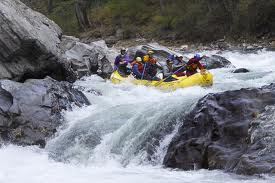
Rafting in Bhutan 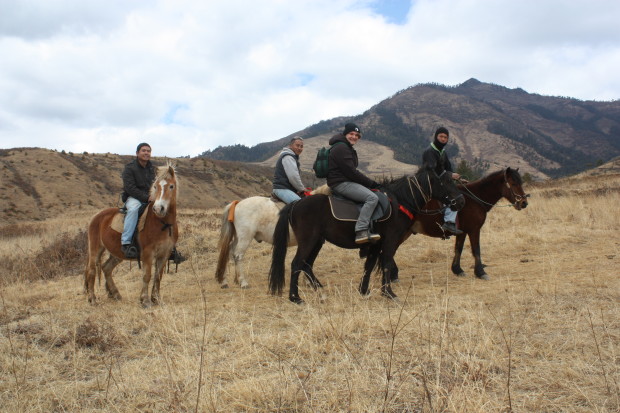
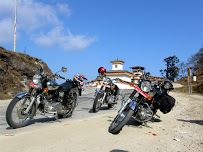
motor cycle tour , which is gaining popularity as a recreational sport for locals and as a package tour for the guests. We have started horse riding project since beginning of 2013, it is located on scenic valley in Bumthang. We are the pioneer in this arena in Bhutan, inclusion of this products in your tour can really add value to your trip.
- What voltage and electrical fittings do I expect in Bhutan?
Bhutan’s electricity is 230 Volts, alternating at 50 cycles per second. You will need a voltage converter if your device does not support 230 Volts at 50 Hertz. Electrical outlets in Bhutan accept 3 types of plugs: three round pins arranged in a triangle, two round pins and two parallel flat pins with ground pin.
- What is the Tipping structure in practise in Bhutan? Is it same for trek and tour?
Tipping is optional than mandatory. However, it is expected in our trade and has become a kind of tradition. Tipping is more of goodwill gesture or token of appreciation shown for the services rendered to guide and driver.
The nature of trip in Bhutan involves driver and guide with you throughout the trip. In some cases we have seen guests tipping generously in exchange of good services rendered. However, the standard practice is 8 to 10 USD per day for guide and driver for single group of family, friends or for a single traveler. And it is based on assumption of ratio 70:30 to Guide: Driver.
After having said that it is subjected to length of stay also, for instance if it’s a 15 days tour, the corresponding amount at the end could be a bit high when added each day. In such case, we advise our guests to exercise discretion based on the standard of services they received. In the same vein, for the shorter duration tour say 4 nights we again advise to adopt the principle of exercising your good judgment based on above mentioned factors. Ultimately, when summed up at the end, it would be safe to say to have baseline of 90 to 100 USD for longer tour and approx. 60 to 70 for shorter one and anything further up in addition as I said is up to you and believe me! Our guide and driver won’t be unhappy about it.
As for our group journey, perhaps it’s only natural to be higher than private trip in term of Tipping as it entails more number of members. Depending on the strength of members, you should pool together on daily basis among you or as per you suitability with the base amount of says USD 110 to 120 at the end. And less, again if the group size is small.
For the trek, the trend has been that the guests gather among themselves a slightly higher amount than cultural tour and at the end certain portion are distributed among the trek supporting staffs also. It again comes down to exercising your discretion for the concrete sum of amount.
As said tipping is optional, if any particular circumstance arises where you feel tipping is not necessary, then don’t tip.
- Does the Bhutanese government have any policies concerning the acquisition of handcrafts and other products (such tea) in small quantities?
- Young women Traveler to Bhutan
Young women Traveler to Bhutan. I am travelling to Bhutan as solo young woman to Bhutan? Is it dangerous or do you have suggestions, feedback?
Compared to most Asian countries or developing world, Bhutan prides itself on its lack of a class system and an absence of sexual discrimination. Bhutanese women tend to have the same rights as men, including rights to education, voting and holding positions in government. Women, both foreign and Bhutanese, are not subject to harassment and do not need to take any special precautions. Bhutanese are more likely to help a woman in distress than a man. Young men have a reasonably liberated attitude towards their relations with women. There are several opportunities for misunderstanding if you don’t make your intentions clear from the very outset. As with any countries you have been to, you cannot be silly and do all the things you won’t do otherwise in your home. Exercise General Caution.
- When is the Weekend Market in Bhutan and where is it?
Weekend Market in Bhutan or Bazaar. When is this weekend market and where are they held. Are they interesting to see it? Does my tour incorporate such visits or I have to do it on my own?

View of Paro (Bhutan) weekend market Weekend markets are where the farmers as well as other vendors come to sell their produce/crafts. It is colorful to see so many people and different products. The most popular weekend markets are held in Thimphu, Paro, Phuntsholing and Wangdiphodrang. Among this, the one in Thimphu is the most popular one, followed by one in Paro and Phuentsholing. Small seasonal weekend market may be held in Trongsa and other towns in Bhutan.

Hardened cheese made out of yak or cow milk, a familiar sight in weekend marketmarket Thimphu weekend market starts from Friday noon and it is over by Sunday afternoon. The market in Paro and Phuntsholing are held on Saturday. Weekend markets are usually held in the site constructed by the city/town in an open area with roof and it is similar to Farmer’s market in America. Depending on the tour operators, and depending on your time of visit, we normally try and incorporate this visit, if it does not hinder other programs / itinerary of your trip.

Vendors selling fresh vegetables in weekend market in Paro (Bhutan) - Do you recommend travelers receive rabies vaccine?
Answer – US CDC (Center for Disease Control and Prevention) recommends Rabies Vaccine for those visiting Bhutan, India, Nepal, Tibet and many other countries not covered by our travels. Chances of coming in close contacts with animals are high and exposure to stray dogs are particularly high in Bhutan. Although the odds of being bitten are low but not zero and so for the peace of mind, it best to get pre-immunization rabies vaccine. However on the plus side, Rabies vaccination is available readily in almost every clinics and health centers in Bhutan and Bhutanese and tourists can avail for free if bitten.
- Once the Booking is received ?
Once The Booking is received?
Once the booking is executed after depositing USD 200 from your end, generally, one question that governs the guests’ mind is what is next? In the sense, that what will be the next course of action or what will follow. Given below are the general processes that take its course progressively.
With the sole intent to provide you with an idea and the steps involved and how and what are means that help the process to takes its course smoothly, once the booking is received till the post trip.
1. Land Arrangements
With the deposit of USD 200, the process of land arrangements start, notably hotels, where we send the reservation notice, upon hearing from the concern hotels we update you the status. We send you invoice/receipt of USD 200, if possible, with the hotel status also.
2. Flight
If the flight reservation is done by us, we require legal name as it appear in your passport to book and purchase the ticket. Better , the copy of Passport, preferably colors in clear and legible nature. Even if you buy flight ticket on your own, we still need your passport for issuance of Visa at later stage.
3. Links for Information
And also our Guests Relation Manager will send you email comprising with links containing information about weather, check lists of thing to bring, tipping etc. which can possibly assist you to prepare well for your forthcoming trip.
4. Mode of Payments
The remaining payment is due in full 70 days before the start of the trip. Note all payments (other than initial deposit) by credit card/paypal are subject to extra charges of 4%.
We accept payment by wire transfer, check (including personal checks) drawn on any US banks, and money order without any additional charges.
Invoice/Receipt will be sent upon receiving the final payment.
5. Final Documents
As the name itself suggests, its last document you will receive other than Visa from us. Our intent is always to send the final documents as soon as possible. As it basically confirm the every aspects pertaining to the trip. It contains confirm hotel list, flight details, confirmed itinerary, notes on what to expect from the trip etc.
6. Visa
For Bhutan portion, visa is done by us. Department of immigration issue visa a month or sometime even less prior to the commencement of trip, which is supposedly a standard practice.
7. Post Trip Feedback
Once the trip is concluded, follow up email requesting the feed backs, insights and your perspectives in regards to the trip’s nature will be sent. It’s paramount for us to have your view as it’ll assist to identify the area, if any, that possibly have potential for improvement.
Please note that all the documents including Flight ticket will be sent via email. And also if, you have any queries pertaining to the concern subject, please feel free to ask.
As per the recent notification, health/Travel insurance copy & digital passport size photos are required to process Bhutan Visa
- Are there availability of hospitals/ health care centers along the way?


